missing translation for 'onlineSavingsMsg'
Learn More
Learn More



Invitrogen™ PSA-NCAM Monoclonal Antibody (12E3), eBioscience™, Invitrogen™

Mouse Monoclonal Antibody
£152.00 - £396.00
Specifications
| Antigen | PSA-NCAM |
|---|---|
| Clone | 12E3 |
| Concentration | 0.5 mg/mL |
| Applications | Immunohistochemistry (Frozen), Immunohistochemistry (Paraffin), Western Blot, Immunocytochemistry |
| Classification | Monoclonal |
| Product Code | Brand | Quantity | Price | Quantity & Availability | |||||
|---|---|---|---|---|---|---|---|---|---|
| Product Code | Brand | Quantity | Price | Quantity & Availability | |||||
|
15517586
|
Invitrogen™
14-9118-80 |
25 μg |
£152.00
25µg |
Please sign in to purchase this item. Need a web account? Register with us today! | |||||
|
15527586
|
Invitrogen™
14-9118-82 |
100 μg |
£396.00
100µg |
Please sign in to purchase this item. Need a web account? Register with us today! | |||||
Description
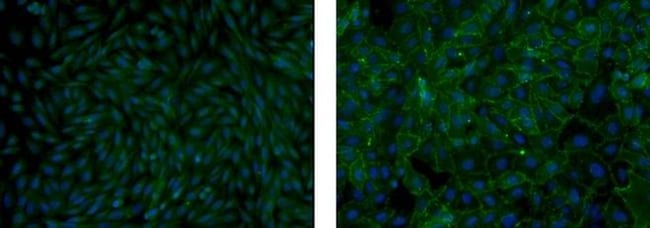
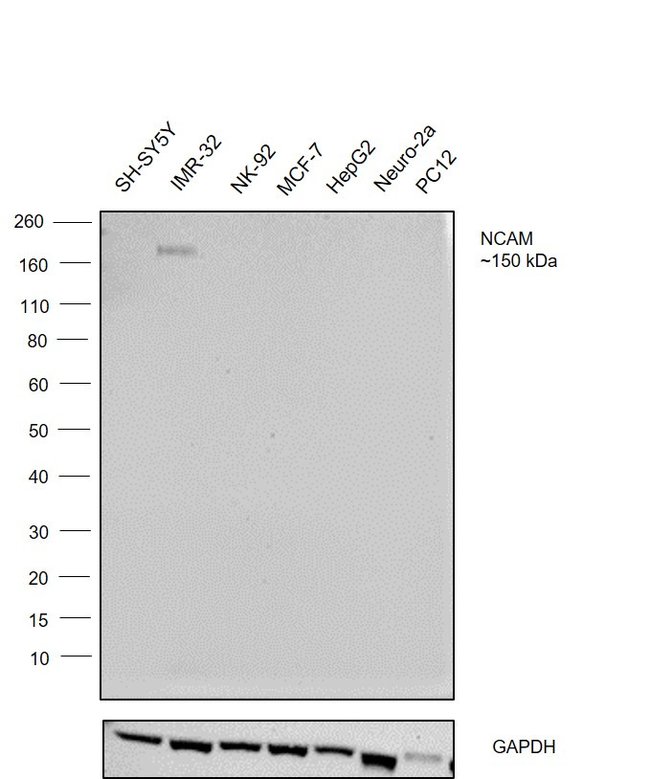
Description: The monoclonal antibody 12E3 specifically recognizes polysialylated neural cell adhesion molecule (PSA-NCAM) in human, mouse and rat. Polysialic acid is a long homopolymer of sialic acid that is negatively charged and is attached to neural cell adhesion molecule (CD56) and serves as a regulator of NCAM function. PSA attachment to NCAM is associated with inhibited adhesion of neural cells. PSA-NCAM expression is highly regulated and corresponds to specific neural developmental windows in which neural precursors are migrating and during the process of axonal sprouting, guidance, and targeting. PSA-NCAM expression is prevalent during development of the brain, but in the adult becomes restricted to regions undergoing self-renewal or exhibiting plasticity such as the olfactory bulb, suprachiasmatic nucleus, hippocampus, hypothalamus, and specific spinal cord nuclei. PSA-NCAM is re-expressed during tumorigenesis and is also expressed on cell lines isolated from neuroblastomas and pheochromocytomas. Applications Reported: This 12E3 antibody has been reported for use in immunohistochemical staining of frozen tissue sections, immunohistochemical staining of formalin-fixed paraffin embedded tissue sections, microscopy, and immunocytochemistry. Applications Tested: This 12E3 antibody has been tested by immunocytochemistry of formaldehyde-fixed PC-12 (rat) cells and can be used at less than or equal to 20 μg/mL.
Polysialic acid is a long homopolymer of sialic acid that is negatively charged and is attached to neural cell adhesion molecule (CD56) and serves as a regulator of NCAM function. PSA attachment to NCAM is associated with inhibited adhesion of neural cells. PSA-NCAM expression is highly regulated and corresponds to specific neural developmental windows in which neural precursors are migrating and during the process of axonal sprouting, guidance, and targeting. PSA-NCAM expression is prevalent during development of the brain, but in the adult becomes restricted to regions undergoing self-renewal or exhibiting plasticity such as the olfactory bulb, suprachiasmatic nucleus, hippocampus, hypothalamus, and specific spinal cord nuclei. PSA-NCAM is re-expressed during tumorigenesis and is also expressed on cell lines isolated from neuroblastomas and pheochromocytomas.Specifications
| PSA-NCAM | |
| 0.5 mg/mL | |
| Monoclonal | |
| Liquid | |
| RUO | |
| PBS with 0.09% sodium azide; pH 7.2 | |
| antigen recognized by monoclonal antibody 5.1H11; CD56; E-NCAM; MSK39; Ncam; N-CAM; NCAM1; N-CAM-1; NCAM-1; NCAMC; NCAM-C; neural cell adhesion molecule 1; neural cell adhesion molecule, NCAM; Polysialylated NCAM; PSA NCAM | |
| NCAM1 | |
| Primary | |
| 4°C | |
| NCAM1 |
| 12E3 | |
| Immunohistochemistry (Frozen), Immunohistochemistry (Paraffin), Western Blot, Immunocytochemistry | |
| Unconjugated | |
| Mouse | |
| Human, Mouse, Rat | |
| P13591, P13595, P13596 | |
| 17967, 24586, 4684 | |
| IgM | |
| Affinity chromatography | |
| Antibody |
For Research Use Only.
Spot an opportunity for improvement?Share a Content Correction
Product Content Correction
Your input is important to us. Please complete this form to provide feedback related to the content on this product.
Product Title