missing translation for 'onlineSavingsMsg'
Learn More
Learn More

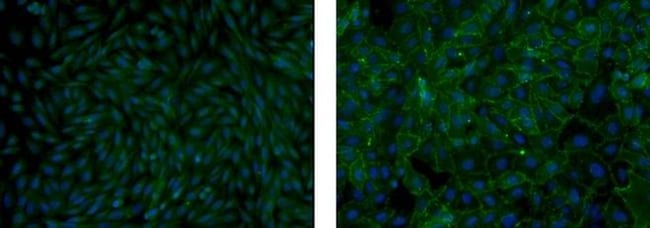

Invitrogen™ PSA-NCAM Monoclonal Antibody (12E3), eBioscience™, Invitrogen™

Mouse Monoclonal Antibody
Brand: Invitrogen™ 14-9118-82
297.00 GBP valid until 2025-12-19
BEST PRICE on Promo! Use promo code "24110" to get your promotional price.
This item is not returnable.
View return policy
Description
Description: The monoclonal antibody 12E3 specifically recognizes polysialylated neural cell adhesion molecule (PSA-NCAM) in human, mouse and rat. Polysialic acid is a long homopolymer of sialic acid that is negatively charged and is attached to neural cell adhesion molecule (CD56) and serves as a regulator of NCAM function. PSA attachment to NCAM is associated with inhibited adhesion of neural cells. PSA-NCAM expression is highly regulated and corresponds to specific neural developmental windows in which neural precursors are migrating and during the process of axonal sprouting, guidance, and targeting. PSA-NCAM expression is prevalent during development of the brain, but in the adult becomes restricted to regions undergoing self-renewal or exhibiting plasticity such as the olfactory bulb, suprachiasmatic nucleus, hippocampus, hypothalamus, and specific spinal cord nuclei. PSA-NCAM is re-expressed during tumorigenesis and is also expressed on cell lines isolated from neuroblastomas and pheochromocytomas. Applications Reported: This 12E3 antibody has been reported for use in immunohistochemical staining of frozen tissue sections, immunohistochemical staining of formalin-fixed paraffin embedded tissue sections, microscopy, and immunocytochemistry. Applications Tested: This 12E3 antibody has been tested by immunocytochemistry of formaldehyde-fixed PC-12 (rat) cells and can be used at less than or equal to 20 μg/mL.
Polysialic acid is a long homopolymer of sialic acid that is negatively charged and is attached to neural cell adhesion molecule (CD56) and serves as a regulator of NCAM function. PSA attachment to NCAM is associated with inhibited adhesion of neural cells. PSA-NCAM expression is highly regulated and corresponds to specific neural developmental windows in which neural precursors are migrating and during the process of axonal sprouting, guidance, and targeting. PSA-NCAM expression is prevalent during development of the brain, but in the adult becomes restricted to regions undergoing self-renewal or exhibiting plasticity such as the olfactory bulb, suprachiasmatic nucleus, hippocampus, hypothalamus, and specific spinal cord nuclei. PSA-NCAM is re-expressed during tumorigenesis and is also expressed on cell lines isolated from neuroblastomas and pheochromocytomas.
Specifications
| PSA-NCAM | |
| Monoclonal | |
| 0.5 mg/mL | |
| PBS with 0.09% sodium azide; pH 7.2 | |
| P13591, P13595, P13596 | |
| NCAM1 | |
| Affinity chromatography | |
| RUO | |
| 17967, 24586, 4684 | |
| 4°C | |
| Liquid |
| Immunohistochemistry (Frozen), Immunohistochemistry (Paraffin), Western Blot, Immunocytochemistry | |
| 12E3 | |
| Unconjugated | |
| NCAM1 | |
| antigen recognized by monoclonal antibody 5.1H11; CD56; E-NCAM; MSK39; Ncam; N-CAM; NCAM1; N-CAM-1; NCAM-1; NCAMC; NCAM-C; neural cell adhesion molecule 1; neural cell adhesion molecule, NCAM; Polysialylated NCAM; PSA NCAM | |
| Mouse | |
| 100 μg | |
| Primary | |
| Human, Mouse, Rat | |
| Antibody | |
| IgM |
Product Content Correction
Your input is important to us. Please complete this form to provide feedback related to the content on this product.
Product Title
For Research Use Only.
Spot an opportunity for improvement?Share a Content Correction