missing translation for 'onlineSavingsMsg'
Learn More
Learn More
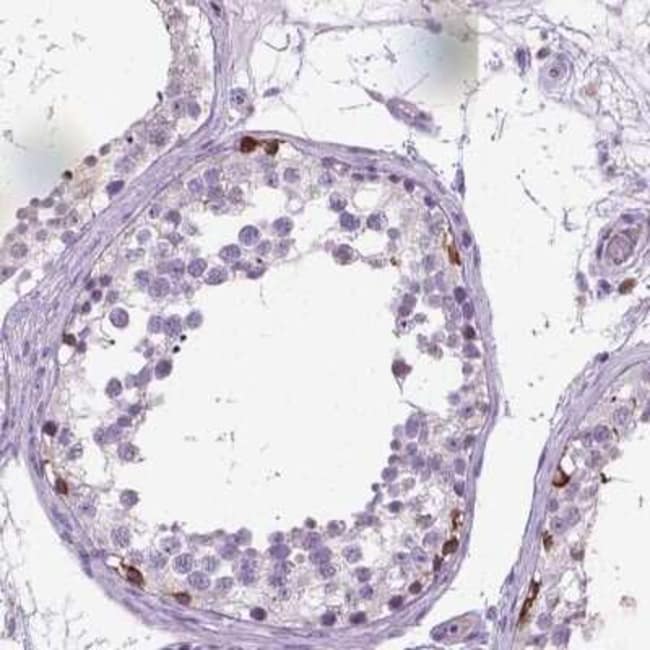
PLK4 Antibody, Novus Biologicals™
Rabbit Polyclonal Antibody
£222.00 - £513.00
Specifications
| Antigen | PLK4 |
|---|---|
| Dilution | Immunohistochemistry 1:1000 - 1:2500, Immunohistochemistry-Paraffin 1:1000 - 1:2500 |
| Applications | Immunohistochemistry, Immunohistochemistry (Paraffin) |
| Classification | Polyclonal |
| Conjugate | Unconjugated |
| Product Code | Brand | Quantity | Price | Quantity & Availability | |||||
|---|---|---|---|---|---|---|---|---|---|
| Product Code | Brand | Quantity | Price | Quantity & Availability | |||||
|
18660437
|
Novus Biologicals
NBP2-68650-25ul |
25 μL |
£222.00
25µL |
Please sign in to purchase this item. Need a web account? Register with us today! | |||||
|
18660758
|
Novus Biologicals
NBP2-68650 |
100 μg |
£513.00
100µL |
Please sign in to purchase this item. Need a web account? Register with us today! | |||||
Description
PLK4 Polyclonal antibody specifically detects PLK4 in Human samples. It is validated for Immunohistochemistry, Immunohistochemistry (Paraffin)Specifications
| PLK4 | |
| Immunohistochemistry, Immunohistochemistry (Paraffin) | |
| Unconjugated | |
| Rabbit | |
| Cell Cycle and Replication, Core ESC Like Genes, Mitotic Regulators, Stem Cell Markers | |
| PBS (pH 7.2) and 40% Glycerol | |
| 10733 | |
| IgG | |
| Protein A purified |
| Immunohistochemistry 1:1000 - 1:2500, Immunohistochemistry-Paraffin 1:1000 - 1:2500 | |
| Polyclonal | |
| Purified | |
| RUO | |
| Human | |
| EC 2.7.11.21, PLK-4, polo-like kinase 4 (Drosophila), polo-like kinase 4SAKSTK18serine/threonine kinase 18, Sak, serine/threonine protein kinase SAK, Serine/threonine-protein kinase 18, serine/threonine-protein kinase PLK4, Serine/threonine-protein kinase Sak, Snk akin kinase | |
| This antibody was developed against a recombinant protein corresponding to amino acids: CLPKSAQLLKSVFVKNVGWATQLTSGAVWVQFNDGSQLVVQAGVSSISYTSPNGQTTRYGENEKLPDYIKQKLQCLSSILLMFSNPTP | |
| Primary | |
| Store at 4°C short term. Aliquot and store at -20°C long term. Avoid freeze-thaw cycles. |
Spot an opportunity for improvement?Share a Content Correction
Product Content Correction
Your input is important to us. Please complete this form to provide feedback related to the content on this product.
Product Title