missing translation for 'onlineSavingsMsg'
Learn More
Learn More
Invitrogen™ CD277 Monoclonal Antibody (eBioBT3.1 (20.1, BT3.1)), eBioscience™, Invitrogen™
Mouse Monoclonal Antibody
£1392.00 - £3480.00
Specifications
| Antigen | CD277 |
|---|---|
| Clone | eBioBT3.1 (20.1, BT3.1) |
| Concentration | 0.5 mg/mL |
| Applications | Flow Cytometry, Immunoprecipitation |
| Classification | Monoclonal |
| Product Code | Brand | Quantity | Price | Quantity & Availability | |||||
|---|---|---|---|---|---|---|---|---|---|
| Product Code | Brand | Quantity | Price | Quantity & Availability | |||||
|
17190612
|
Invitrogen™
14-2779-37 |
2 mg |
£1392.00
2mg |
Please sign in to purchase this item. Need a web account? Register with us today! | |||||
|
17100622
|
Invitrogen™
14-2779-95 |
10 mg |
£3480.00
10mg |
Please sign in to purchase this item. Need a web account? Register with us today! | |||||
Description
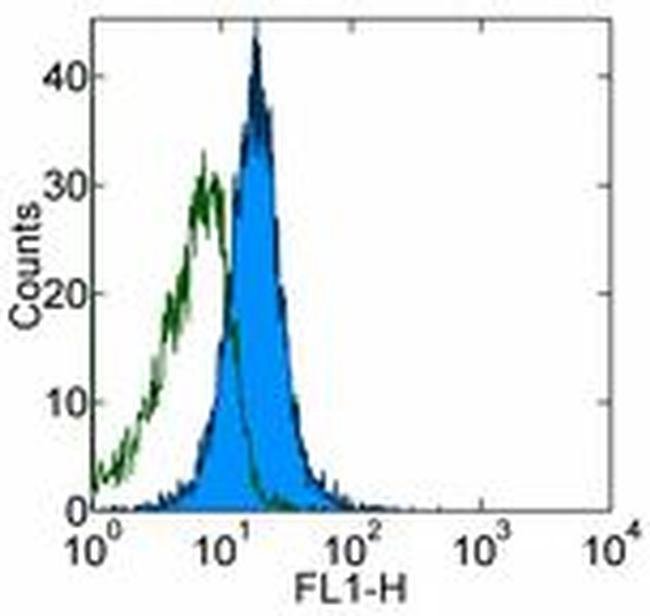
The eBioBT3.1 MAb recognizes BT3.1, BT3.2 and BT3.3. The BT family of proteins is a subgroup of the Ig superfamily (IgSF). BT is a glycoprotein that forms a major component of the milk fat globule molecule. In addition to BT, there are six other genes that have been discovered which have been sub-divided into the BT2 (BT2.1, BT2.2, and BT2.3) and BT3 (BT3.1, BT3.2, and BT3.3) families. BT3.1, BT3.2, and BT3.3 share 95% mRNA identity. BT3 molecules are constitutively expressed on the cell surface of antigen-presenting cells, and the IgV-like domain of BT3.1 is sufficient for interaction with its counter-receptor. BT3.1 is expressed by T cells, B cells and CD14+ cells. Applications Reported: This eBioBT3.1 (20.1, BT3.1) antibody has been reported for use in flow cytometric analysis, and immunoprecipitation. Applications Tested: This eBioBT3.1 (20.1, BT3.1) antibody has been tested by flow cytometric analysis of normal human peripheral blood cells. This can be used at less than or equal to 1 μg per test. A test is defined as the amount (μg) of antibody that will stain a cell sample in a final volume of 100 μL. Cell number should be determined empirically but can range from 10^5 to 10^8 cells/test. It is recommended that the antibody be carefully titrated for optimal performance in the assay of interest. Purity: Greater than 90%, as determined by SDS-PAGE. Aggregation: Less than 10%, as determined by HPLC. Filtration: 0.2 μm post-manufacturing filtered.
The butyrophilin (BTN) genes are a group of major histocompatibility complex (MHC)-associated genes that encode type I membrane proteins with 2 extracellular immunoglobulin (Ig) domains and an intracellular B30.2 (PRYSPRY) domain. Three subfamilies of human BTN genes are located in the MHC class I region: the single-copy BTN1A1 gene and the BTN2 and BTN3 genes, which have undergone tandem duplication, resulting in 3 copies of each.Specifications
| CD277 | |
| 0.5 mg/mL | |
| Monoclonal | |
| Liquid | |
| RUO | |
| PBS with 0.09% sodium azide; pH 7.2 | |
| BT3.1; BTF5; BTN3.1; BTN3A1; butyrophilin; Butyrophilin subfamily 3 member A1; butyrophilin, subfamily 3, member A1; CD277; dJ45P21.3 (butyrophilin, subfamily 3, member A1) | |
| BTN3A1 | |
| Primary | |
| 4°C | |
| BTN3A1 |
| eBioBT3.1 (20.1, BT3.1) | |
| Flow Cytometry, Immunoprecipitation | |
| Unconjugated | |
| Mouse | |
| Human | |
| O00481 | |
| 11119 | |
| IgG1 | |
| Affinity Chromatography | |
| Antibody |
Spot an opportunity for improvement?Share a Content Correction
Product Content Correction
Your input is important to us. Please complete this form to provide feedback related to the content on this product.
Product Title