Learn More
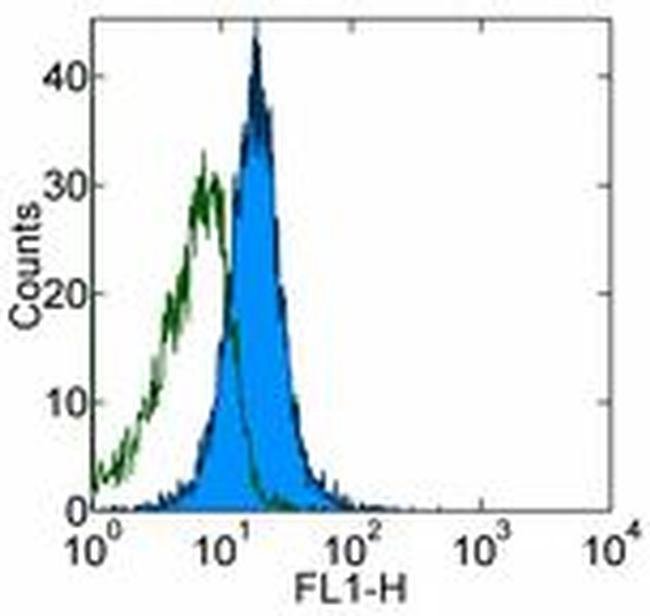
Invitrogen™ CD277 Monoclonal Antibody (eBioBT3.1 (20.1, BT3.1)), eBioscience™, Invitrogen™
Description
The eBioBT3.1 MAb recognizes BT3.1, BT3.2 and BT3.3. The BT family of proteins is a subgroup of the Ig superfamily (IgSF). BT is a glycoprotein that forms a major component of the milk fat globule molecule. In addition to BT, there are six other genes that have been discovered which have been sub-divided into the BT2 (BT2.1, BT2.2, and BT2.3) and BT3 (BT3.1, BT3.2, and BT3.3) families. BT3.1, BT3.2, and BT3.3 share 95% mRNA identity. BT3 molecules are constitutively expressed on the cell surface of antigen-presenting cells, and the IgV-like domain of BT3.1 is sufficient for interaction with its counter-receptor. BT3.1 is expressed by T cells, B cells and CD14+ cells. Applications Reported: This eBioBT3.1 (20.1, BT3.1) antibody has been reported for use in flow cytometric analysis, and immunoprecipitation. Applications Tested: This eBioBT3.1 (20.1, BT3.1) antibody has been tested by flow cytometric analysis of normal human peripheral blood cells. This can be used at less than or equal to 1 μg per test. A test is defined as the amount (μg) of antibody that will stain a cell sample in a final volume of 100 μL. Cell number should be determined empirically but can range from 10^5 to 10^8 cells/test. It is recommended that the antibody be carefully titrated for optimal performance in the assay of interest. Purity: Greater than 90%, as determined by SDS-PAGE. Aggregation: Less than 10%, as determined by HPLC. Filtration: 0.2 μm post-manufacturing filtered.

Specifications
Specifications
| Antigen | CD277 |
| Applications | Flow Cytometry, Immunoprecipitation |
| Classification | Monoclonal |
| Clone | eBioBT3.1 (20.1, BT3.1) |
| Concentration | 0.5 mg/mL |
| Conjugate | Unconjugated |
| Formulation | PBS with 0.09% sodium azide; pH 7.2 |
| Gene | BTN3A1 |
| Gene Accession No. | O00481 |
| Gene Alias | BT3.1; BTF5; BTN3.1; BTN3A1; butyrophilin; Butyrophilin subfamily 3 member A1; butyrophilin, subfamily 3, member A1; CD277; dJ45P21.3 (butyrophilin, subfamily 3, member A1) |
| Show More |
By clicking Submit, you acknowledge that you may be contacted by Fisher Scientific in regards to the feedback you have provided in this form. We will not share your information for any other purposes. All contact information provided shall also be maintained in accordance with our Privacy Policy.