missing translation for 'onlineSavingsMsg'
Learn More
Learn More
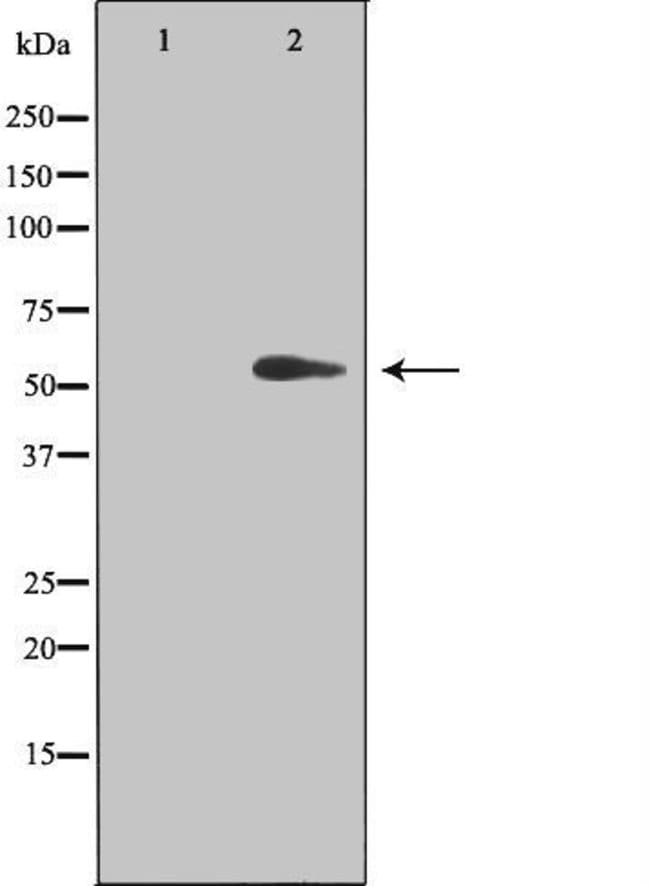
Invitrogen™ TIN2 Polyclonal Antibody

Rabbit Polyclonal Antibody
Brand: Invitrogen™ PA5101248
This item is not returnable.
View return policy
Description
Antibody detects endogenous levels of total TINF2.
TRF1 is a negative regulator of telomere length maintenance. Recently two proteins, tankyrase and Tin2, which bind to mammalian TRF1, have been identified. Tankyrase is a protein with homology to ankyrins as well as to the catalytic domain of poly (adenosine diphosphate-ribose) polymerase (PARP). Tankyrase localizes to telomeres by binding to the telomeric repeat binding factor 1 (TRF1) through its ankyrin repeats. Tankyrase exhibits PARP activity functioning as acceptors for adenosine diphosphate (ADP)-ribosylation. Since ADP-ribosylation of TRF1 diminishes its ability to bind to telomeric DNA, this suggests that telomere function in human cells is regulated by poly (ADP)-ribosylation. Both the cell cycle and TRF1 may regulate the subcellular localization of tankyrase. The cDNA coding for TIN2 protein was isolated as interacting partner of TRF1 from a yeast two-hybrid cDNA library screening. Tin2 localizes to telomeres and is essential for proper regulation of telomere length. TIN2, like TRF1, is widely and constitutively expressed, suggesting that these proteins act together to counterbalance telomere elongation by telomerase. However, endogenous TIN2, like endogenousTRF1, is not highly expressed, and therefore may be difficult to visualize by immunostaining in certain cell systems.
Specifications
| TIN2 | |
| Polyclonal | |
| Unconjugated | |
| Tinf2 | |
| AW552114; D14Wsu146e; DKCA3; TERF1 (TRF1)-interacting nuclear factor 2; TERF1 interacting nuclear factor 2; TERF1-interacting nuclear factor 2; tin; TIN2; Tin-2; TINF2; TRF1-interacting nuclear factor 2; TRF1-interacting nuclear protein 2 | |
| Rabbit | |
| Affinity chromatography | |
| RUO | |
| 26277 | |
| -20°C | |
| Liquid |
| Western Blot, Immunocytochemistry | |
| 1 mg/mL | |
| PBS with 50% glycerol and 0.02% sodium azide; pH 7.4 | |
| Q9BSI4 | |
| Tinf2 | |
| A synthesized peptide derived from human TINF2(Accession Q9BSI4), corresponding to amino acid residues R74-A124. | |
| 100 μL | |
| Primary | |
| Human | |
| Antibody | |
| IgG |
Product Content Correction
Your input is important to us. Please complete this form to provide feedback related to the content on this product.
Product Title
Spot an opportunity for improvement?Share a Content Correction