missing translation for 'onlineSavingsMsg'
Learn More
Learn More

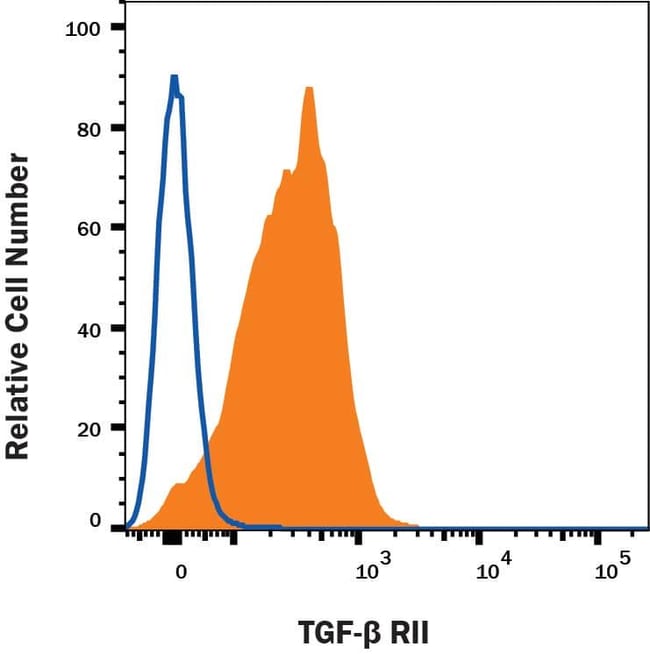
Invitrogen™ TGFBR2 Polyclonal Antibody

Description
In direct ELISAs, approximately 5% cross-reactivity with recombinant human (rh) TGF-beta RII is observed and less than 1% cross-reactivity with recombinant mouse TGF-beta RI and rhTGF-beta RIII is observed. Reconstitute at 0.2 mg/mL in sterile PBS.
Transforming Growth Factor, beta receptor 2 (AAT3, FAA3, MFS2, RIIC, LDS1B, LDS2B, TAAD2, TGFR-2, TGFbeta-RII) is a member of the TGF-beta family of receptor Serine/Threonine kinases. It is involved in the regulation of cell proliferation. Mitochondrial ATP synthase catalyzes ATP synthesis, utilizing an electrochemical gradient of protons across the inner membrane during oxidative phosphorylation. ATP synthase is composed of two linked multi-subunit complexes: the soluble catalytic core, F1, and the membrane-spanning component, Fo, comprising the proton channel. The catalytic portion of mitochondrial ATP synthase consists of 5 different subunits (alpha, beta, gamma, delta, and epsilon) assembled with a stoichiometry of 3 alpha, 3 beta, and a single representative of the other 3. The proton channel consists of three main subunits (a, b, c). TGFBR2 encodes the gamma subunit of the catalytic core. Alternatively spliced transcript variants encoding different isoforms have been identified. TGFBR2 also has a pseudogene on chromosome 14.

Specifications
Specifications
| Antigen | TGFBR2 |
| Applications | Flow Cytometry, Western Blot |
| Classification | Polyclonal |
| Concentration | 0.2 mg/mL |
| Conjugate | Unconjugated |
| Formulation | PBS with 5% trehalose and No Preservative |
| Gene | TGFBR2 |
| Gene Accession No. | P38438, Q62312 |
| Gene Alias | 1110020H15Rik; AAT3; AU042018; DNIIR; FAA3; LDS1B; LDS2; LDS2B; MFS2; RIIC; RIIDN; TAAD2; TbetaRII; TbetaR-II; TBR-II; tgf beta receptor 2; TGF-beta 2; TGF-beta receptor II; TGF-beta receptor type II; TGF-beta receptor type IIB; TGF-beta receptor type-2; TGFbeta RII; TGFbeta type II receptor; TGF-beta type II receptor; TGFbeta-RII; TGFBR2; Tgfbr2T; TGFR2; TGFR-2; transforming growth factor beta receptor 2; transforming growth factor beta receptor II; transforming growth factor beta receptor type II; transforming growth factor beta receptor type IIC; transforming growth factor, beta receptor 2; transforming growth factor, beta receptor II; transforming growth factor, beta receptor II (70/80kDa); transforming growth factor, beta receptor II alpha; transforming growth factor, beta receptor II beta; transforming growth factor, beta receptor II delta; transforming growth factor, beta receptor II epsilon; transforming growth factor, beta receptor II gamma; transforming growth factor, beta receptor IIT; transforming growth factor-b type II receptor; transforming growth factor-beta receptor type II; transforming growth factor-beta type II receptor |
| Gene Symbols | TGFBR2 |
| Show More |
Product Title
By clicking Submit, you acknowledge that you may be contacted by Fisher Scientific in regards to the feedback you have provided in this form. We will not share your information for any other purposes. All contact information provided shall also be maintained in accordance with our Privacy Policy.
Spot an opportunity for improvement?