missing translation for 'onlineSavingsMsg'
Learn More
Learn More
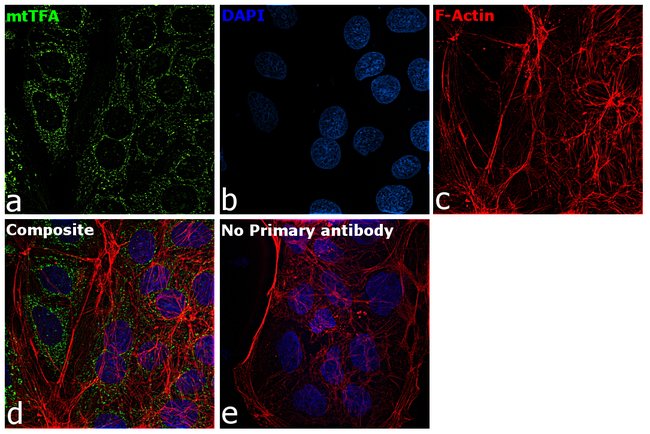
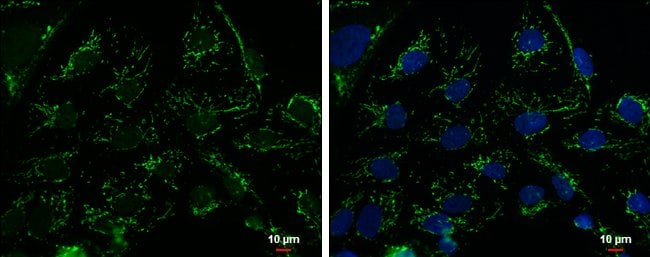
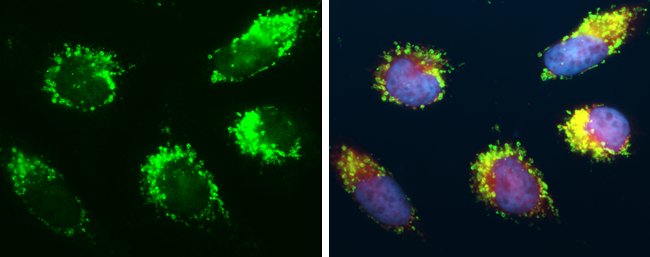
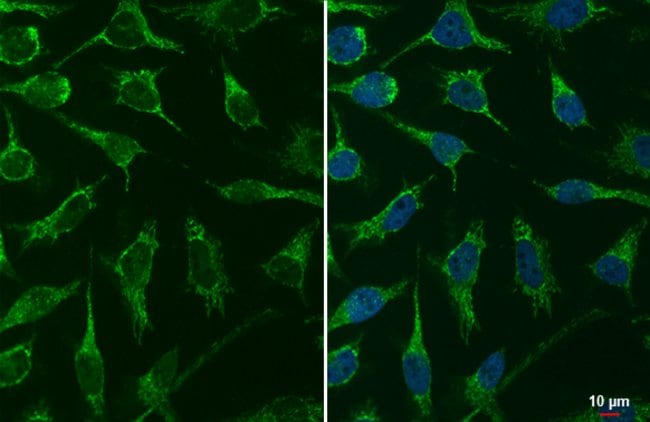
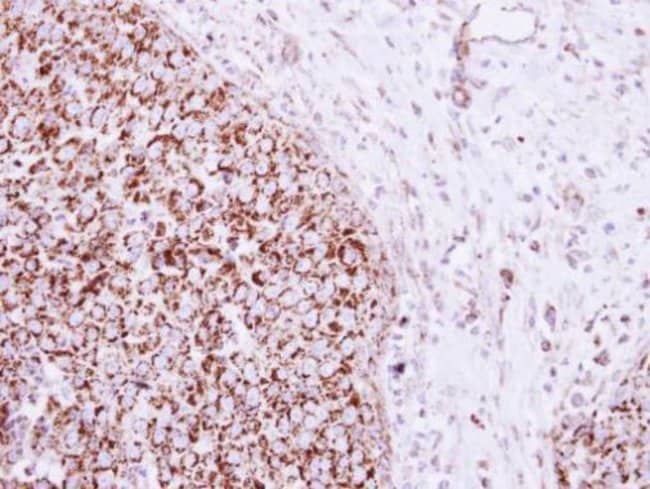
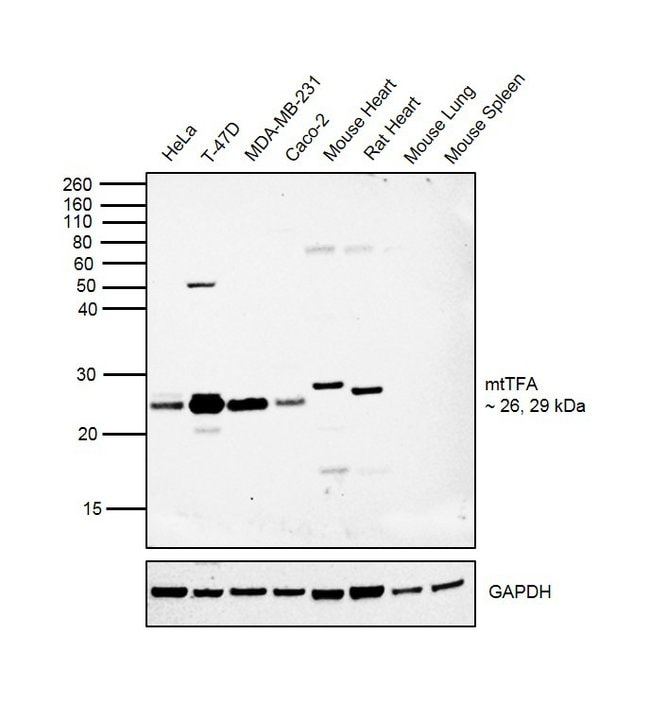
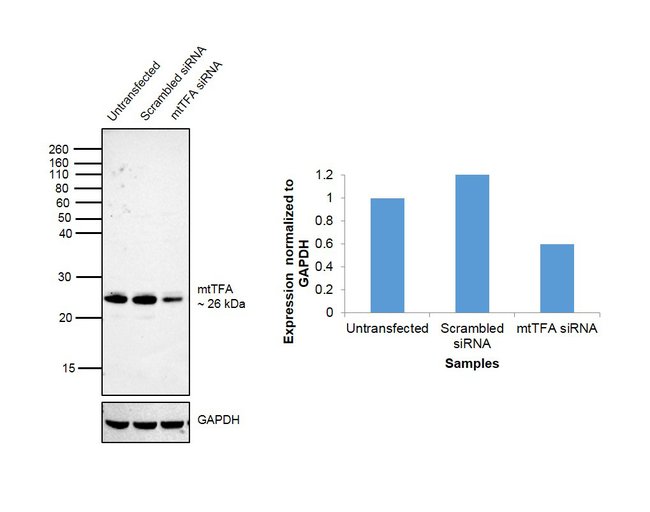
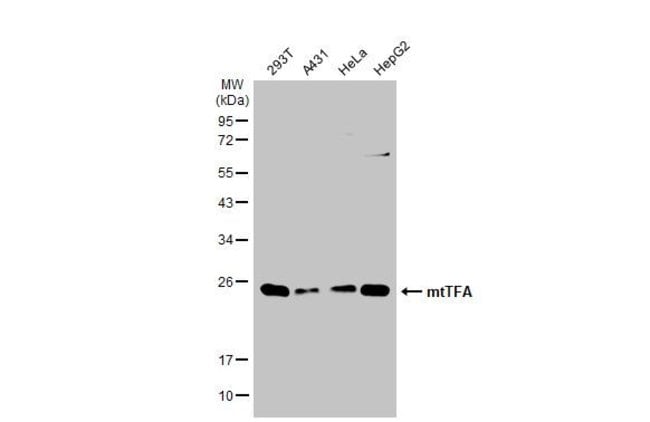
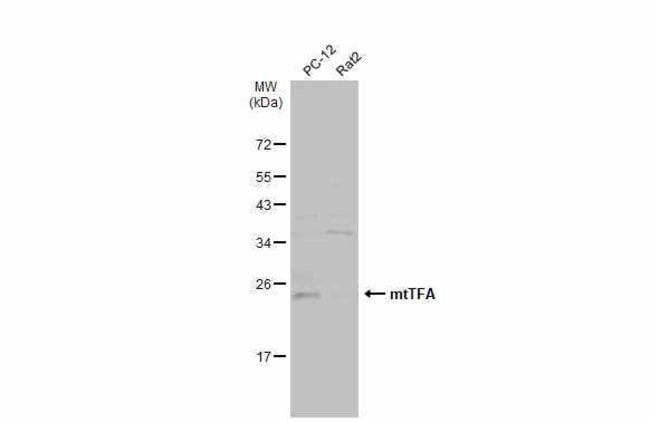
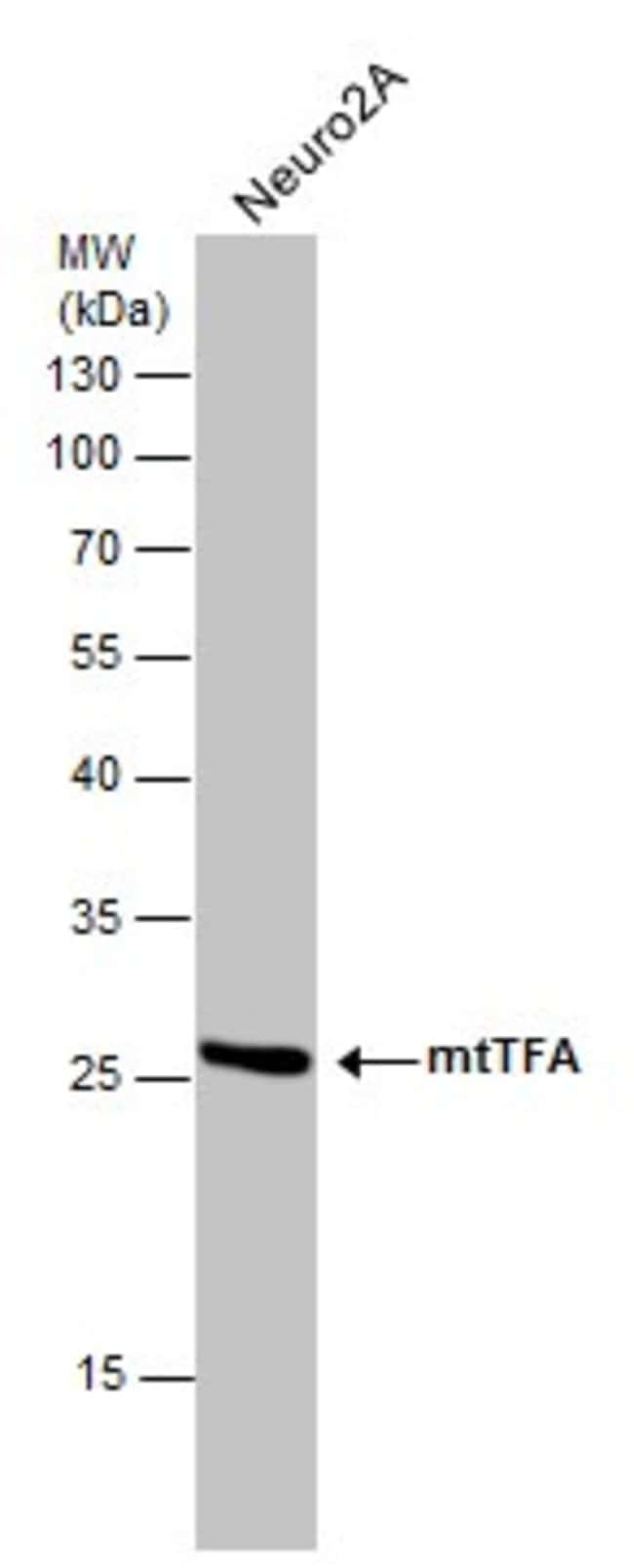
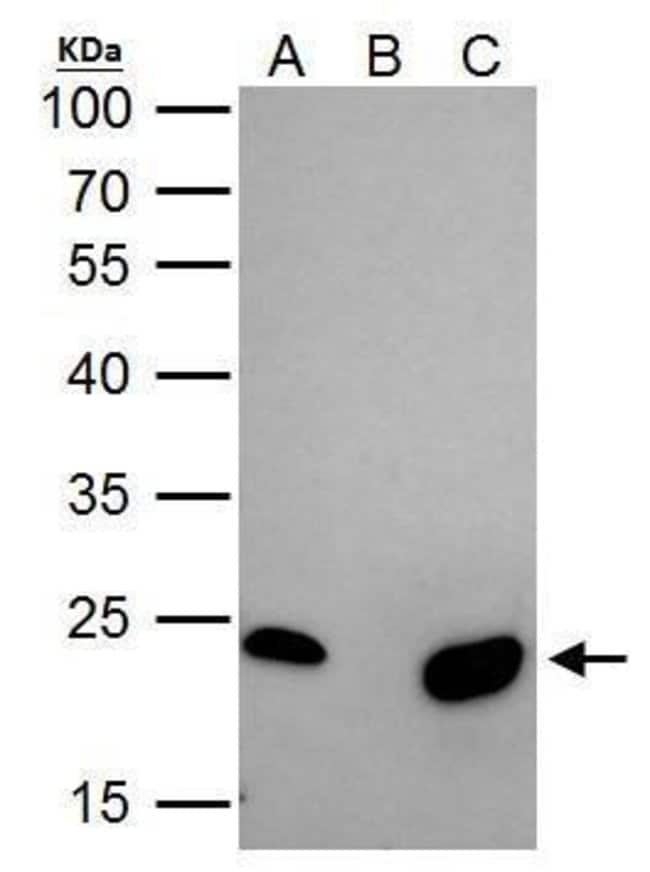
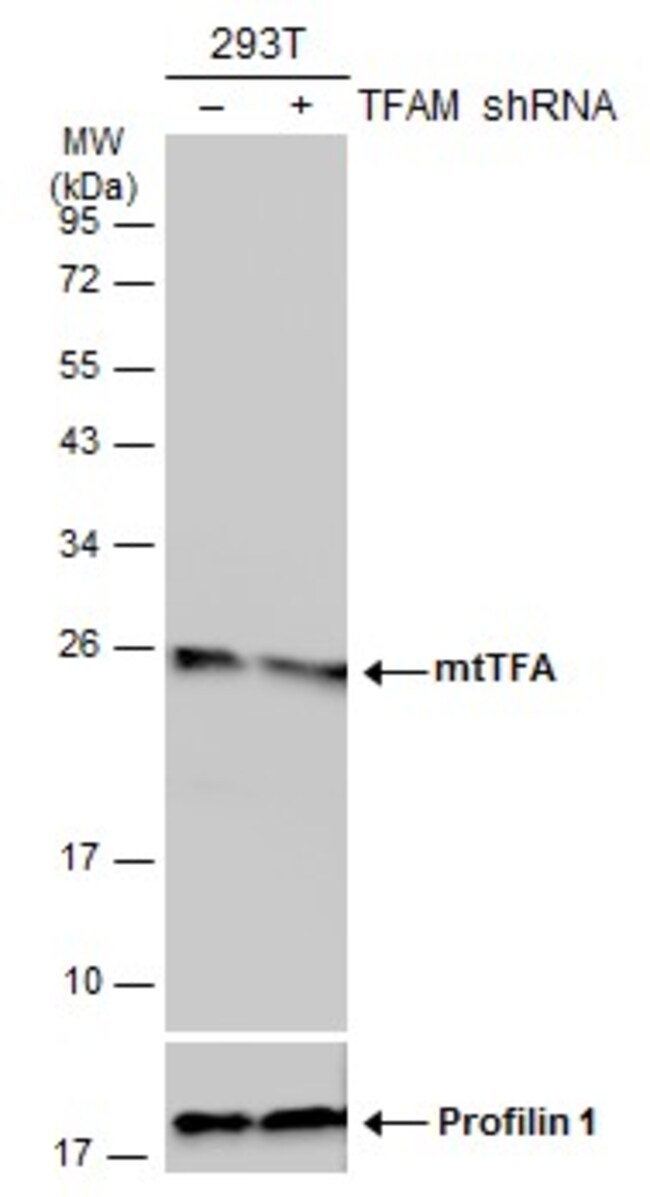
Invitrogen™ TFAM Polyclonal Antibody

Description
Recommended positive controls: 293T, A431, HeLa, HepG2, Neuro 2A. Predicted reactivity: Chimpanzee (99%). Store product as a concentrated solution. Centrifuge briefly prior to opening the vial.
Mitochondrial transcription factor A (TFAM) is a crucial protein encoded by nuclear genes, but it is transported from the cytoplasm to mitochondria where it plays a key role in the maintenance and expression of mitochondrial DNA (mtDNA). It regulates the replication and transcription of mtDNA, ensuring the proper functioning of mitochondrial processes. Structurally, TFAM contains a molecular region known as the LC3 interacting region (LIR) motif, which allows it to bind to autophagy proteins such as LC3. This interaction is essential for the autolysosomal pathway, helping to eliminate leaked mtDNA and limit inflammation. TFAM levels vary across tissues, with notable effects on mitochondrial function; high levels can repress mtDNA expression in certain tissues, such as skeletal muscle, and contribute to deficiencies in oxidative phosphorylation (OXPHOS). Conversely, in other tissues like the heart, increased mtDNA copy number maintains a balanced TFAM-to-mtDNA ratio, preserving OXPHOS capacity. TFAM is integral to the packaging, stability, and replication of the mitochondrial genome, and disruptions in TFAM can have severe effects, including implications in neurodegeneration and other diseases related to mtDNA stress.

Specifications
Specifications
| Antigen | TFAM |
| Applications | Immunohistochemistry (Paraffin), Immunoprecipitation, Western Blot, Immunocytochemistry |
| Classification | Polyclonal |
| Concentration | 0.43 mg/mL |
| Conjugate | Unconjugated |
| Formulation | PBS with 1% BSA, 20% glycerol and 0.025% ProClin 300; pH 7 |
| Gene | Tfam |
| Gene Accession No. | P40630, Q00059, Q91ZW1 |
| Gene Alias | AI661103; Hmgts; Mitochondrial transcription factor 1; mitochondrial transcription factor A; MTTF1; mtTFA; TCF6; TCF-6; TCF6L1; TCF6L2; TCF6L3; Testis-specific high mobility group protein; testis-specific HMG-box protein m-tsHMG; TFAM; Transcription factor 6; transcription factor 6-like 1; transcription factor 6-like 2; transcription factor 6-like 2 (mitochondrial transcription factor); transcription factor 6-like 3; transcription factor A, mitochondrial; tsHMG; TS-HMG |
| Gene Symbols | Tfam |
| Show More |
Product Title
By clicking Submit, you acknowledge that you may be contacted by Fisher Scientific in regards to the feedback you have provided in this form. We will not share your information for any other purposes. All contact information provided shall also be maintained in accordance with our Privacy Policy.
Spot an opportunity for improvement?