missing translation for 'onlineSavingsMsg'
Learn More
Learn More


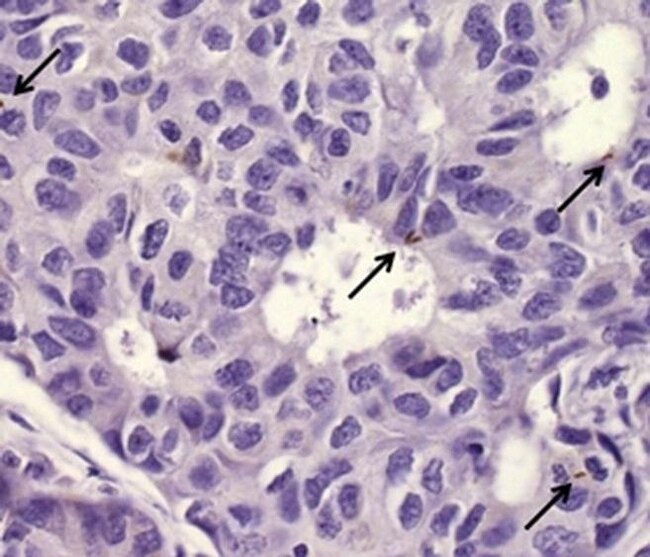
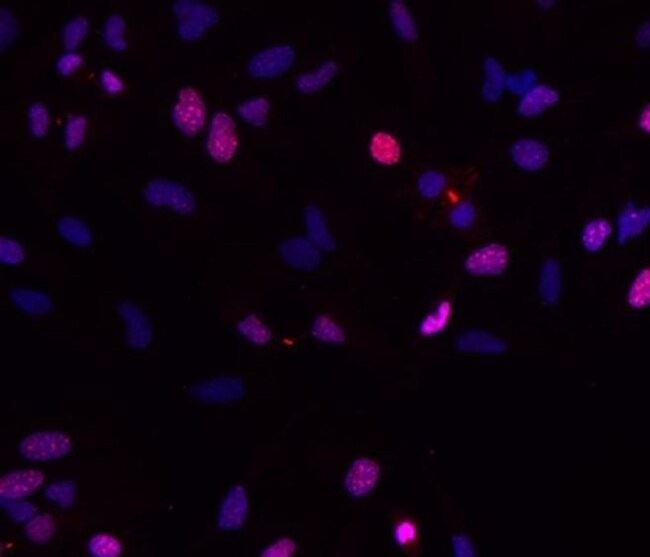
Invitrogen™ Survivin Monoclonal Antibody (STLALYV), eBioscience™, Invitrogen™

Mouse Monoclonal Antibody
£430.00 - £3115.00
Specifications
| Antigen | Survivin |
|---|---|
| Clone | STLALYV |
| Concentration | 0.5 mg/mL |
| Classification | Monoclonal |
| Conjugate | Unconjugated |
| Product Code | Brand | Quantity | Price | Quantity & Availability | |||||
|---|---|---|---|---|---|---|---|---|---|
| Product Code | Brand | Quantity | Price | Quantity & Availability | |||||
|
15597586
|
Invitrogen™
14-9176-82 |
100 μg |
£430.00
100µg |
Please sign in to purchase this item. Need a web account? Register with us today! | |||||
|
17180722
|
Invitrogen™
14-9176-37 |
2 mg |
£1410.00
2mg |
Please sign in to purchase this item. Need a web account? Register with us today! | |||||
|
17190722
|
Affymetrix eBioscience
14-9176-95 |
10 mg | |||||||
Description
This STLALYV MAb recognizes human survivin (also known as Birc5). Survivin is a member of the inhibitor of apoptosis (IAP) family that also includes XIAP, c-IAP1, c-IAP2, and NAIP. Survivin functions to inhibit caspase activation, thereby leading to negative regulation of apoptosis. Survivin also plays a critical role in mitosis and cytokinesis where it is expressed only during G2/M and localizes to the mitotic spindle and is found at the cleavage furrow/midplate. Thus, survivin is highly expressed in tumors and in fetal tissue, but is absent in terminally-differentiated cells and non-proliferating cells. Deletion of survivin in developing thymocytes as well as in mature T cells showed that survivin is critical for cell division in lymphoid cells but not for inhibition of survival; the same is true for B lymphocytes.
Survivin (IAP4) is the smallest member of the Inhibitors of Apoptosis Protein (IAP) gene family. The IAPs are involved in multiple cell functions such as cell signaling, cell division, metabolism, and exhibits differential expression in nearly all human cancers, but not in most normal tissues. IAP family members usually contain multiple baculovirus IAP repeat (BIR) domains, but the Survivin gene encodes proteins with only a single BIR domain. The encoded proteins also lack a C-terminus RING finger domain. Gene expression is high during fetal development and in most tumors yet low in adult tissues. Antisense transcripts are involved in the regulation of survivin’s gene expression. Survivin is expressed in the G2/M phase of the cell cycle in a cycle-regulated manner. At the beginning of mitosis, survivin associates with microtubules of the mitotic spindle in a specific and saturable reaction that is regulated by microtubule dynamics. Disruption of survivin-microtubule interactions results in loss of survivin's anti-apoptosis function and increased caspase-3 activity, a mechanism involved in cell death, during mitosis. Survivin may counteract a default induction of apoptosis in G2/M phase. Survivin is also abundantly expressed in brain tissues (astrocytes and some neurons) of adult rats following traumatic brain injury. Survivin has been found co-expressed with NeuN (mature neuronal marker) and PCNA (a cell cycle protein). Survivin might affect regulation of neural cell proliferative responses after brain injury. At least four transcript variants encoding distinct isoforms have been found for this gene, but the full-length natures of only three of them have been determined. The overexpression of survivin in cancer may overcome this apoptotic checkpoint and favor aberrant progression of transformed cells through mitosis.Specifications
| Survivin | |
| 0.5 mg/mL | |
| Unconjugated | |
| Mouse | |
| Human | |
| O15392 | |
| IgG2b κ | |
| Affinity chromatography | |
| Antibody |
| STLALYV | |
| Monoclonal | |
| Liquid | |
| RUO | |
| PBS with 0.09% sodium azide; pH 7.2 | |
| 332 | |
| Primary | |
| 4°C | |
| Birc5 |
Spot an opportunity for improvement?Share a Content Correction
Product Content Correction
Your input is important to us. Please complete this form to provide feedback related to the content on this product.
Product Title