missing translation for 'onlineSavingsMsg'
Learn More
Learn More
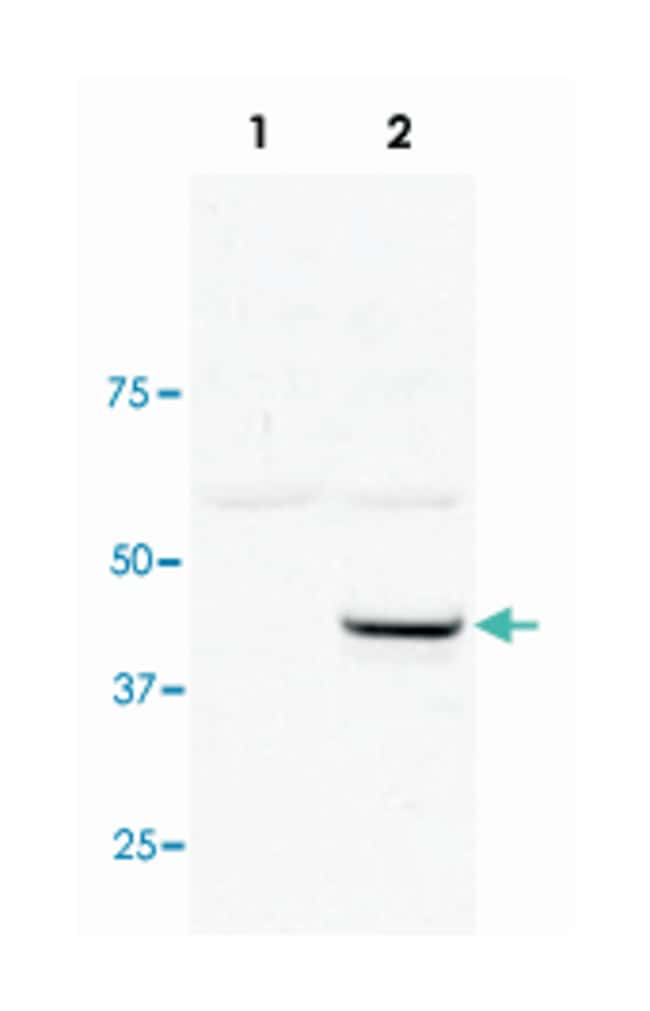
UBE2J1, Rabbit, Polyclonal Antibody, Abnova™
Rabbit polyclonal antibody raised against synthetic peptide of UBE2J1.
Brand: Abnova PAB11288.100ug
This item is not returnable.
View return policy
Description
The modification of proteins with ubiquitin is an important cellular mechanism for targeting abnormal or short-lived proteins for degradation. Ubiquitination involves at least three classes of enzymes: ubiquitin-activating enzymes, or E1s, ubiquitin-conjugating enzymes, or E2s, and ubiquitin-protein ligases, or E3s. This gene encodes a member of the E2 ubiquitin-conjugating enzyme family. This enzyme is located in the membrane of the endoplasmic reticulum (ER) and may contribute to quality control ER-associated degradation by the ubiquitin-proteasome system. [provided by RefSeq
Specifications
| UBE2J1 | |
| Polyclonal | |
| Rabbit polyclonal antibody raised against synthetic peptide of UBE2J1. | |
| In 20mM KH2PO4, 150mM NaCl, pH 7.2 (0.01% sodium azide) | |
| CGI-76/HSPC153/HSPC205/HSU93243/MGC12555/NCUBE1/Ubc6p | |
| Rabbit | |
| 100 μg | |
| Primary | |
| Human, Mouse, Rat | |
| Liquid |
| ELISA, Immunoprecipitation, Western Blot | |
| Unconjugated | |
| ELISA (1:1000-1:5000) Western Blot (1:200-1:2000) Immunoprecipitation (1-2 ug) The optimal working dilution should be determined by the end user. | |
| UBE2J1 | |
| UBE2J1 | |
| A synthetic peptide corresponding to N-terminus of human UBE2J1. | |
| RUO | |
| 51465 | |
| Store at 4°C. For long term storage store at -20°C. Aliquot to avoid repeated freezing and thawing. |
Product Content Correction
Your input is important to us. Please complete this form to provide feedback related to the content on this product.
Product Title
For Research Use Only
Spot an opportunity for improvement?Share a Content Correction