missing translation for 'onlineSavingsMsg'
Learn More
Learn More
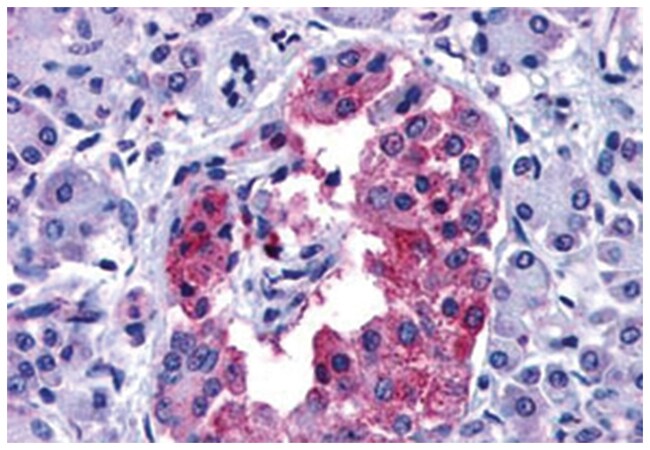
GIPR Rabbit anti-Human, Monkey, Polyclonal Antibody, Abnova™
Rabbit polyclonal antibody raised against synthetic peptide of GIPR.
Brand: Abnova PAB26358.50ug
This item is not returnable.
View return policy
Description
Gastric inhibitory polypeptide (GIP; MIM 137240), also called glucose-dependent insulinotropic polypeptide, is a 42-amino acid polypeptide synthesized by K cells of the duodenum and small intestine. It was originally identified as an activity in gut extracts that inhibited gastric acid secretion and gastrin release, but subsequently was demonstrated to stimulate insulin release potently in the presence of elevated glucose. The insulinotropic effect on pancreatic islet beta-cells was then recognized to be the principal physiologic action of GIP. Together with glucagon-like peptide-1, GIP is largely responsible for the secretion of insulin after eating. It is involved in several other facets of the anabolic response.[supplied by OMIM
Specifications
| GIPR | |
| Polyclonal | |
| Rabbit polyclonal antibody raised against synthetic peptide of GIPR. | |
| In PBS (0.09% sodium azide) | |
| P48546 | |
| GIPR | |
| A synthetic peptide corresponding to 18 amino acids at N-terminal extracellular domain of human GIPR. | |
| 50 μg | |
| Primary | |
| BLAST analysis of the peptide immunogen showed no homology with other human proteins, except GHRHR (72%), CNNM1 (56%). | |
| Store at 4°C. For long term storage store at -80°C. Aliquot to avoid repeated freezing and thawing. |
| Immunohistochemistry (PFA fixed) | |
| Unconjugated | |
| Immunohistochemistry (Formalin/PFA-fixed paraffin-embedded sections) (19 ug/mL) The optimal working dilution should be determined by the end user. | |
| GIPR | |
| MGC126722 | |
| Rabbit | |
| Immunoaffinity chromatography | |
| RUO | |
| 2696 | |
| Human, Monkey | |
| Liquid |
Product Content Correction
Your input is important to us. Please complete this form to provide feedback related to the content on this product.
Product Title
For Research Use Only
Spot an opportunity for improvement?Share a Content Correction