missing translation for 'onlineSavingsMsg'
Learn More
Learn More
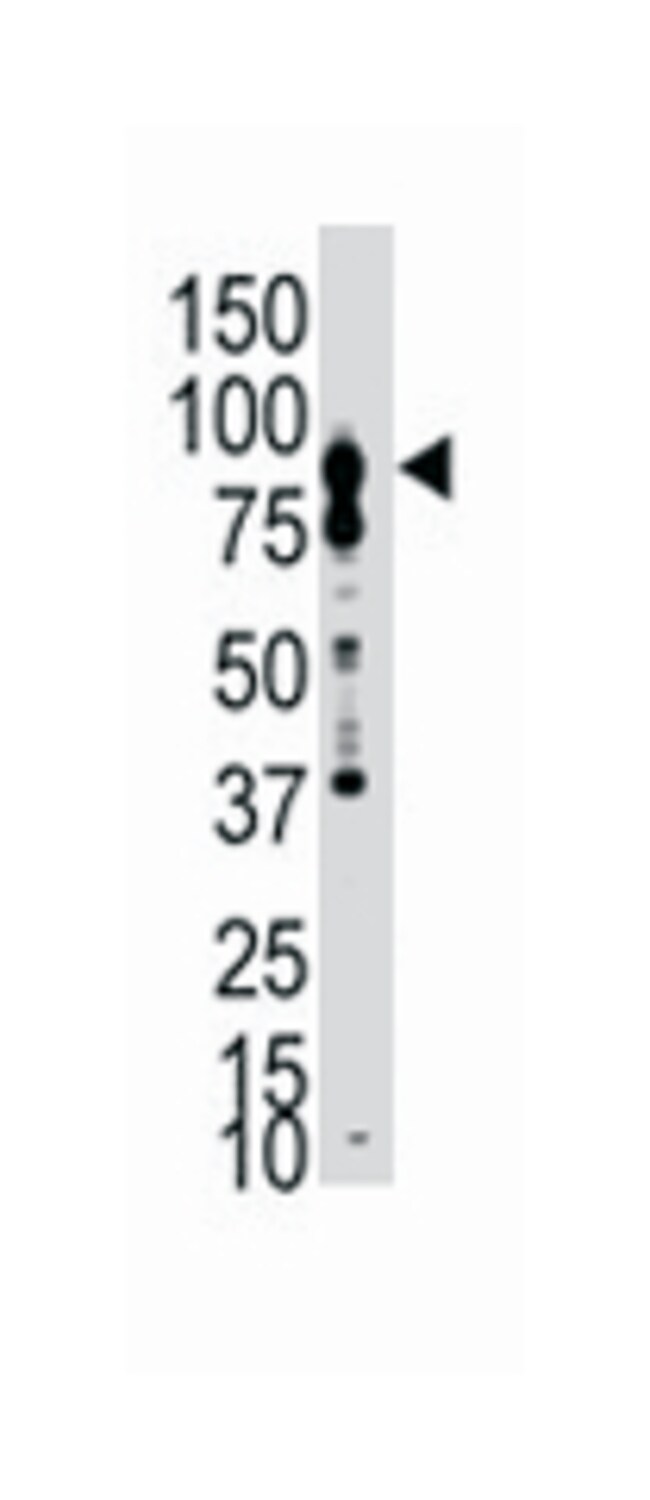
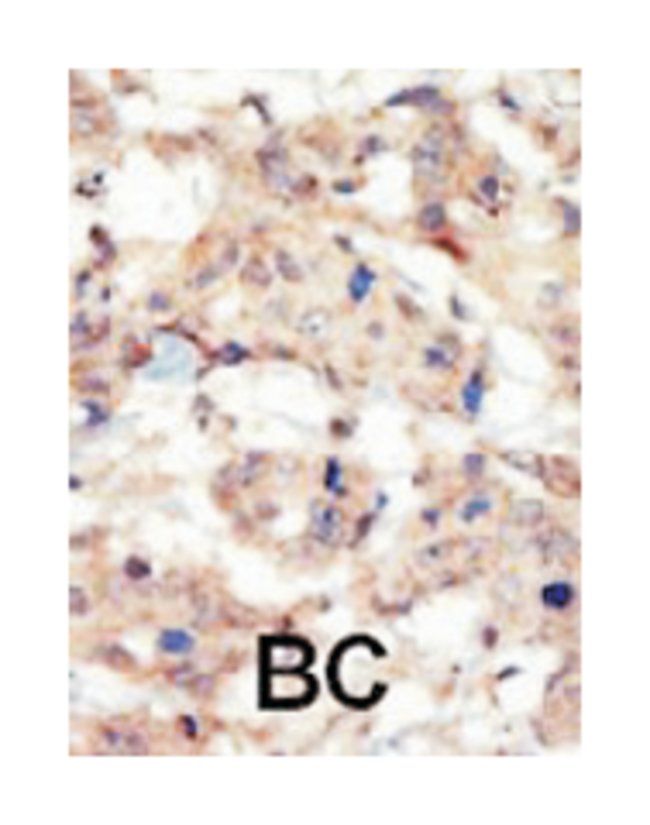
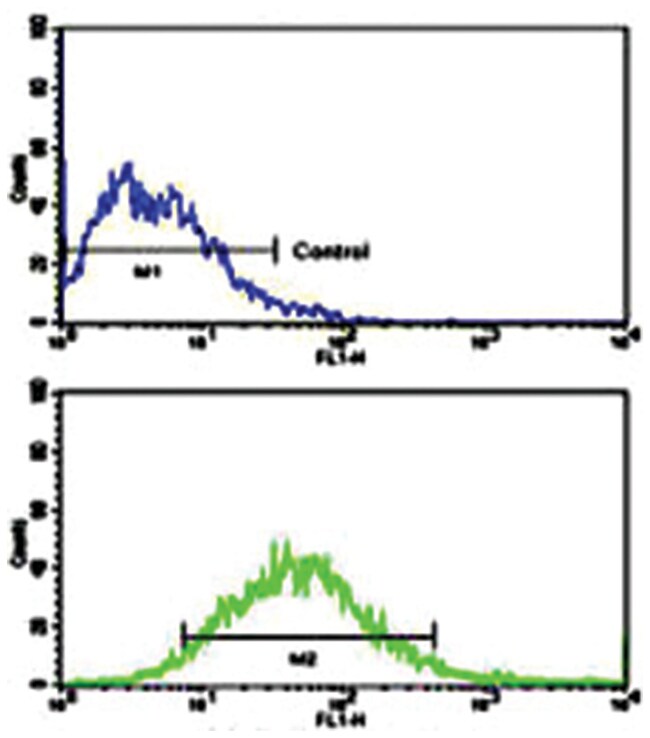
EPHB6 Rabbit anti-Human, Polyclonal Antibody, Abnova™
Rabbit polyclonal antibody raised against synthetic peptide of EPHB6.
Brand: Abnova PAB2074.400uL
This item is not returnable.
View return policy
Description
Ephrin receptors and their ligands, the ephrins, mediate numerous developmental processes, particularly in the nervous system. Based on their structures and sequence relationships, ephrins are divided into the ephrin-A (EFNA) class, which are anchored to the membrane by a glycosylphosphatidylinositol linkage, and the ephrin-B (EFNB) class, which are transmembrane proteins. The Eph family of receptors are divided into 2 groups based on the similarity of their extracellular domain sequences and their affinities for binding ephrin-A and ephrin-B ligands. Ephrin receptors make up the largest subgroup of the receptor tyrosine kinase (RTK) family. The ephrin receptor encoded by this gene lacks the kinase activity of most receptor tyrosine kinases and binds to ephrin-B ligands. [provided by RefSeq
Specifications
| EPHB6 | |
| Polyclonal | |
| Rabbit polyclonal antibody raised against synthetic peptide of EPHB6. | |
| In PBS (0.09% sodium azide) | |
| NP_004436;O15197 | |
| EPHB6 | |
| A synthetic peptide (conjugated with KLH) corresponding to N-terminus of human EPHB6. | |
| 400 μL | |
| Primary | |
| Human | |
| Liquid |
| ELISA, Flow Cytometry, Immunohistochemistry (Paraffin), Western Blot | |
| Unconjugated | |
| Western Blot (1:1000) Immunohistochemistry (1:50-100) Flow cytometry (1:10-50) The optimal working dilution should be determined by the end user. | |
| EPHB6 | |
| HEP/MGC129910/MGC129911 | |
| Rabbit | |
| Protein G purification | |
| RUO | |
| 2051 | |
| Store at 4°C. For long term storage store at -20°C. Aliquot to avoid repeated freezing and thawing. |
Product Content Correction
Your input is important to us. Please complete this form to provide feedback related to the content on this product.
Product Title
For Research Use Only
Spot an opportunity for improvement?Share a Content Correction