missing translation for 'onlineSavingsMsg'
Learn More
Learn More
Invitrogen™ PRAK Polyclonal Antibody

Description
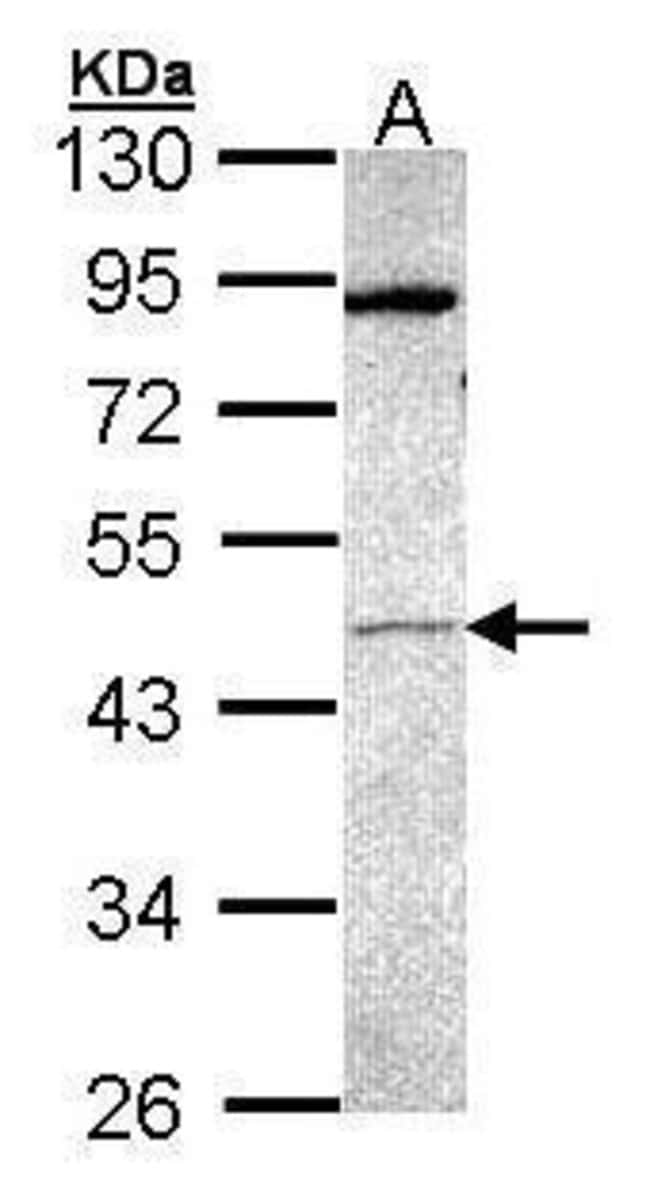
Recommended positive controls: HepG2. Predicted reactivity: Mouse (98%), Rat (96%), Zebrafish (92%), Pig (98%), Chicken (97%), Rhesus Monkey (99%), Bovine (97%). Store product as a concentrated solution. Centrifuge briefly prior to opening the vial.
MAPKAPK5 (PRAK) is activated in response to cellular stress and pro-inflammatory cytokines. Activity of this kinase is regulated by p38 alpha and p38 beta. The protein encoded by PRAK is a member of the serine/threonine kinase family. In response to cellular stress and proinflammatory cytokines, this kinase is activated through its phosphorylation by MAP kinases including MAPK1/ERK, MAPK14/p38-alpha, and MAPK11/p38-beta. In vitro, this kinase phosphorylates heat shock protein HSP27 at its physiologically relevant sites. Two alternately spliced transcript variants of PRAK encoding distinct isoforms have been reported.

Specifications
Specifications
| Antigen | PRAK |
| Applications | Western Blot |
| Classification | Polyclonal |
| Concentration | 0.62 mg/mL |
| Conjugate | Unconjugated |
| Formulation | 0.1M tris glycine with 10% glycerol and 0.01% thimerosal; pH 7 |
| Gene | MAPKAPK5 |
| Gene Accession No. | Q8IW41 |
| Gene Alias | MAP kinase-activated protein kinase 5; MAPK-activated protein kinase 5; MAPKAP kinase 5; Mapkapk5; MAPKAP-K5; MAPKAPK-5; mitogen-activated protein kinase-activated protein kinase 5; MK5; MK-5; p38-regulated/activated protein kinase; PRAK |
| Gene Symbols | MAPKAPK5 |
| Show More |
Product Title
By clicking Submit, you acknowledge that you may be contacted by Fisher Scientific in regards to the feedback you have provided in this form. We will not share your information for any other purposes. All contact information provided shall also be maintained in accordance with our Privacy Policy.
Spot an opportunity for improvement?