Learn More
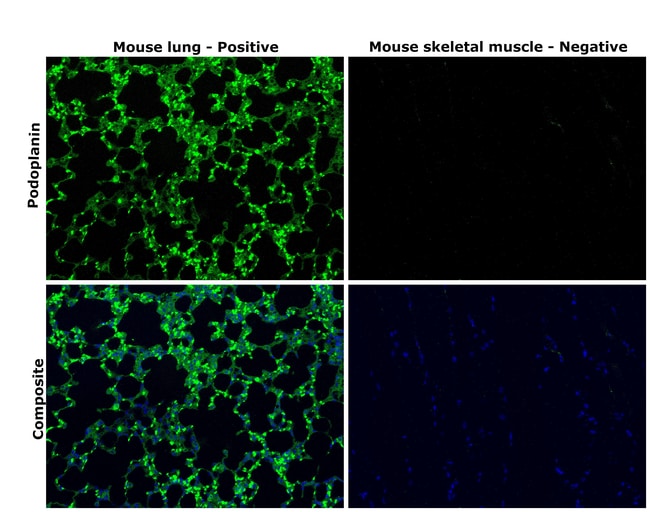
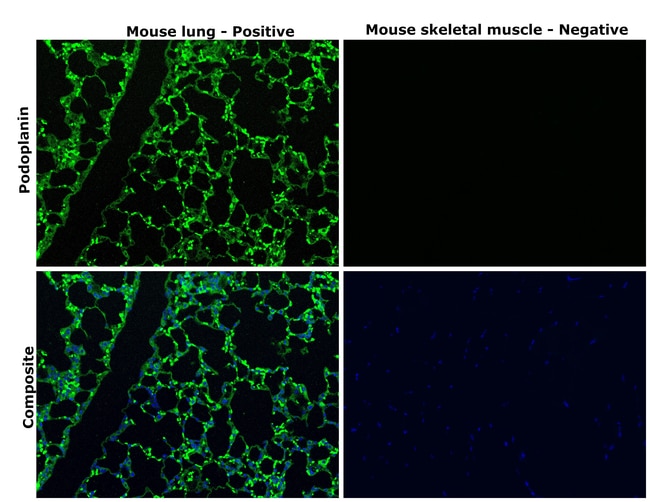
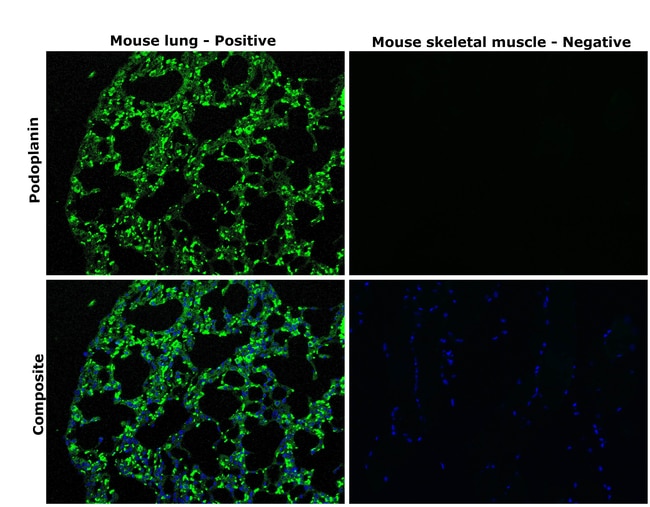
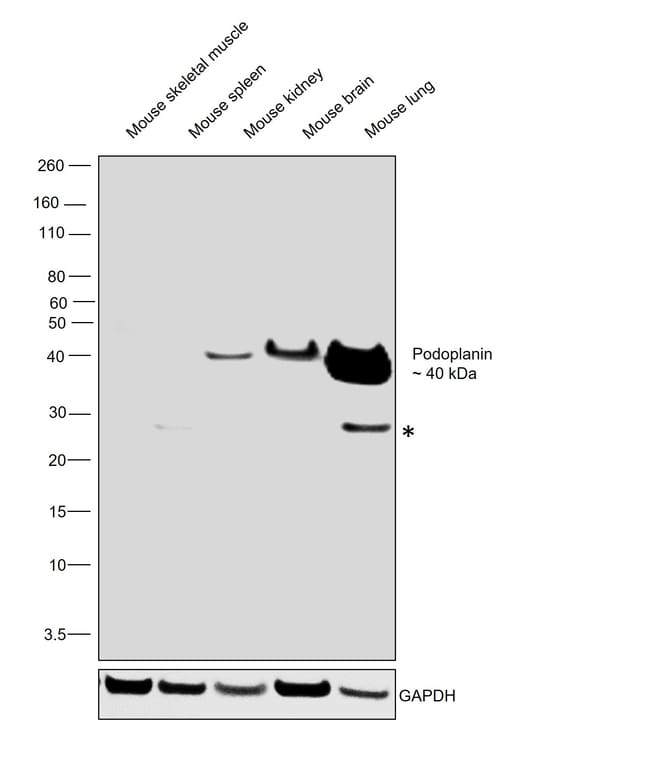


Invitrogen™ Podoplanin Monoclonal Antibody (eBio8.1.1 (8.1.1)), eBioscience™, Invitrogen™
Description
Description: The 8.1.1 monoclonal antibody reacts with mouse podoplanin (T1a, gp38, aggrus), a 43 kDa transmembrane glycoprotein, named for its expression in kidney glomerular epithelial cells (podocytes). In addition, Podoplanin is expressed in epithelial and mesothelial cells such as intestinal epithelium, alveolar type I cells, podocytes, and mesothelium of the visceral peritoneum. It was also shown to be a potent marker for lymphatic endothelium. Podoplanin is also expressed by subcapsular epithelial cells of the murine thymus. Mice deficient in Podoplanin die at birth because of a respiratory defect and congenital lymphedema due to a failure in lymphatic pattern formation. Applications Reported: This eBio8.1.1 (8.1.1) antibody has been reported for use in flow cytometric analysis, immunoprecipitation, immunoblotting (WB), and immunohistochemical staining. Applications Tested: This eBio8.1.1 (8.1.1) antibody has been tested by flow cytometric analysis of TE-71 cells. This can be used at less than or equal to 0.5 μg per test. A test is defined as the amount (μg) of antibody that will stain a cell sample in a final volume of 100 μL. Cell number should be determined empirically but can range from 10^5 to 10^8 cells/test. It is recommended that the antibody be carefully titrated for optimal performance in the assay of interest. Purity: Greater than 90%, as determined by SDS-PAGE.

Specifications
Specifications
| Antigen | Podoplanin |
| Applications | Flow Cytometry, Immunohistochemistry (Paraffin), Immunoprecipitation, Western Blot |
| Classification | Monoclonal |
| Clone | eBio8.1.1 (8.1.1) |
| Concentration | 0.5 mg/mL |
| Conjugate | Unconjugated |
| Formulation | PBS with 0.09% sodium azide; pH 7.2 |
| Gene | PDPN |
| Gene Accession No. | Q62011, Q64294 |
| Gene Alias | 29kDa cytosolic podoplanin intracellular domain; Aggrus; CTA-520D8.1; E11; E11 antigen epitope; epithelial cell surface transmembrane protein antigen; glycoprotein 36; Glycoprotein 38; glycoprotein, 36-KD; GP36; Gp38; GP40; HT1A-1; hT1alpha-1; hT1alpha-2; lung type I cell membrane associated glycoprotein; lung type-I cell membrane-associated glycoprotein (T1A-2); Ots8; OTS-8; OTTHUMP00000009640; OTTHUMP00000044504; PA2.26; PA2.26 antigen; PDPN; PICD; Podoplanin; PSEC0003; PSEC0025; pulmonary type I alveolar epithelial cell transmembrane differentiation marker; RANDAM-2; RP23-348F1.2; RTI140; RTI40; T1a; T1A2; T1A-2; T1alpha; T1-alpha; TI1A; Transmembrane glycoprotein E11; type I cell 40 kDa protein |
| Show More |
For Research Use Only.
By clicking Submit, you acknowledge that you may be contacted by Fisher Scientific in regards to the feedback you have provided in this form. We will not share your information for any other purposes. All contact information provided shall also be maintained in accordance with our Privacy Policy.