missing translation for 'onlineSavingsMsg'
Learn More
Learn More
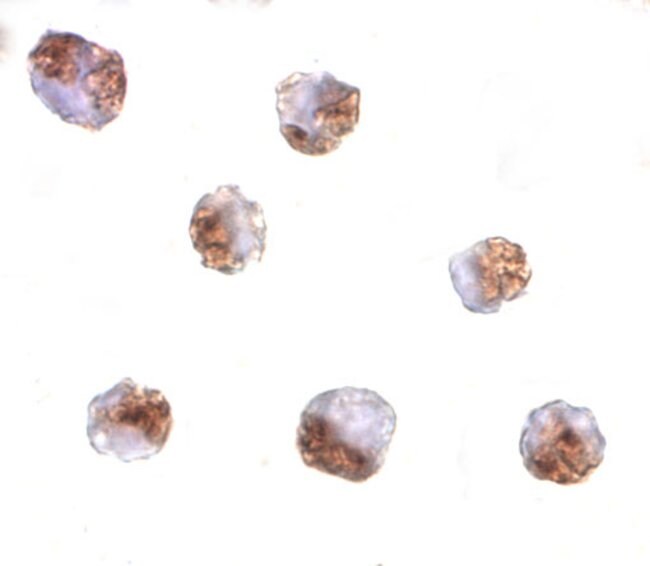
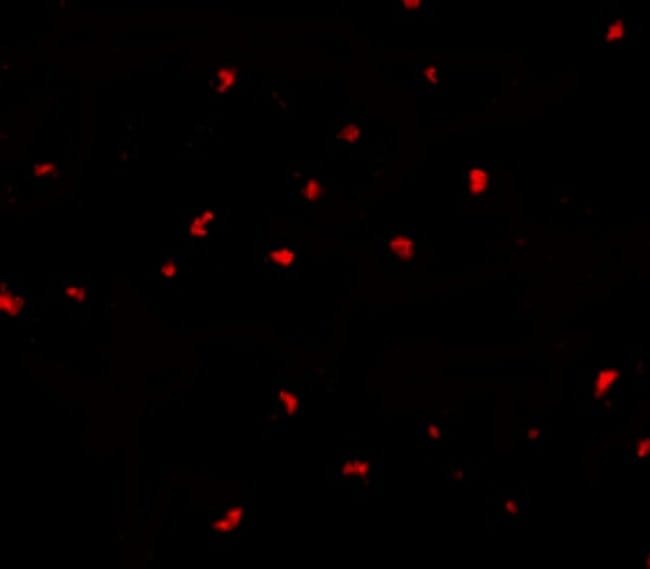
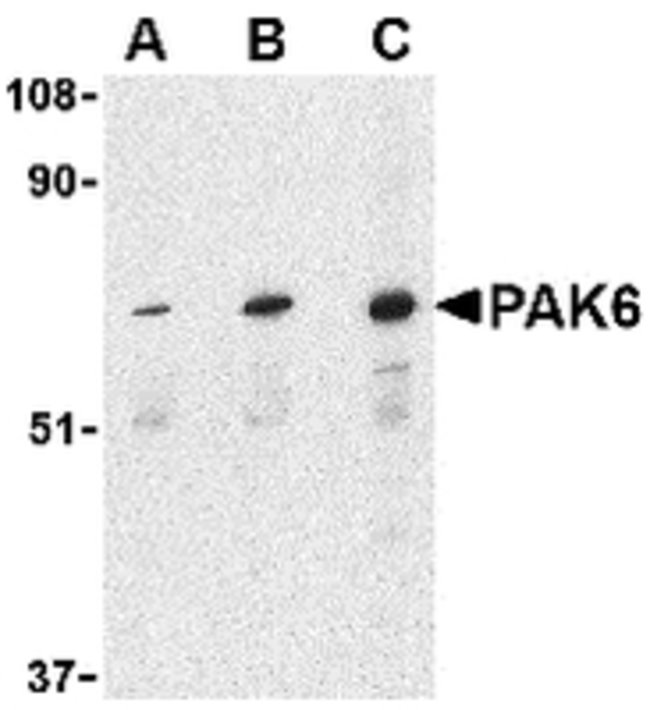
Invitrogen™ PAK6 Polyclonal Antibody

Description
A suggested positive control is Raji cell lysate. PA5-20231 can be used with blocking peptide PEP-0367.
PAK6 is a serine/threonine kinase expressed in the testis and prostate. It associates with both the estrogen and androgen receptors. The p21-activated kinases (PAKs) are serine-threonine kinases that bind to the active forms of Cdc42 and Rac. They are divided into two groups, the first of which include PAK1, 2 and 3, and can be activated by Cdc42/Rac binding. Group 1 PAKs contain an autoinhibitory domain whose activity is regulated by Cdc42/Rac binding. The group 1 PAKs are known to be involved in cellular processes such as gene transcription, apoptosis, and cell morphology and motility. Much less is known about the second group, which includes PAK4, 5 and 6. These proteins are not activated by Cdc42/Rac binding. Later experiments have shown it to be activated by MAP kinase kinase 6 and p38 MAP kinase, suggesting that PAK6 may play a role in the cellular response to stress-related signals.

Specifications
Specifications
| Antigen | PAK6 |
| Applications | Western Blot, Immunocytochemistry |
| Classification | Polyclonal |
| Concentration | 1 mg/mL |
| Conjugate | Unconjugated |
| Formulation | PBS with 0.02% sodium azide |
| Gene | Pak6 |
| Gene Accession No. | Q9NQU5 |
| Gene Alias | 4732456M09; p21 (CDKN1A)-activated kinase 6; p21 (RAC1) activated kinase 6; p21 protein (Cdc42/Rac)-activated kinase 6; p21(CDKN1A)-activated kinase 6; p21-activated kinase 6; PAK5; PAK-5; PAK6; PAK-6; Serine/threonine-protein kinase PAK 6 |
| Gene Symbols | Pak6 |
| Show More |
Product Title
By clicking Submit, you acknowledge that you may be contacted by Fisher Scientific in regards to the feedback you have provided in this form. We will not share your information for any other purposes. All contact information provided shall also be maintained in accordance with our Privacy Policy.
Spot an opportunity for improvement?