missing translation for 'onlineSavingsMsg'
Learn More
Learn More
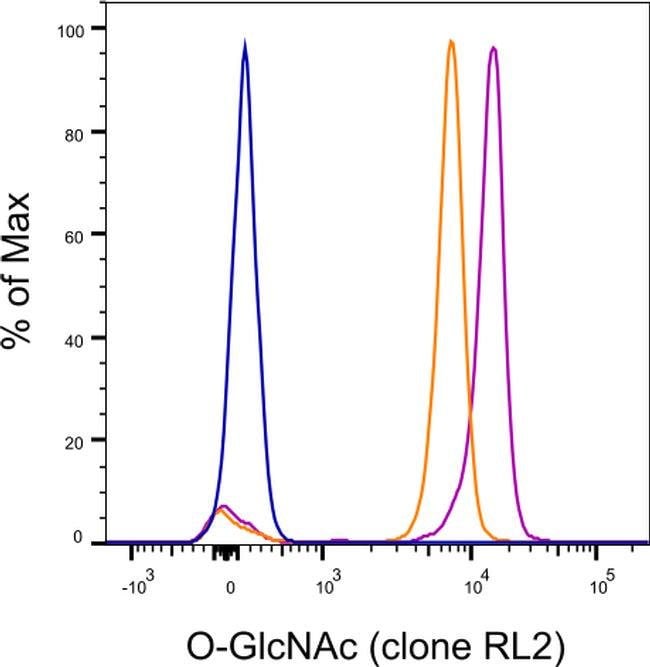
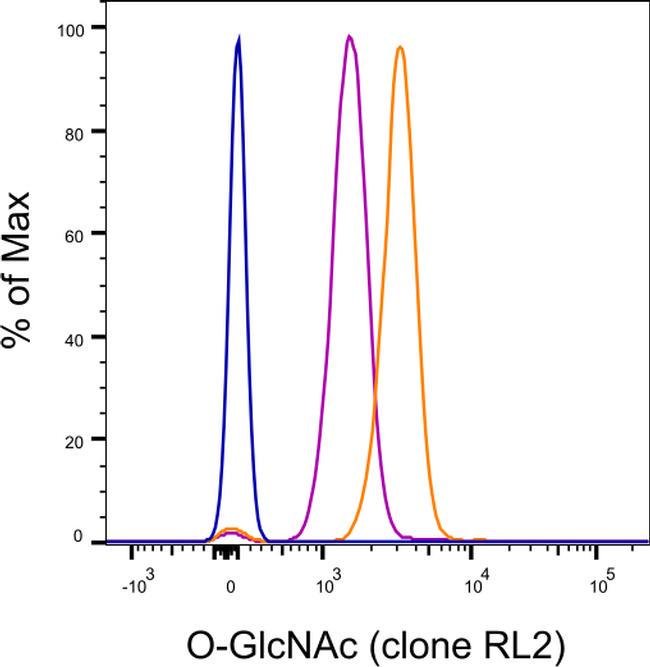
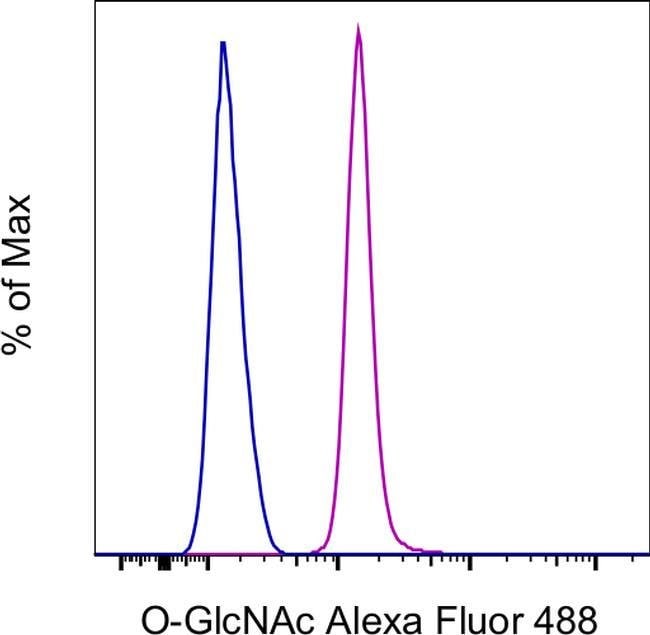
Invitrogen™ O-GlcNAc Monoclonal Antibody (RL2), Alexa Fluor™ 488, eBioscience™, Invitrogen™

Mouse Monoclonal Antibody
£161.00 - £349.00
Specifications
| Antigen | O-GlcNAc |
|---|---|
| Clone | RL2 |
| Concentration | 5 μL/Test |
| Applications | Flow Cytometry |
| Classification | Monoclonal |
| Product Code | Brand | Quantity | Price | Quantity & Availability | |||||
|---|---|---|---|---|---|---|---|---|---|
| Product Code | Brand | Quantity | Price | Quantity & Availability | |||||
|
16321014
|
Invitrogen™
53-9793-41 |
25 Tests |
£161.00
Pack of 25 |
Please sign in to purchase this item. Need a web account? Register with us today! | |||||
|
16331014
|
Invitrogen™
53-9793-42 |
100 Tests |
£349.00
Pack of 100 |
Please sign in to purchase this item. Need a web account? Register with us today! | |||||
Description
Description: This RL2 monoclonal antibody recognizes proteins with O-N-acetylglucosamine (O-GlcNAc) glycosylation. It was originally developed by immunizing mice with the rat liver nuclear envelopes containing nuclear pore complexes. The RL2 clone has been successfully used in Western blot, immunofluorescence, immunoprecipitation, and flow cytometry in a wide variety of mammalian cells. Applications Reported: This RL2 antibody has been reported for use in intracellular staining followed by flow cytometric analysis. Applications Tested: This RL2 antibody has been pre-diluted and tested by intracellular staining followed by flow cytometric analysis of normal human peripheral blood cells using the Foxp3/Transcription Factor Staining Buffer Set (Product # 00-5523-00) and protocol. Please refer to Best Protocols: Protocol B: One step protocol for (nuclear) intracellular proteins located under the Resources Tab online. This may be used at 5 μL (0.5 μg) per test. A test is defined as the amount (μg) of antibody that will stain a cell sample in a final volume of 100 μL. Cell number should be determined empirically but can range from 10^5 to 10^8 cells/test. Excitation: 488 nm; Emission: 519 nm; Laser: Blue Laser
O-linked N-acetylglucosamine (O-GlcNAc) is a posttranslational modification characterized by the attachment of N-acetylglucosamine to specific serine or threonine residues. Unlike other protein glycosylations, O-GlcNAc modifications occur within the nucleus and cytoplasm. They are found on many cellular proteins, including nuclear pore, oncogene, cytoskeletal, heat shock, viral and transcription regulatory proteins. O-GlcNAc glycosylations are thought to obscure phosphorylation sites, counteracting phosphorylation-dependent signaling pathways and protein interactions.Specifications
| O-GlcNAc | |
| 5 μL/Test | |
| Monoclonal | |
| Liquid | |
| RUO | |
| PBS with BSA and 0.09% sodium azide; pH 7.2 | |
| GlcNAc; HINCUT-1; HRNT1; O-GLCNAC; O-GlcNAc transferase p110 subunit; O-GlcNAc transferase subunit p110; OGT; O-linked N-acetylglucosamine (GlcNAc) transferase; O-linked N-acetylglucosamine (GlcNAc) transferase (UDP-N-acetylglucosamine:polypeptide-N-acetylglucosaminyl transferase); O-linked N-acetylglucosamine transferase 110 kDa subunit; UDP-N-acetylglucosamine:polypeptide-N-acetylglucosaminyl transferase; UDP-N-acetylglucosamine--peptide N-acetylglucosaminyltransferase 110 kDa subunit; uridinediphospho-N-acetylglucosamine:polypeptide beta-N-acetylglucosaminyl transferase | |
| OGT | |
| IgG1 κ | |
| Affinity chromatography | |
| Antibody |
| RL2 | |
| Flow Cytometry | |
| Alexa Fluor 488 | |
| Mouse | |
| Chemical | |
| O15294 | |
| 8473 | |
| Rat liver nuclear envelopes. | |
| Primary | |
| 4°C, store in dark, DO NOT FREEZE! | |
| OGT |
Spot an opportunity for improvement?Share a Content Correction
Product Content Correction
Your input is important to us. Please complete this form to provide feedback related to the content on this product.
Product Title