missing translation for 'onlineSavingsMsg'
Learn More
Learn More
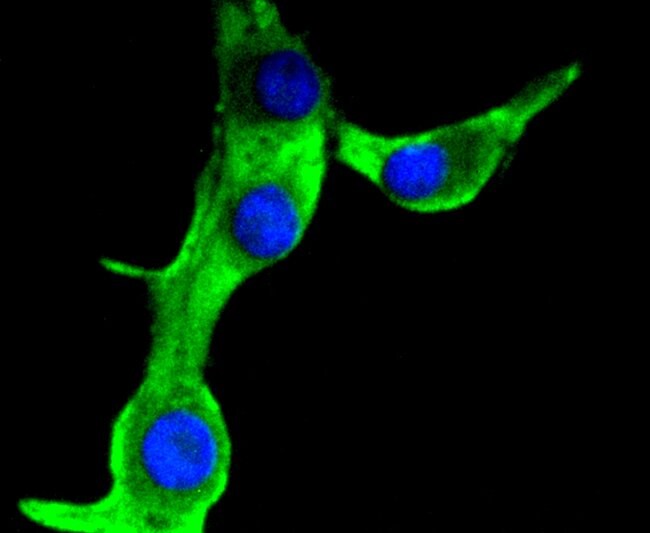
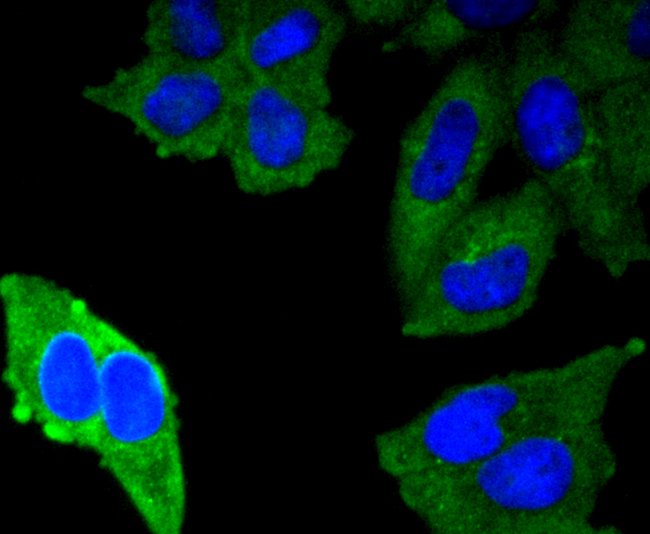
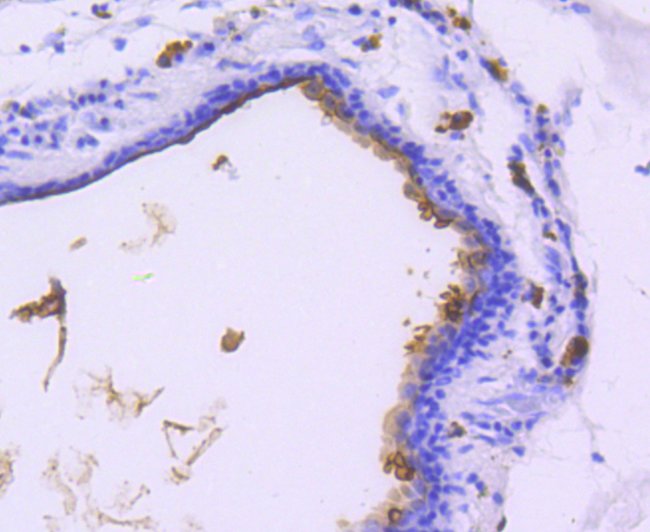
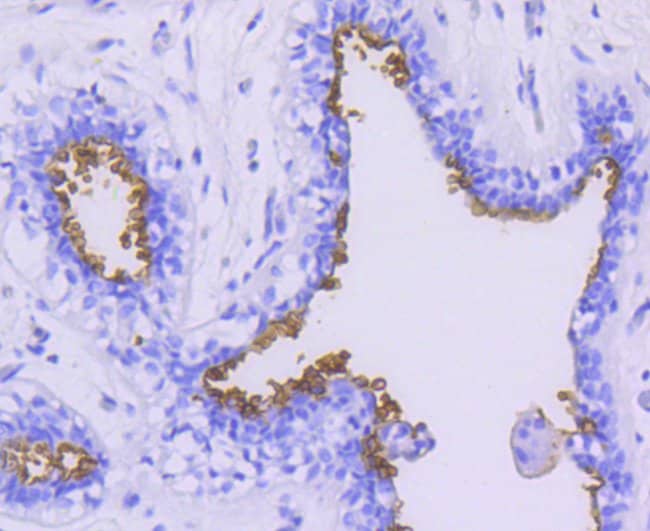
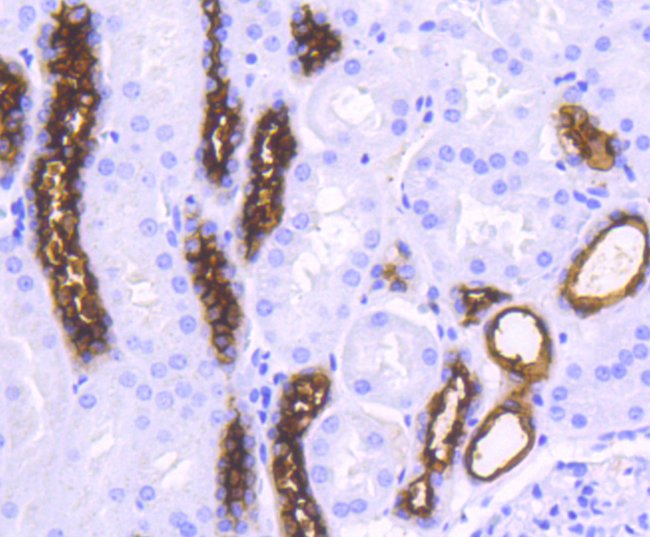
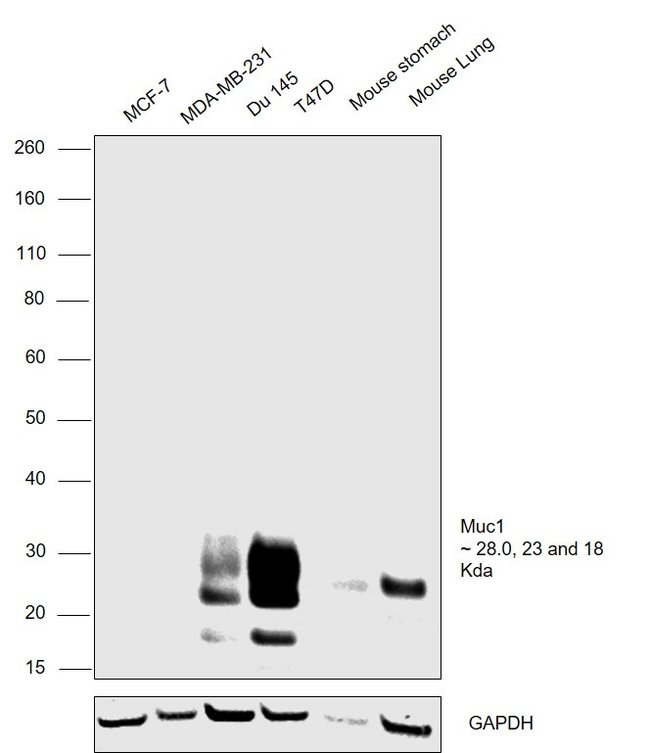
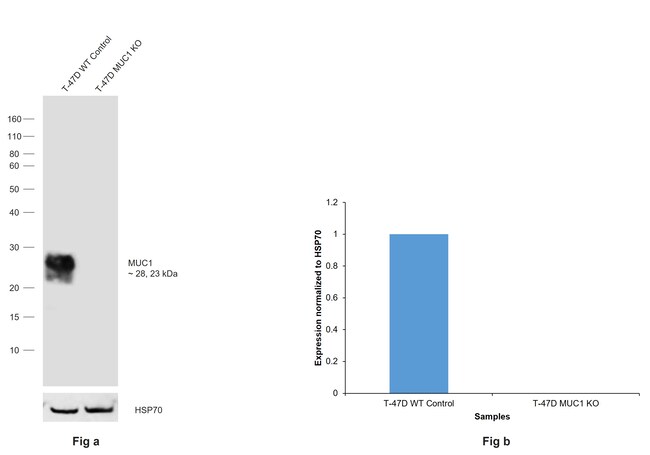
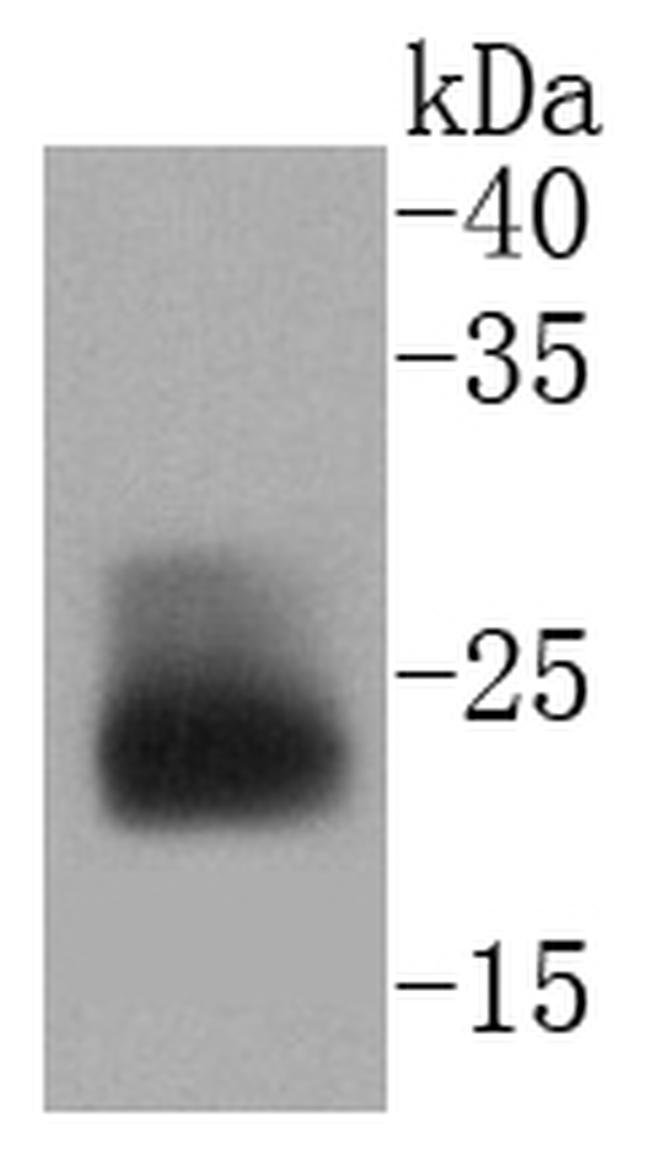
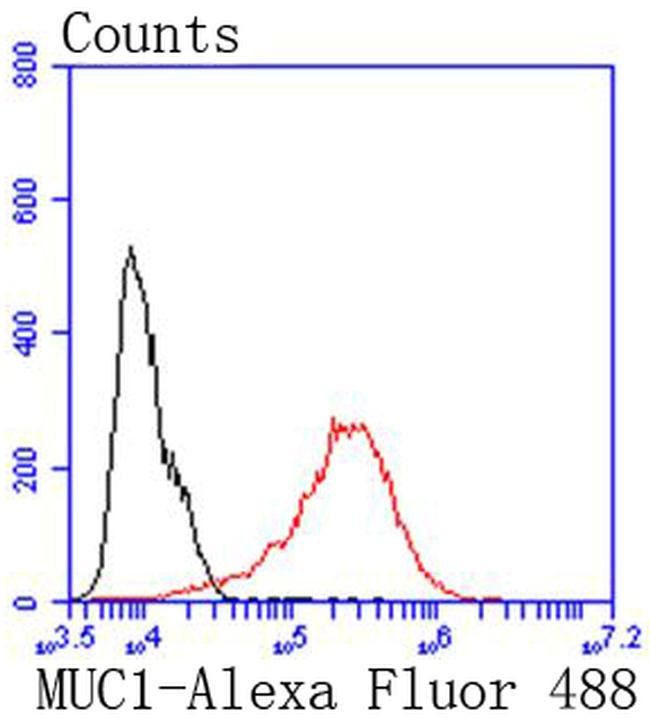
Invitrogen™ MUC1 Recombinant Rabbit Monoclonal Antibody (SN06-80)

Rabbit Recombinant Monoclonal Antibody
Brand: Invitrogen™ MA532265
This item is not returnable.
View return policy
Description
Recombinant rabbit monoclonal antibodies are produced using in vitro expression systems. The expression systems are developed by cloning in the specific antibody DNA sequences from immunoreactive rabbits. Then, individual clones are screened to select the best candidates for production. The advantages of using recombinant rabbit monoclonal antibodies include: better specificity and sensitivity, lot-to-lot consistency, animal origin-free formulations, and broader immunoreactivity to diverse targets due to larger rabbit immune repertoire.
MUC1 (Mucin 1, Episialin, MAM-6, CA 15-3, PEM and EMA) is a large cell surface mucin glycoprotein expressed by most glandular and ductal epithelial cells and some hematopoietic cell lineages. MUC1 is a transmembrane glycoprotein with a large mucin-like extracellular domain that matures through several intermediate forms generated by proteolysis, and sequential addition and processing of numerous O-linked glycans that are heavily sialylated. MUC1 is highly polymorphic and each allele encodes a product that contains a different number of repeats (between 30 and 90) leading to large differences in molecular weight of the protein. MUC1 is expressed on most secretory epithelium, including mammary gland and some hematopoietic cells, and is expressed abundantly in >90% breast carcinomas and metastases. Transgenic MUC1 has been shown to associate with all four cebB receptors and localize with erbB1 (EGFR) in lactating glands. The MUC1 gene contains seven exons and produces several different alternatively spliced variants. Overexpression, aberrant intracellular localization, and changes in glycosylation of the MUC1 protein have been associated with carcinomas. Multiple alternatively spliced transcript variants that encode different isoforms of the MUC1 gene have been reported, but the full-length nature of only some has been determined. Transgenic MUC-1 has been shown to associate with all four cebB receptors and localize with erbB1 (EGFR) in lactating glands.
Specifications
| MUC1 | |
| Recombinant Monoclonal | |
| 1 mg/mL | |
| TBS with 0.05% BSA, 40% Glycerol and 0.05% sodium azide; pH 7.4 | |
| P15941 | |
| MUC1 | |
| Synthetic peptide within Human MUC1 aa 1,206-1,255. | |
| 100 μL | |
| Primary | |
| Human | |
| Antibody | |
| IgG |
| Flow Cytometry, Immunohistochemistry (Paraffin), Western Blot, Immunocytochemistry, Western Blot | |
| SN06-80 | |
| Unconjugated | |
| MUC1 | |
| ADMCKD; ADMCKD1; Breast carcinoma-associated antigen DF3; CA 15-3; Cancer antigen 15-3; carcinoma-associated mucin; CD227; DF3 antigen; EMA; Episialin; H23 antigen; H23AG; J19; KL-6; Krebs von den Lungen-6; MAM6; MCD; MCKD; MCKD1; Medullary cystic kidney disease, autosomal dominant; Muc1; MUC-1; MUC-1/SEC; MUC-1/X; MUC1/ZD; MUC1-alpha; MUC1-beta; MUC1-CT; MUC1-NT; mucin 1, cell surface associated; mucin 1, transmembrane; Mucin1; mucin-1; Mucin-1 subunit alpha; Mucin-1 subunit beta; peanut-reactive urinary mucin; PEM; PEMT; Polymorphic epithelial mucin; PUM; tumor associated epithelial mucin; tumor-associated epithelial membrane antigen; Tumor-associated mucin | |
| Rabbit | |
| Protein A | |
| RUO | |
| 4582 | |
| Store at 4°C short term. For long term storage, store at -20°C, avoiding freeze/thaw cycles. | |
| Liquid |
Product Content Correction
Your input is important to us. Please complete this form to provide feedback related to the content on this product.
Product Title
Spot an opportunity for improvement?Share a Content Correction