missing translation for 'onlineSavingsMsg'
Learn More
Learn More
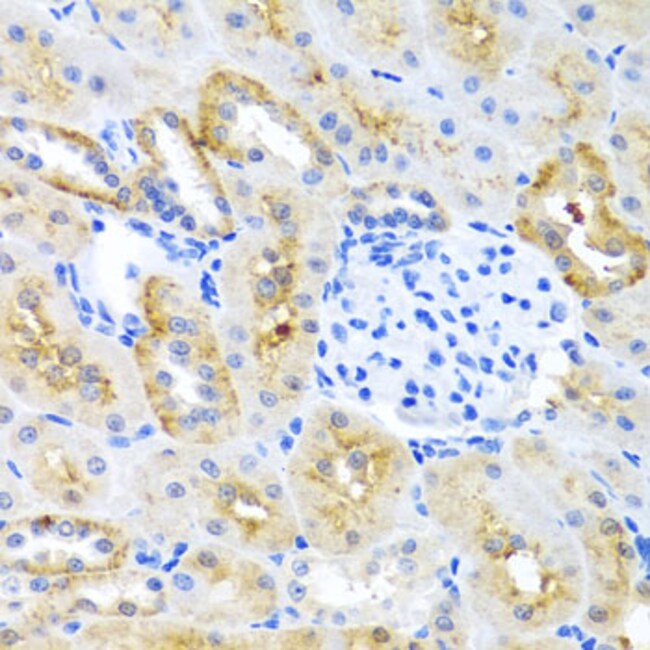
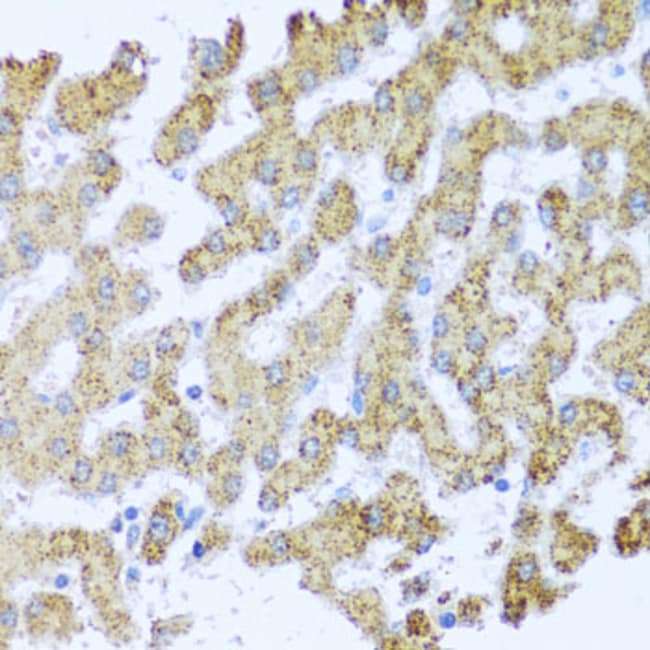
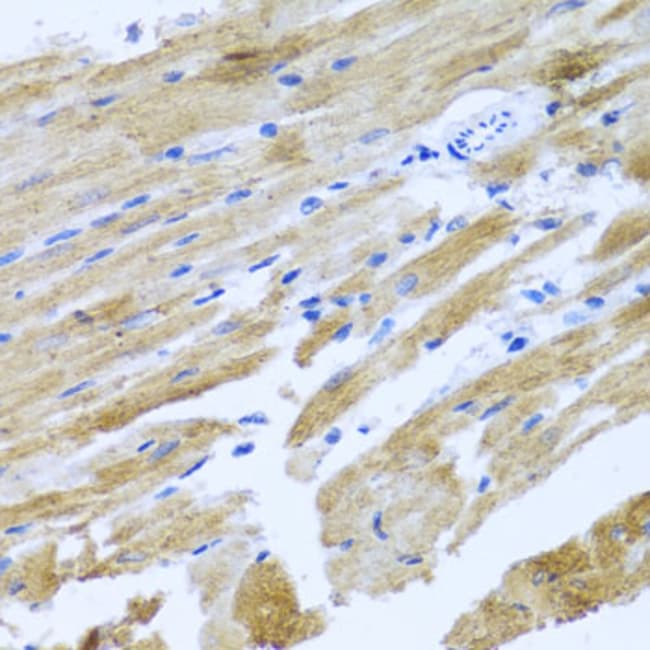
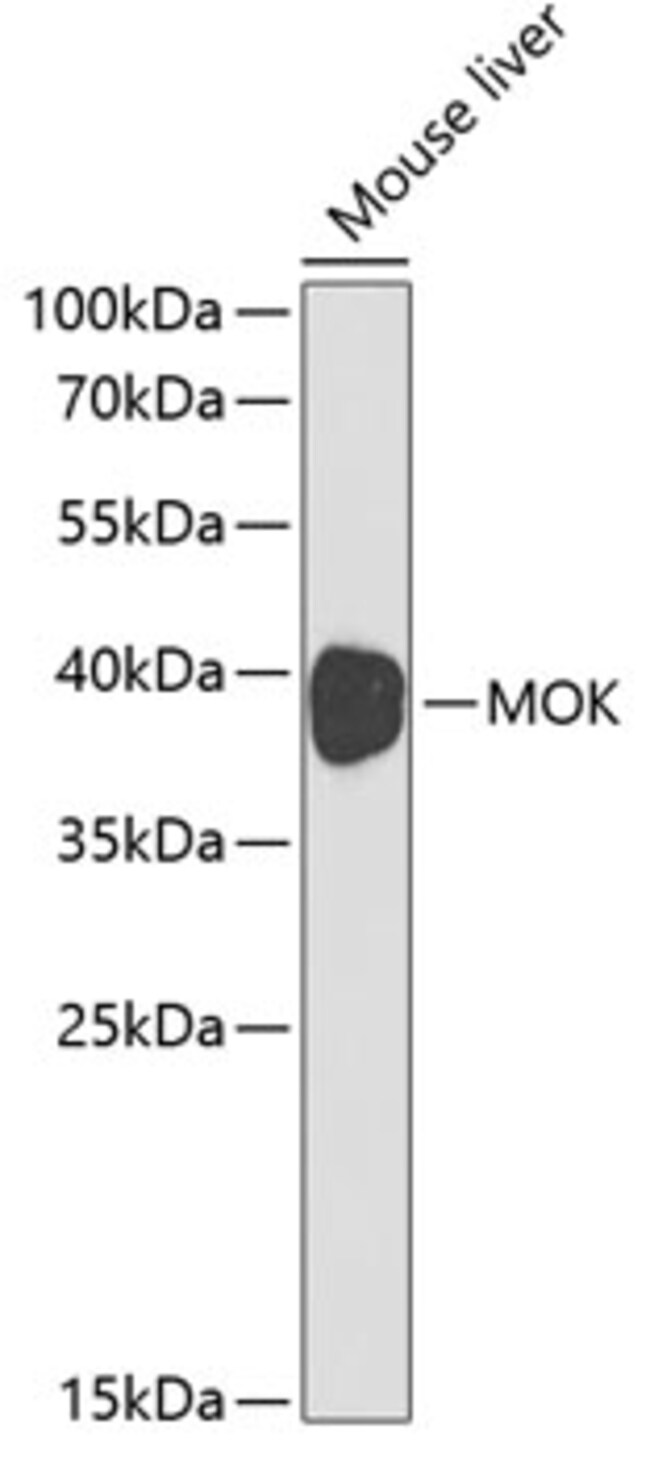
Invitrogen™ MOK Polyclonal Antibody

Description
Immunogen sequence: MKNYKAIGKI GEGTFSEVMK MQSLRDGNYY ACKQMKQRFE SIEQVNNLRE IQALRRLNPH PNILMLHEVV FDRKSGSLAL ICELMDMNIY ELIRGRRYPL SEKKIMHYMY QLCKSLDHIH RNGIFHRDVK PENILIKQDV LKLGDFGSCR SVYSKQPYTE YISTRWYRAP ECLLTDGFYT YKMDLWSAGC VFYEIASLQP LFPGVNELDQ ISKIHDVIGT PAQKILTKFK; Positive Samples: Mouse liver; Cellular Location: Cytoplasm.
MOK is able to phosphorylate several exogenous substrates and to undergo autophosphorylation. It negatively regulates cilium length in a cAMP and mTORC1 signaling-dependent manner.

Specifications
Specifications
| Antigen | MOK |
| Applications | ELISA, Immunohistochemistry (Paraffin), Western Blot |
| Classification | Polyclonal |
| Concentration | 0.47 mg/mL |
| Conjugate | Unconjugated |
| Formulation | PBS with 50% glycerol and 0.02% sodium azide; pH 7.3 |
| Gene | MOK |
| Gene Accession No. | Q9UQ07, Q9WVS4 |
| Gene Alias | MAPK/MAK/MRK overlapping kinase; MAPK/MAK/MRK/ overlapping kinase; MOK; MOK protein kinase; Rage; RAGE1; RAGE-1; renal cell carcinoma antigen; renal tumor antigen; renal tumor antigen 1; Serine/threonine kinase 30; soluble RAGE; STK30; T/STK 30 |
| Gene Symbols | MOK |
| Show More |
Product Title
By clicking Submit, you acknowledge that you may be contacted by Fisher Scientific in regards to the feedback you have provided in this form. We will not share your information for any other purposes. All contact information provided shall also be maintained in accordance with our Privacy Policy.
Spot an opportunity for improvement?