missing translation for 'onlineSavingsMsg'
Learn More
Learn More

Invitrogen™ KLHL1 Polyclonal Antibody

Description
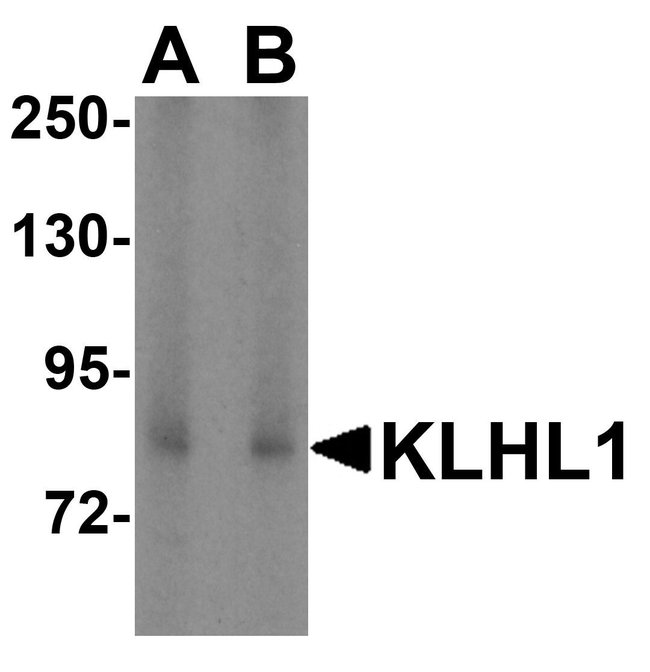
A suggested positive control is human brain tissue lysate. PA5-19998 can be used with blocking peptide PEP-0120.
The mammalian Kelch-like 1 (KLHL1) was initially discovered as a homolog to the Drosophila Kelch gene that is highly expressed in several brain tissues. The predicted protein domain structure of KLHL1 is characteristic of a number of proteins that bind actin, form dimers, and often act as actin-organizing proteins. Based on the presence of anti-sense RNA that spans the transcription and translation start sites as well as the first splice site of KLHL1 in brain tissue of individuals suffering from the neurodegenerative disorder spinocerebellar ataxia type 8 (SCA8), it has been suggested that KLHL1 is involved this disease and that regulation of KLHL1 protein may be affected by antisense RNA expression.

Specifications
Specifications
| Antigen | KLHL1 |
| Applications | Immunohistochemistry, Western Blot |
| Classification | Polyclonal |
| Concentration | 1 mg/mL |
| Conjugate | Unconjugated |
| Formulation | PBS with 0.02% sodium azide |
| Gene | KLHL1 |
| Gene Accession No. | Q9NR64 |
| Gene Alias | FLJ30047; kelch like family member 1; kelch-l like; kelch-like 1; kelch-like family member 1; kelch-like protein 1; KIAA1490; Klhl1; Mayven-related protein 2; mKIAA1490; MRP2; RP11-394C23.1 |
| Gene Symbols | KLHL1 |
| Show More |
Product Title
By clicking Submit, you acknowledge that you may be contacted by Fisher Scientific in regards to the feedback you have provided in this form. We will not share your information for any other purposes. All contact information provided shall also be maintained in accordance with our Privacy Policy.
Spot an opportunity for improvement?