missing translation for 'onlineSavingsMsg'
Learn More
Learn More
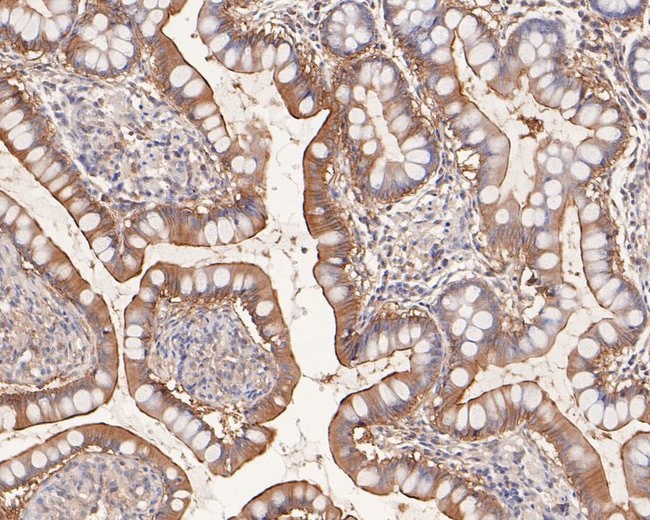
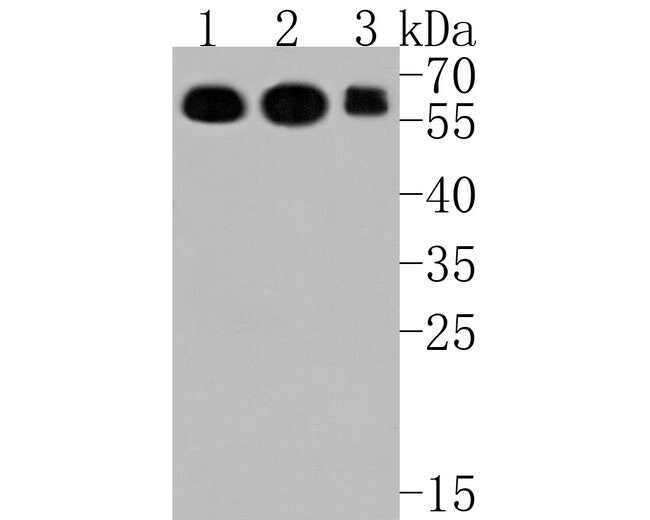
Invitrogen™ Kir7.1 (KCNJ13) Polyclonal Antibody

Description
Positive Control: Rat brain tissue lysate, mouse brain tissue lysate, mouse cerebellum tissue lysate, human small intestine tissue. Subcellular Location: Membrane.
Inward rectifier potassium channels are characterized by a greater tendency to allow potassium to flow into the cell rather than out of it. Their voltage dependence is regulated by the concentration of extracellular potassium; as external potassium is raised, the voltage range of the channel opening shifts to more positive voltages. The inward rectification is mainly due to the blockage of outward current by internal magnesium. KCNJ13 has a very low single channel conductance, low sensitivity to block by external barium and cesium, and no dependence of its inward rectification properties on the internal blocking particle magnesium.

Specifications
Specifications
| Antigen | Kir7.1 (KCNJ13) |
| Applications | Immunohistochemistry (Paraffin), Western Blot |
| Classification | Polyclonal |
| Concentration | 1 mg/mL |
| Conjugate | Unconjugated |
| Formulation | TBS with 0.2% BSA, 50% glycerol and 0.05% sodium azide; pH 7.4 |
| Gene | KCNJ13 |
| Gene Accession No. | O60928, O70617, P86046 |
| Gene Alias | Inward rectifier K(+) channel Kir7.1; inward rectifier potassium channel 13; Kcnj13; KIR1.4; KIR7.1; LCA16; Potassium channel, inwardly rectifying subfamily J member 13; potassium channel, inwardly rectifying subfamily J, member 13; potassium inwardly-rectifying channel, subfamily J, member 13; potassium voltage-gated channel subfamily J member 13; SVD |
| Gene Symbols | KCNJ13 |
| Show More |
Product Title
By clicking Submit, you acknowledge that you may be contacted by Fisher Scientific in regards to the feedback you have provided in this form. We will not share your information for any other purposes. All contact information provided shall also be maintained in accordance with our Privacy Policy.
Spot an opportunity for improvement?