missing translation for 'onlineSavingsMsg'
Learn More
Learn More
Invitrogen™ KCNN4 Polyclonal Antibody

Rabbit Polyclonal Antibody
Brand: Invitrogen™ PA5102537
This item is not returnable.
View return policy
Description
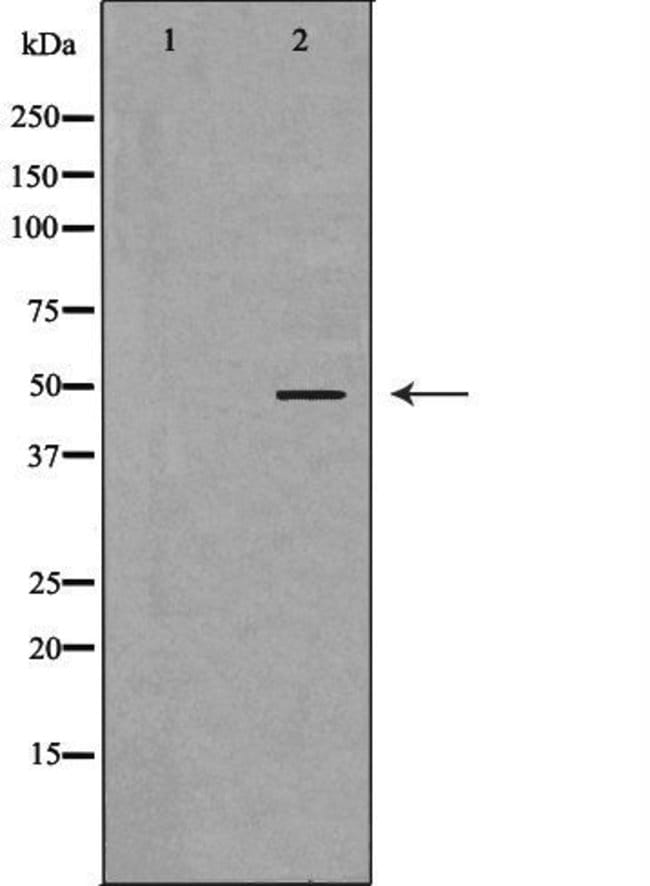
Antibody detects endogenous levels of total KCNN4.
The protein encoded by this gene is part of a potentially heterotetrameric voltage-independent potassium channel that is activated by intracellular calcium. Activation is followed by membrane hyperpolarization, which promotes calcium influx. The encoded protein may be part of the predominant calcium-activated potassium channel in T-lymphocytes. This gene is similar to other KCNN family potassium channel genes, but it differs enough to possibly be considered as part of a new subfamily.
Specifications
| KCNN4 | |
| Polyclonal | |
| Unconjugated | |
| Kcnn4 | |
| DHS2; HIK1; hIKCa1; hKCa4; hSK4; IK; IK1; IKCa; IKCA1; intermediate conductance calcium-activated potassium channel protein 1; intermediate conductance calcium-activated potassium channel protein 4; intermediate conductance K channel; intermediate-conductance Ca-activated K channel; intermediate-conductance calcium-activated potassium channel; KCa3.1; KCA4; KCNN 4; KCNN4; mIKCa1; potassium calcium-activated channel subfamily N member 4; potassium channel, calcium activated intermediate/small conductance subfamily N alpha, member 4; potassium intermediate/small conductance calcium-activated channel, subfamily N, member 4; putative erythrocyte intermediate conductance calcium-activated potassium Gardos channel; putative Gardos channel; rKCNN4c; rSK4; SK4; SKCa 4; SKCa4; SKCas; small conductance calcium-activated potassium channel 4 | |
| Rabbit | |
| Affinity Chromatography | |
| RUO | |
| 16534, 3783, 65206 | |
| -20°C | |
| Liquid |
| Immunohistochemistry (Paraffin), Western Blot, Immunocytochemistry | |
| 1 mg/mL | |
| PBS with 50% glycerol and 0.02% sodium azide; pH 7.4 | |
| O15554, O89109, Q9QYW1 | |
| Kcnn4 | |
| A synthesized peptide derived from human KCNN4(Accession O15554), corresponding to amino acid residues E333-Q383. | |
| 100 μL | |
| Primary | |
| Human, Mouse, Rat | |
| Antibody | |
| IgG |
Product Content Correction
Your input is important to us. Please complete this form to provide feedback related to the content on this product.
Product Title
Spot an opportunity for improvement?Share a Content Correction