missing translation for 'onlineSavingsMsg'
Learn More
Learn More
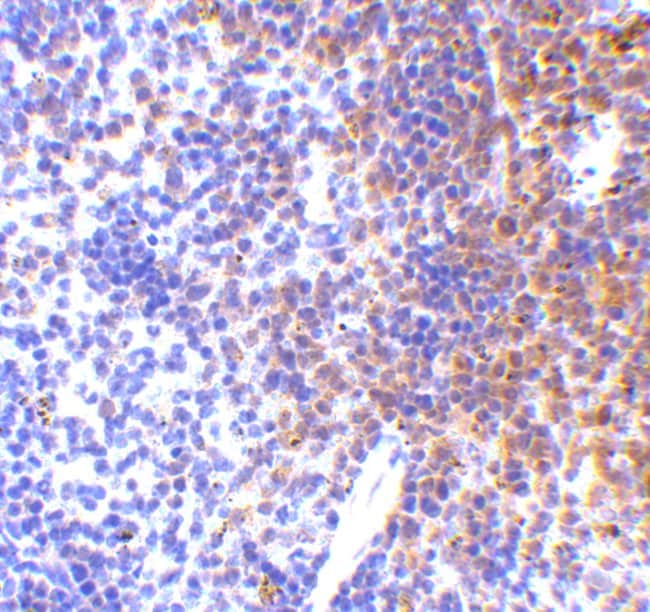
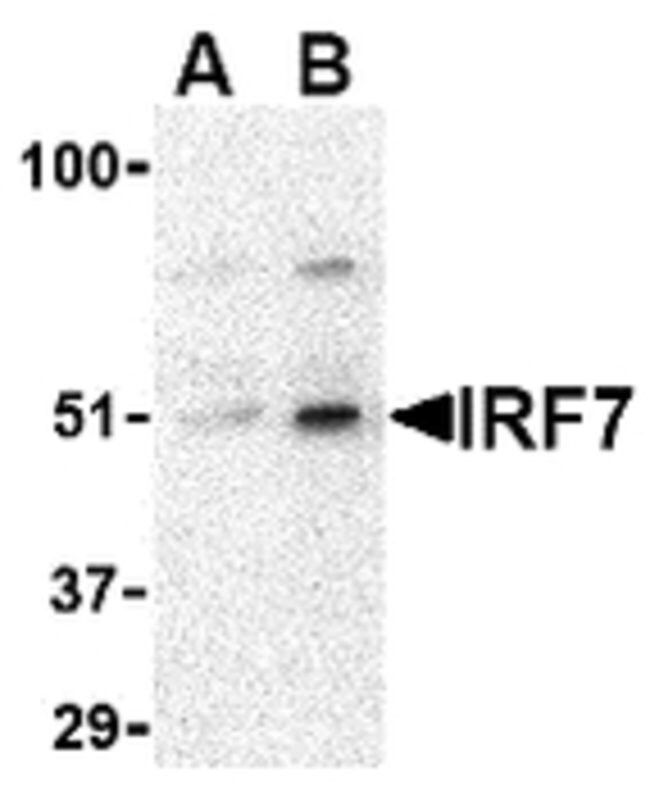
Invitrogen™ IRF7 Polyclonal Antibody

Description
A suggested positive control is 293 cell lysate. PA5-20281 can be used with blocking peptide PEP-0415.
Interferons (IFNs) are involved in a multitude of immune interactions during viral infections and play a major role in both the induction and regulation of innate and adaptive antiviral mechanisms. During infection, host-virus interactions signal downstream molecules such as transcription factors such as IFN regulatory factor-3 (IRF3) which can act to stimulate transcription of IFN-a/b genes. IRF7 has been shown to play a role in the transcriptional activation of virus-inducible cellular genes, including interferon beta chain genes. IRF7 play a major role in the innate immune pathway, interacting with the Toll-like receptor (TLR) adaptor proteins MyD88 and Tirp/TRAM and functioning as an intermediate TLR4 and TLR9 signaling. There are at least four differentially spliced isoforms of IRF7, although their function has not been clearly established.

Specifications
Specifications
| Antigen | IRF7 |
| Applications | Immunohistochemistry, Western Blot |
| Classification | Polyclonal |
| Concentration | 1 mg/mL |
| Conjugate | Unconjugated |
| Formulation | PBS with 0.02% sodium azide |
| Gene | IRF7 |
| Gene Accession No. | P70434, Q92985 |
| Gene Alias | IMD39; Interferon regulatory factor 7; interferon regulatory factor-7H; Irf7; IRF-7; IRF7A; IRF7B; IRF7C; IRF7H; IRF-7H |
| Gene Symbols | IRF7 |
| Show More |
Product Title
By clicking Submit, you acknowledge that you may be contacted by Fisher Scientific in regards to the feedback you have provided in this form. We will not share your information for any other purposes. All contact information provided shall also be maintained in accordance with our Privacy Policy.
Spot an opportunity for improvement?