Learn More

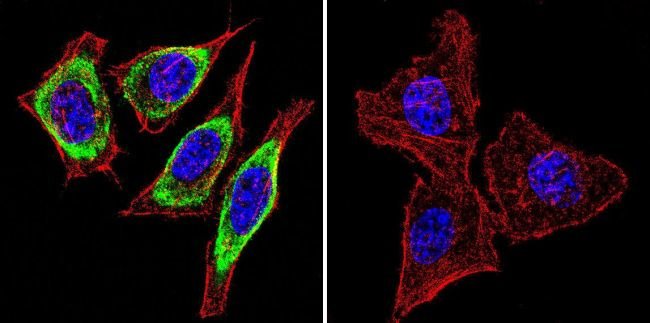
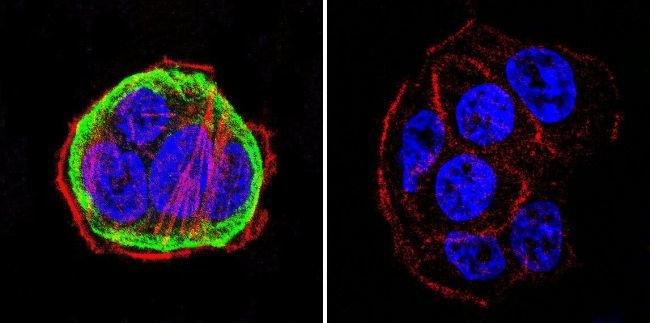
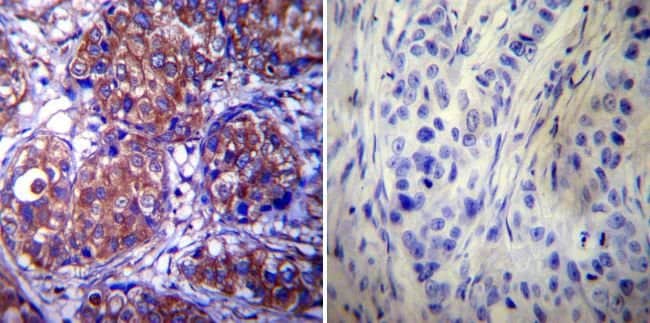
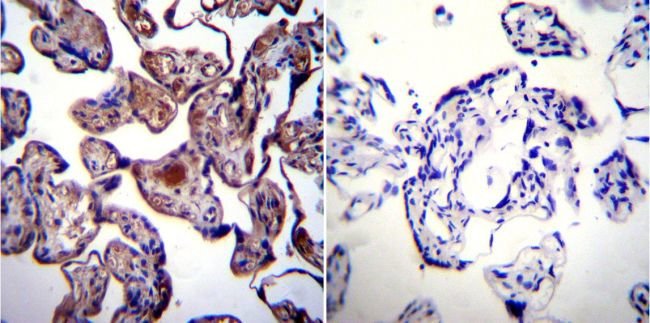
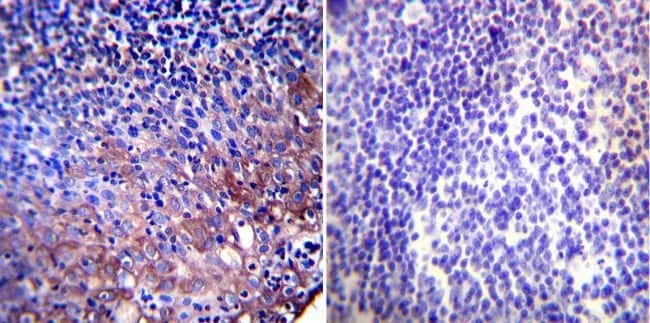
HSP90 alpha Monoclonal Antibody (3G3), Invitrogen™
Description
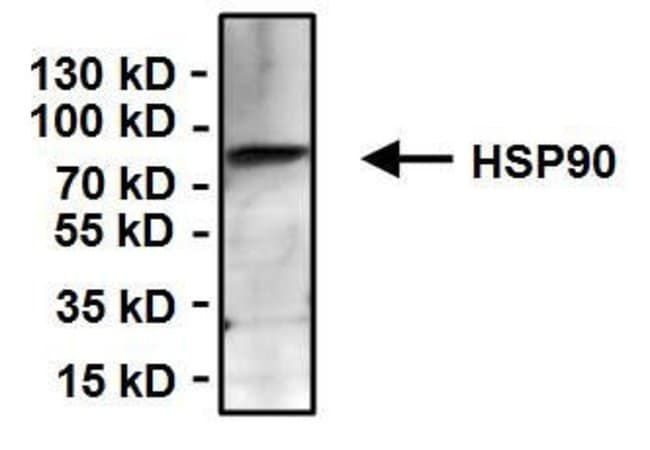
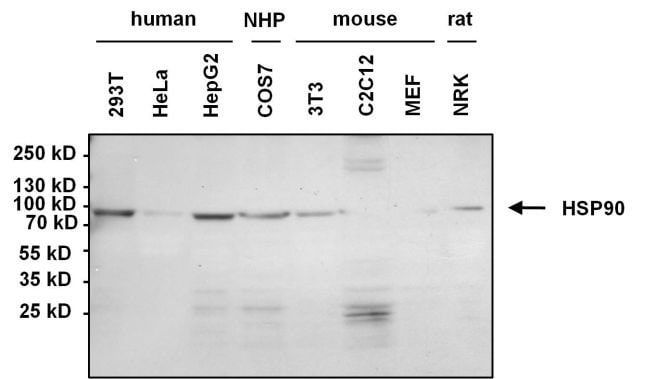
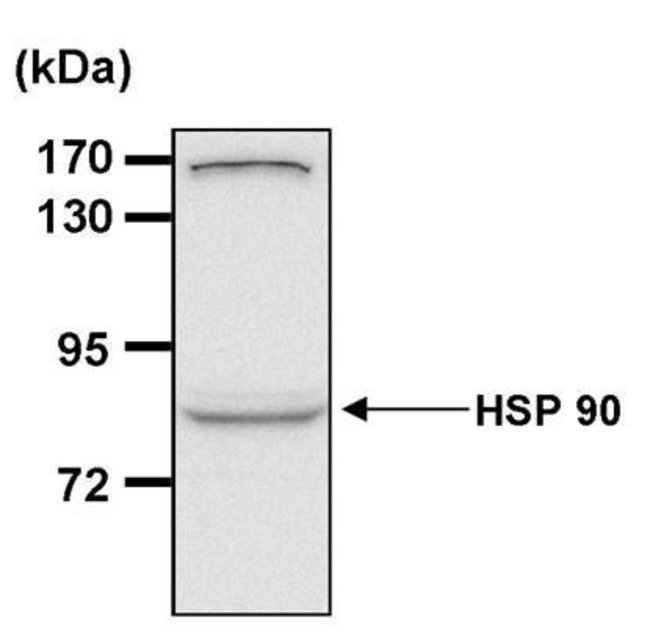
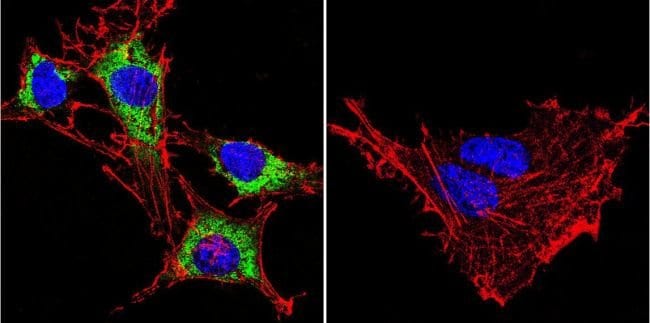
MA3-011 detects heat shock protein 90 kDa (HSP90) from human, mouse, rat, rainbow trout, and chicken tissues. MA3-011 has been successfully used in Western blot, immunofluorescence, immunohistochemistry, and immunoprecipitation procedures. By Western blot, this antibody detects a 90 kDa protein representing HSP90 from Hepa 1 cell extract. It has been reported that up to 90% of cytosolic HSP90 can be immunoprecipitated with this product under low ionic strength conditions. For Western blots using MA3-011, nitrocellulose is recommended. PVDF membranes typically do not yield acceptable results with this antibody. Before use, centrifuge suspension (4000 g for 15 minutes) and discard supernatant. Resuspend pellet in 200 μL of PBS, pH 7.2. If desired, 0.05% sodium azide may be added to resuspended solution. Removal of residual ammonium sulfate is not usually necessary for immunoprecipitation and Western blot procedures, however, any other uses may require its removal by dialysis or equivalent method. Stable for 6 months after PBS resuspension. The MA3-011 antigen is purified HSP90 from Hepa 1 cytosol.

Specifications
Specifications
| Antigen | HSP90 alpha |
| Applications | Immunocytochemistry, Immunohistochemistry, Immunoprecipitation, Western Blot |
| Classification | Monoclonal |
| Clone | 3G3 |
| Concentration | Conc. Not Determined |
| Conjugate | Unconjugated |
| Formulation | ascites with Ammonium sulfate and no preservative |
| Gene | Hsp90aa1 |
| Gene Accession No. | P07900, P07901, P11501, P82995 |
| Gene Alias | 86kDa; 89kDa; 90-kDa heat shock protein; 90-kDa heat shock protein alpha; akineto; AL024080; AL024147; EL52; epididymis luminal secretory protein 52; epididymis secretory sperm binding protein Li 65p; fb17b01; heat shock 86 kDa; heat shock 90kD protein 1, alpha; heat shock 90kD protein 1, alpha-like 4; heat shock 90kD protein, alpha-like 4; heat shock 90kDa protein 1, alpha; heat shock 90kDa protein 1, beta; Heat shock protein; heat shock protein 1, alpha; heat shock protein 86; heat shock protein 90; heat shock protein 90 alpha family class A member 1; heat shock protein 90, alpha (cytosolic), class A member 1; heat shock protein 90, alpha (cytosolic), class A member 1, tandem duplicate 1; heat shock protein 90-alpha 1; heat shock protein 90kDa alpha (cytosolic), class A member 1; heat shock protein 90kDa alpha family class A member 1; heat shock protein alpha; Heat shock protein HSP 90-alpha; Heat shock protein HSP 90-alpha 1; heat shock protein HSP90 alpha; heat shock protein hsp90alpha; heat shock protein, 1; heat shock protein, 86 kDa 1; heat shock protein, 89 kDa; Heat shock protein90; HEL-S-65p; HSP; HSP 86; HSP 90 alpha; hsp4; HSP86; Hsp86-1; Hsp89; HSP89A; HSP90; hsp90a; hsp90a protein; hsp90a.1; hsp90aa1; hsp90aa1.1; hsp90alpha; HSP90N; HSPC1; Hspca; HSPCA protein; HSPCAL1; HSPCAL4; HSPN; hypothetical protein; LAP2; LAP-2; Lipopolysaccharide-associated protein 2; LPS-associated protein 2; renal carcinoma antigen NY-REN-38; slo; sloth; TSTA; Tumor-specific transplantation 86 kDa antigen; wu:fb17b01; zgc:86652 |
| Show More |
By clicking Submit, you acknowledge that you may be contacted by Fisher Scientific in regards to the feedback you have provided in this form. We will not share your information for any other purposes. All contact information provided shall also be maintained in accordance with our Privacy Policy.