missing translation for 'onlineSavingsMsg'
Learn More
Learn More
Invitrogen™ HAP1 Polyclonal Antibody

Description
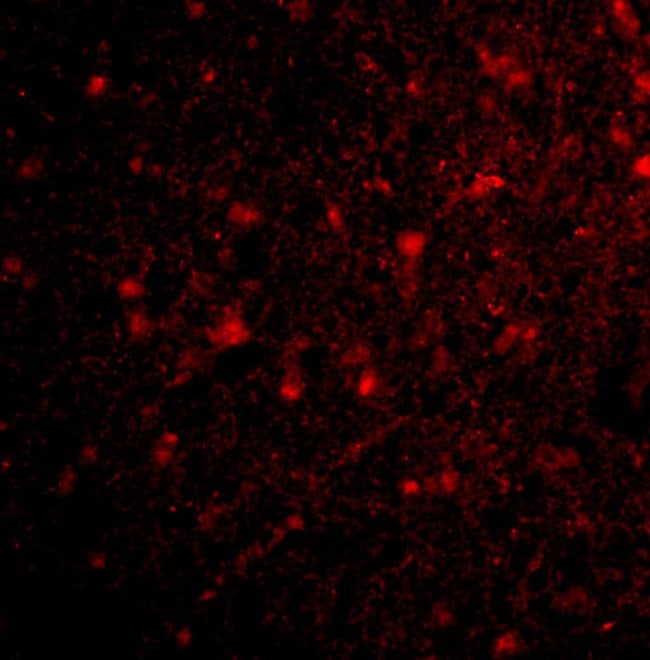
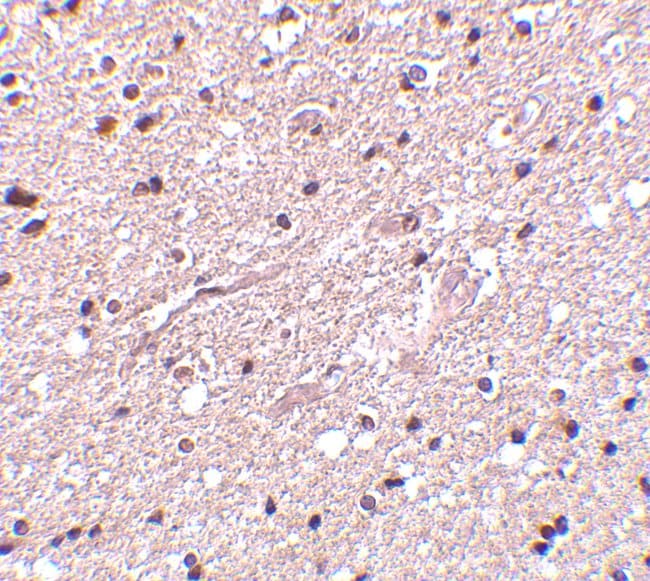
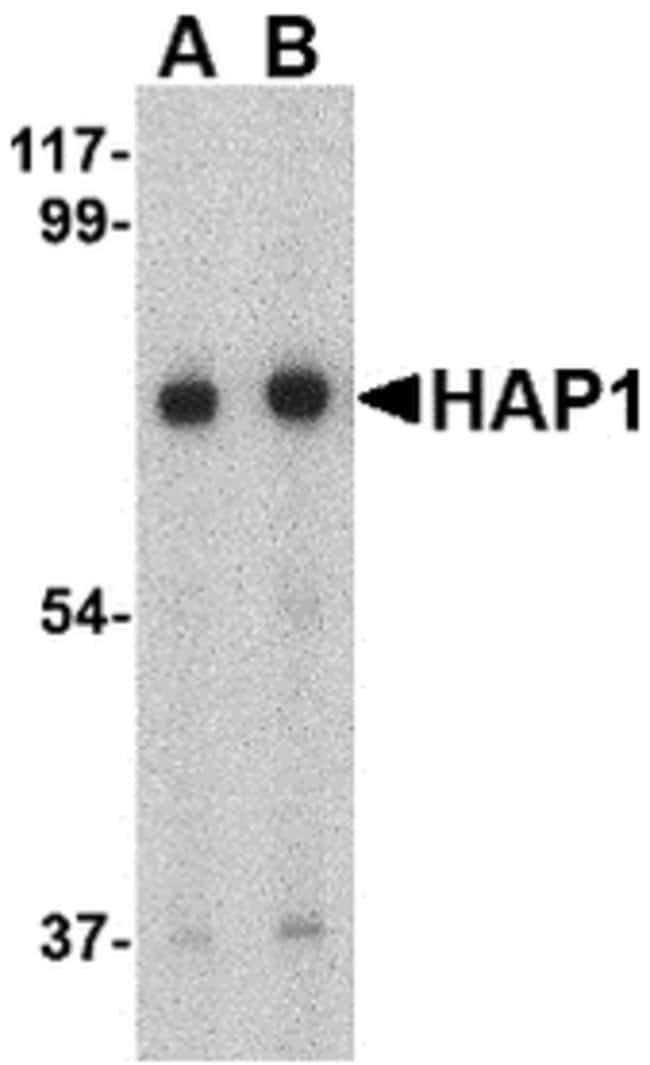
A suggested positive control is mouse brain tissue lysate. PA5-20377 can be used with blocking peptide PEP-0494.
Huntington's disease (HD), a neurodegenerative disorder characterized by loss of striatal neurons, is caused by an expansion of a polyglutamine tract in the HD protein huntingtin. HAP1 was initially identified through a two-hybrid library screening; the binding of HAP1 to huntingtin correlated with the expansion of the polyglutamine tract. HAP1 also interacts with two cytoskeletal proteins (dynactin and pericentriolar autoantigen protein 1), suggesting that HAP1 may play a role in vesicular trafficking or organelle transport. HAP1 is also involved with the huntingtin-enhanced BDNF transport along the cellular microtubles. Attenuation of this process led to the loss of neurotrophic support and neuronal toxicity, which suggests that loss of this function might contribute to pathogenesis. Several alternatively spliced isoforms have been described for HAP1.

Specifications
Specifications
| Antigen | HAP1 |
| Applications | Immunohistochemistry, Western Blot, Immunocytochemistry |
| Classification | Polyclonal |
| Concentration | 1 mg/mL |
| Conjugate | Unconjugated |
| Formulation | PBS with 0.02% sodium azide |
| Gene | HAP1 |
| Gene Accession No. | O35668, P54256, P54257 |
| Gene Alias | Hap1; HAP-1; HAP-1 antibody; HAP1-A; HAP1-B; HAP2; hHLP1; HIP5; HLP; HLP1; huntingtin associated protein 1; huntingtin-associated protein 1; huntingtin-associated protein 2; neuroan 1 |
| Gene Symbols | HAP1 |
| Show More |
Product Title
By clicking Submit, you acknowledge that you may be contacted by Fisher Scientific in regards to the feedback you have provided in this form. We will not share your information for any other purposes. All contact information provided shall also be maintained in accordance with our Privacy Policy.
Spot an opportunity for improvement?