missing translation for 'onlineSavingsMsg'
Learn More
Learn More
H1F0 Antibody (SPM256), Novus Biologicals™
Mouse Monoclonal Antibody
Brand: Novus Biologicals NBP2-45183-0.02MG
This item is not returnable.
View return policy
Description
Ensure accurate, reproducible results in Flow Cytometry, Immunohistochemistry (Paraffin), Immunofluorescence
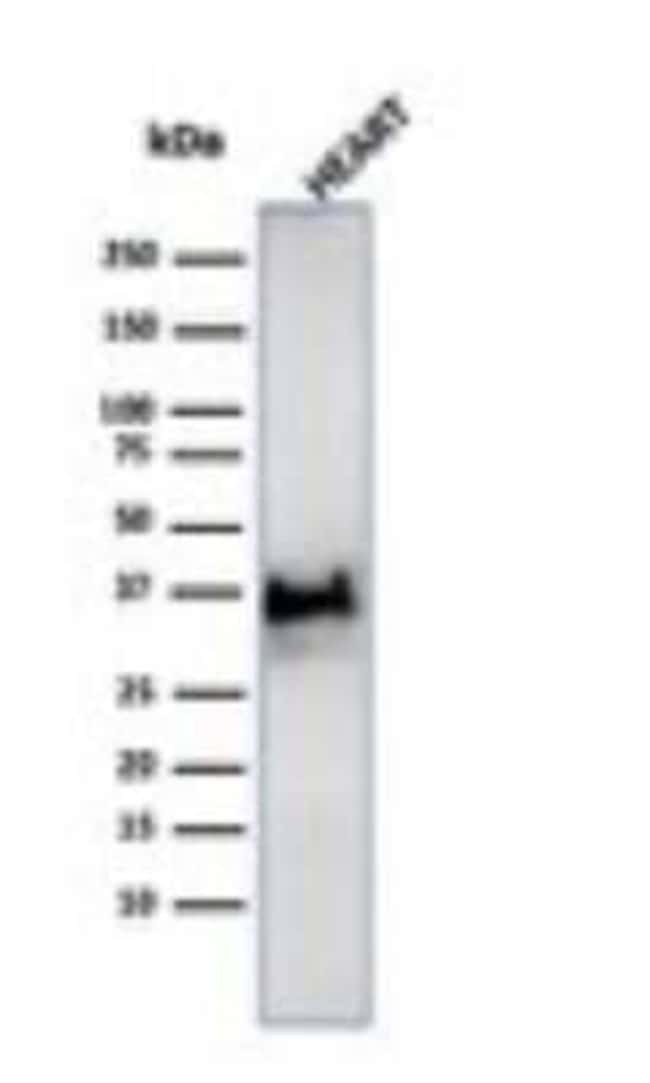
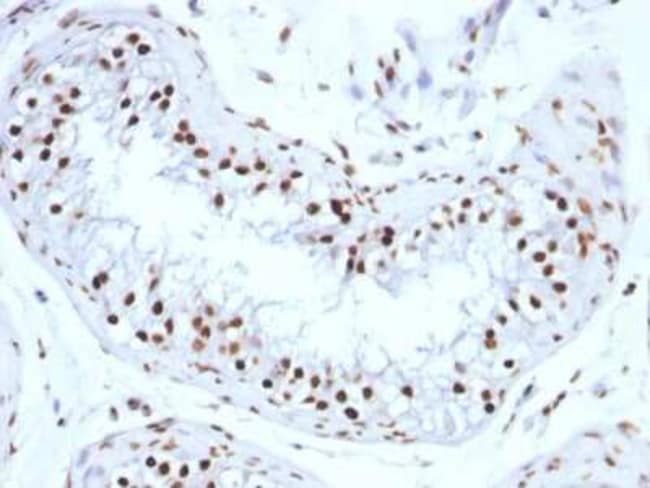
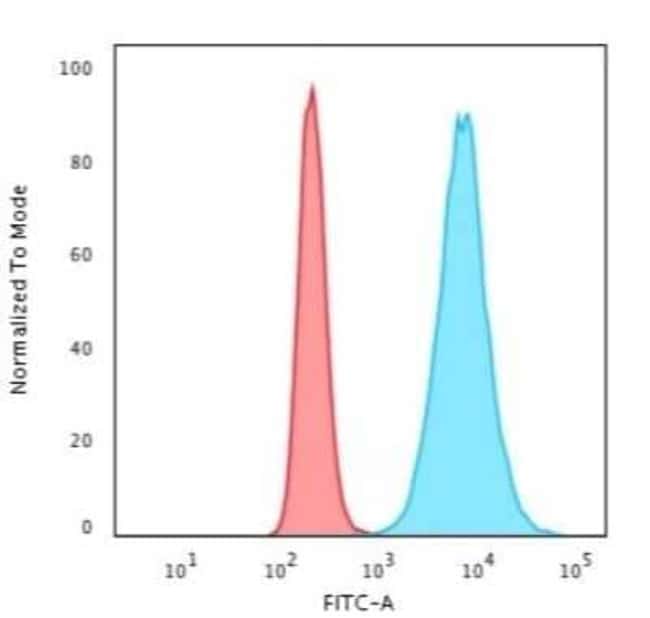
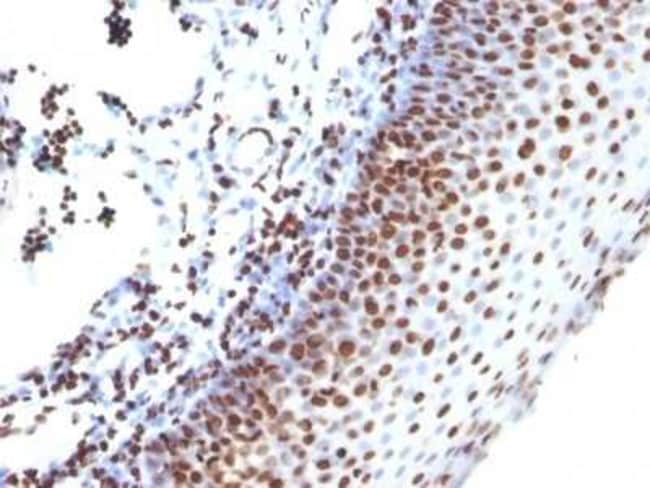
H1F0 Monoclonal specifically detects H1F0 in Human, Mouse, Rat samples. It is validated for Western Blot, Flow Cytometry, Immunohistochemistry, Immunocytochemistry/Immunofluorescence, Immunohistochemistry-Paraffin, Immunofluorescence.
Specifications
| H1F0 | |
| Monoclonal | |
| 0.2mg/mL | |
| Flow Cytometry 0.5 - 1 ug/million cells in 0.1 ml, Immunohistochemistry-Paraffin 0.5 - 1.0 ug/ml, Immunofluorescence 0.5 - 1.0 ug/ml | |
| H1 histone family, member 0, H1.0, H1(0), H1-0, H10, H1FVMGC5241, Histone H1', Histone H1(0), histone H1.0 | |
| Mouse | |
| Protein A or G purified | |
| RUO | |
| 3005 | |
| Human, Mouse, Rat | |
| Purified |
| Flow Cytometry, Immunohistochemistry (Paraffin), Immunofluorescence | |
| SPM256 | |
| Unconjugated | |
| 1.0mM PBS and 0.05% BSA with 0.05% Sodium Azide | |
| H1F0 | |
| Nuclei of human leukemia biopsy cells | |
| 0.02 mg | |
| Primary | |
| Eukaryotic histones are basic and water-soluble nuclear proteins that form hetero-octameric nucleosome particles by wrapping 146 base pairs of DNA in a left-handed super-helical turn sequentially to form chromosomal fiber. Two molecules of each of the four core histones (H2A, H2B, H3, and H4) form the octamer; formed of two H2A-H2B dimers and two H3-H4 dimers, forming two nearly symmetrical halves by tertiary structure. Over 80% of nucleosomes contain the linker Histone H1, derived from an intronless gene that interacts with linker DNA between nucleosomes and mediates compaction into higher order chromatin. Histones are subject to posttranslational modification by enzymes primarily on their N-terminal tails, but also in their globular domains. Such modifications include methylation, citrullination, acetylation, phosphorylation, sumoylation, ubiquitination and ADP-ribosylation. | |
| Store at 4C. | |
| IgG2a κ |
Product Content Correction
Your input is important to us. Please complete this form to provide feedback related to the content on this product.
Product Title
For Research Use Only
Spot an opportunity for improvement?Share a Content Correction