missing translation for 'onlineSavingsMsg'
Learn More
Learn More
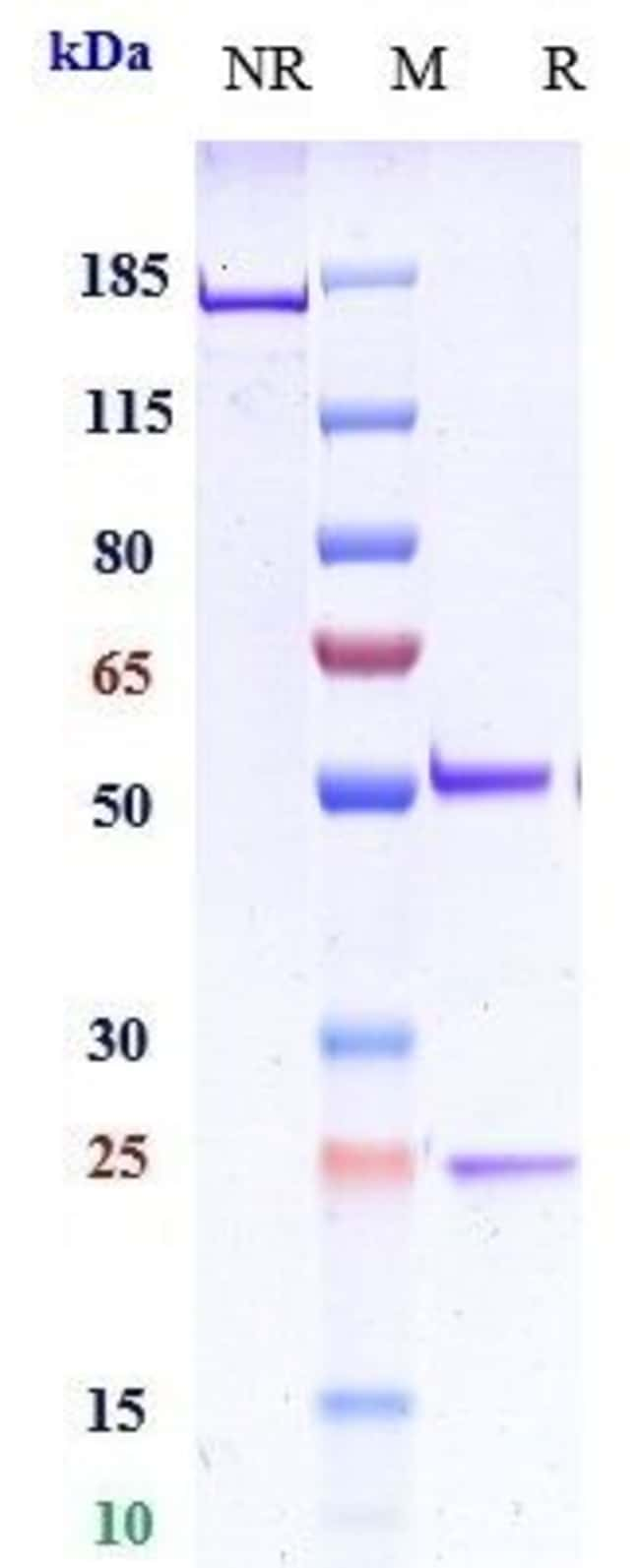
Invitrogen™ Favezelimab Recombinant Monoclonal Antibody

Recombinant Monoclonal Antibody
£397.00 - £1002.00
Specifications
| Antigen | Favezelimab |
|---|---|
| Concentration | 1 mg/mL |
| Content And Storage | -20°C, Avoid Freeze/Thaw Cycles |
| Applications | ELISA, Flow Cytometry, Functional Assay, Surface Plasmon Resonance |
| Classification | Recombinant Monoclonal |
| Product Code | Brand | Quantity | Price | Quantity & Availability | |||||
|---|---|---|---|---|---|---|---|---|---|
| Product Code | Brand | Quantity | Price | Quantity & Availability | |||||
|
30282628
|
Invitrogen™
MA559635 |
100 μg |
£397.00
100µg |
Please sign in to purchase this item. Need a web account? Register with us today! | |||||
|
30284504
|
Invitrogen™
MA559636 |
1 mg |
£1002.00
1mg |
Please sign in to purchase this item. Need a web account? Register with us today! | |||||
Description
For reconstitution, add sterile, distilled water to achieve a final antibody concentration of 1 mg/mL. Gently shake to solubilize the protein completely. Do not vortex. Reconstituted products should be stored at -80 °.
Favezelimab, also known as MK-4280, is a therapeutic monoclonal antibody targeting the lymphocyte-activation gene 3 (LAG-3). This immune checkpoint receptor downregulates T-cell activity, playing a crucial role in immune response regulation. Lymphocyte Activation Gene 3 (LAG3), also known as CD223, is an immune checkpoint receptor encoded by the LAG3 gene located on chromosome 12 (12p13.32). Structurally, LAG3 is closely related to the CD4 molecule, sharing four extracellular immunoglobulin-like domains and a highly conserved cytoplasmic tail, which mediates its inhibitory signaling. Functionally, LAG3 is expressed on activated T cells, natural killer (NK) cells, B cells, and plasmacytoid dendritic cells, playing a crucial role in regulating the immune response. It acts by binding to its primary ligand, MHC class II molecules, and can also interact with other ligands such as fibrinogen-like protein 1 and galectin-3. Through these interactions, LAG3 transmits inhibitory signals to reduce the proliferation and activation of effector T cells, thus maintaining immune homeostasis and preventing autoimmunity. In cancer, LAG3 contributes to the immune evasion of tumors by suppressing anti-tumor T cell activity, making it a significant target for novel cancer immunotherapies.Specifications
| Favezelimab | |
| -20°C, Avoid Freeze/Thaw Cycles | |
| Recombinant Monoclonal | |
| Lyophilized | |
| IgG4SP | |
| Human | |
| Primary | |
| Protein A |
| 1 mg/mL | |
| ELISA, Flow Cytometry, Functional Assay, Surface Plasmon Resonance | |
| Unconjugated | |
| Human | |
| RUO | |
| 25mM histidine with 8% sucrose, 0.01% Tween 80 and no preservative; pH 6.2 | |
| Antibody |
Spot an opportunity for improvement?Share a Content Correction
Product Content Correction
Your input is important to us. Please complete this form to provide feedback related to the content on this product.
Product Title