missing translation for 'onlineSavingsMsg'
Learn More
Learn More
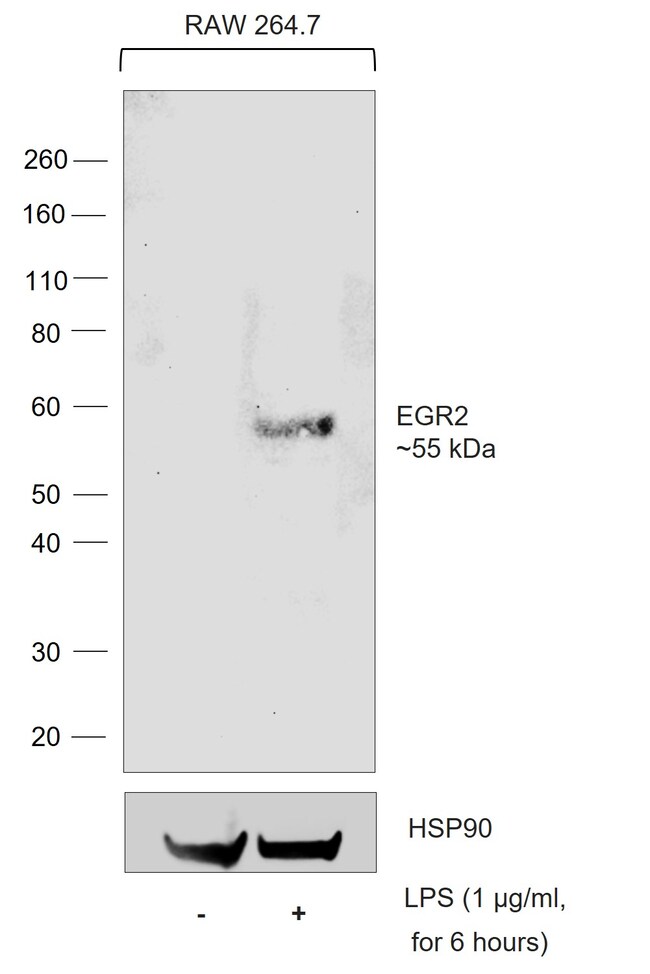
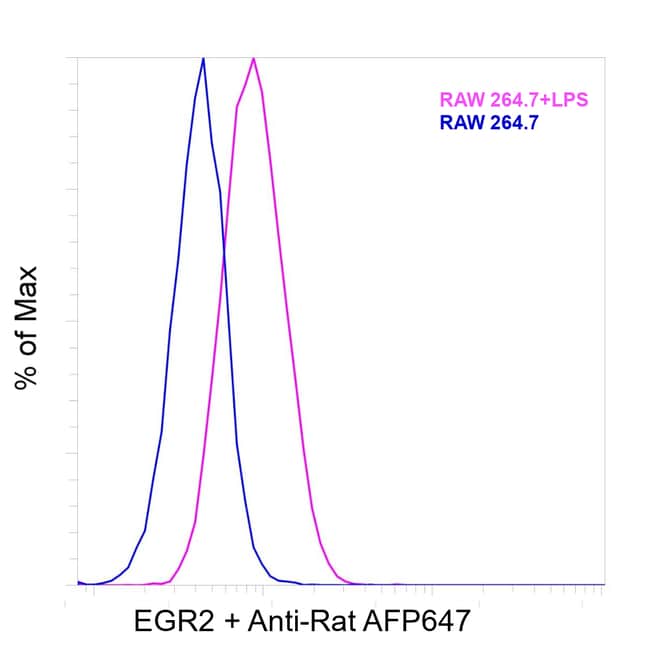
Invitrogen™ EGR2 Recombinant Rat Monoclonal Antibody (erongr2)
Rat Recombinant Monoclonal Antibody
£187.00 - £282.00
Specifications
| Antigen | EGR2 |
|---|---|
| Clone | erongr2 |
| Concentration | 1.0 mg/mL |
| Content And Storage | Store at 4°C short term. For long term storage, store at -20°C, avoiding freeze/thaw cycles. |
| Applications | Flow Cytometry, Western Blot |
| Product Code | Brand | Quantity | Price | Quantity & Availability | |||||
|---|---|---|---|---|---|---|---|---|---|
| Product Code | Brand | Quantity | Price | Quantity & Availability | |||||
|
30484928
|
Invitrogen™
740043T |
100 μL |
£282.00
100µL |
Please sign in to purchase this item. Need a web account? Register with us today! | |||||
|
30485102
|
Invitrogen™
740043TXS |
20 μL |
£187.00
20µL |
Please sign in to purchase this item. Need a web account? Register with us today! | |||||
Description
Recombinant rat monoclonal antibodies are produced using in vitro expression systems. Recombinant antibodies are produced using specific genes that code for the desired antibodies. These genes are cloned into an expression vector and expressed in vitro. The advantages of recombinant antibodies include better specificity and lot-to-lot consistency. It is recommended that the antibody be carefully titrated for optimal performance in the assay of interest.
The EGR2 gene provides instructions for making a protein called early growth response 2, which is part of the early growth response family of proteins. These proteins bind to specific areas of DNA and help control the activity of particular genes. On the basis of this action, the proteins are referred to as transcription factors. The early growth response 2 protein activates several genes that are involved in the formation and maintenance of myelin, the fatty substance that covers and protects nerve cells. Myelin promotes the efficient transmission of nerve impulses. If myelin is lost (demyelination) or its structure is disrupted, the transmission of nerve impulses is impaired. Mutations in the EGR2 gene can cause two forms of Charcot-Marie-Tooth disease, type 1D or type 4E (sometimes called congenital hypomyelinating neuropathy) or a severe form of type 1D (sometimes called Dejerine-Sottas syndrome) that begins during infancy or early childhood.Specifications
| EGR2 | |
| 1.0 mg/mL | |
| Flow Cytometry, Western Blot | |
| Unconjugated | |
| Rat | |
| RUO | |
| PBS with 0.09% sodium azide; pH 7.4 | |
| P08152 | |
| 13654 | |
| E. coli-derived protein, aa 1-319. | |
| Antibody |
| erongr2 | |
| Store at 4°C short term. For long term storage, store at -20°C, avoiding freeze/thaw cycles. | |
| Recombinant Monoclonal | |
| Liquid | |
| IgG2a κ | |
| Mouse | |
| Egr2 | |
| AT591; CMT1D; CMT4E; DKFZp686J1957; E3 SUMO-protein ligase EGR2; E3 SUMO-protein transferase ERG2; early growth response 2; early growth response protein 2; Egr2; Egr-2; FLJ1454; FLJ14547; Krox20; Krox-20; Krox-20 homolog; KROX-20, Drosophila, homolog (early growth response-2); NGF1-B; OTTHUMP00000062133; Zfp-25; Zfp-6; Zinc finger protein Krox-20 | |
| Egr2 | |
| Primary | |
| Affinity chromatography |
Spot an opportunity for improvement?Share a Content Correction
Product Content Correction
Your input is important to us. Please complete this form to provide feedback related to the content on this product.
Product Title