missing translation for 'onlineSavingsMsg'
Learn More
Learn More
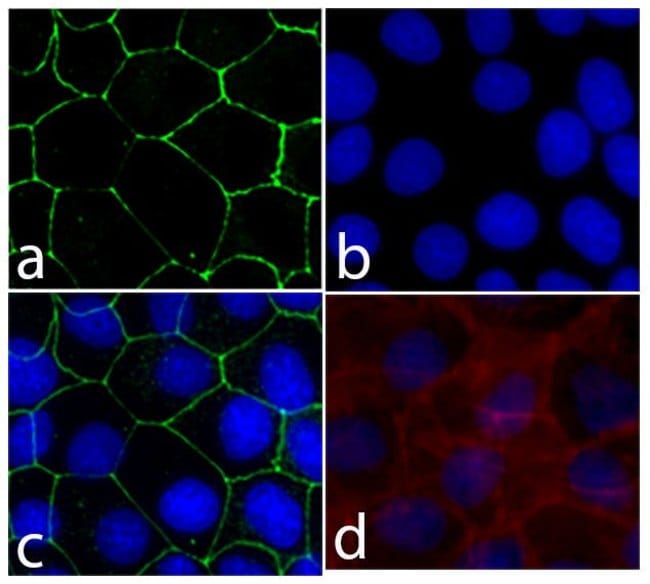
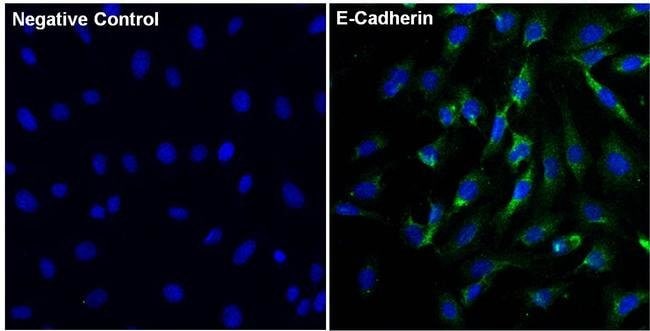


Invitrogen™ E-cadherin Recombinant Superclonal™ Antibody (5HCLC)
Rabbit Recombinant Superclonal Antibody
Brand: Invitrogen™ 710161
This item is not returnable.
View return policy
Description
Recombinant rabbit Superclonal™ antibodies are unique offerings from Thermo Fisher Scientific. They are comprised of a selection of multiple different recombinant monoclonal antibodies, providing the best of both worlds - the sensitivity of polyclonal antibodies with the specificity of monoclonal antibodies - all delivered with the consistency only found in a recombinant antibody. While functionally the same as a polyclonal antibody - recognizing multiple epitope sites on the target and producing higher detection sensitivity for low abundance targets - a recombinant rabbit Superclonal™ antibody has a known mixture of light and heavy chains. The exact population can be produced in every lot, circumventing the biological variability typically associated with polyclonal antibody production. Note: Formerly called Recombinant polyclonal antibody, this product is now rebranded as Recombinant Superclonal™ antibody. The physical product and the performance remain unchanged.
E-Cadherin (epithelial cadherin) is a classical cadherin from the cadherin (alcium dependent adhesion protein) superfamily. The encoded protein is a calcium dependent cell-cell adhesion glycoprotein comprised of five extracellular cadherin repeats, a transmembrane region and a highly conserved cytoplasmic tail. Mutations in this gene are correlated with gastric, breast, colorectal, thyroid and ovarian cancer. Loss of function is thought to contribute to progression in cancer by increasing proliferation, invasion, and/or metastasis. The ectodomain of this protein mediates bacterial adhesion to mammalian cells and the cytoplasmic domain is required for internalization. Identified transcript variants arise from mutation at consensus splice sites. E-cadherin plays a central role in the growth and development of cells by controlling tissue architecture, and maintenance of tissue integrity. In humans, E-cadherin is encoded by the CDH1 gene present on chromosome 16. Studies have demonstrated that reduction and/or loss of E-cadherin expression in carcinomas correlates positively with the potential of these tumors for invasion and metastasis.
Specifications
| E-cadherin | |
| Recombinant Superclonal | |
| 0.5 mg/mL | |
| PBS with 0.09% sodium azide | |
| P09803, P12830 | |
| CDH1 | |
| Peptide corresponding to amino acids 668-677 of human E-cadherin (epithelial). | |
| 100 μg | |
| Primary | |
| Human, Mouse | |
| Antibody | |
| IgG |
| Western Blot, Immunocytochemistry | |
| 5HCLC | |
| Unconjugated | |
| CDH1 | |
| AA960649; ARC-1; cadherin 1; cadherin 1, E-cadherin (epithelial); cadherin 1, epithelial; cadherin 1, type 1; cadherin 1, type 1, E-cadherin (epithelial); cadherin e; cadherin-1; cadherin-E; calcium-dependent adhesion protein, epithelial; CAM 120/80; CD324; CDH1; CDHE; cell adhesion molecule; cell-CAM 120/80; ECAD; E-cad; E-Cad/CTF1; E-Cad/CTF2; E-Cad/CTF3; Ecadherin; E-cadherin; E-cadherin 1; E-cadherin precursor; Epithelial cadherin; hab; half baked; LCAM; L-CAM; Um; UVO; Uvomorulin | |
| Rabbit | |
| Protein A | |
| RUO | |
| 12550, 999 | |
| Store at 4°C short term. For long term storage, store at -20°C, avoiding freeze/thaw cycles. | |
| Liquid |
Product Content Correction
Your input is important to us. Please complete this form to provide feedback related to the content on this product.
Product Title
Spot an opportunity for improvement?Share a Content Correction