missing translation for 'onlineSavingsMsg'
Learn More
Learn More
Invitrogen™ CRP Polyclonal Antibody

Description
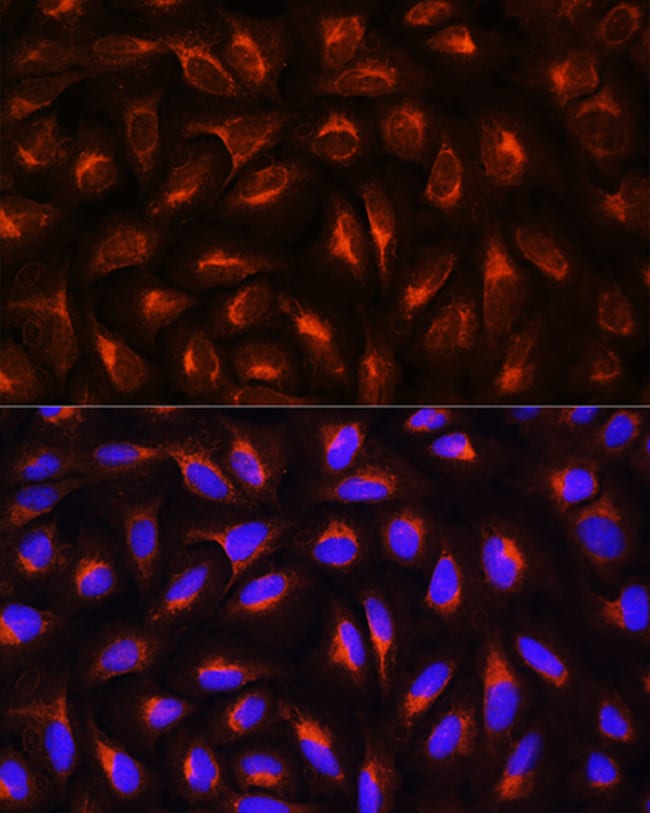
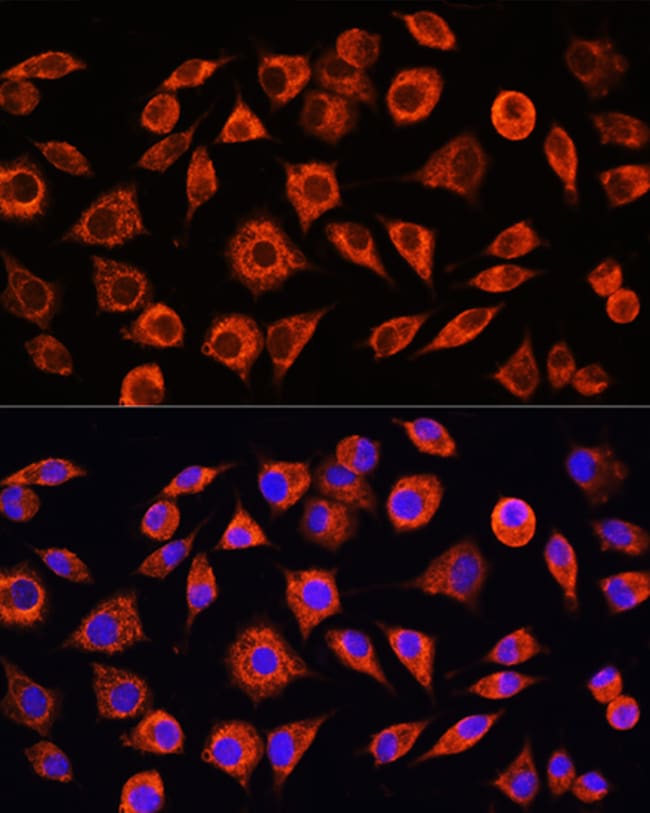
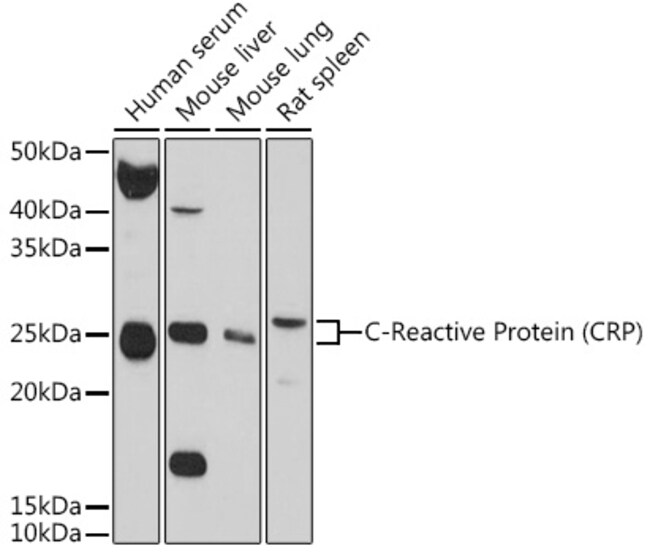
Positive test controls include: Human serum, Mouse liver, Mouse lung, Rat spleen. The target is usually found in the following locations: Secreted. Immunogen sequence: ILFEVPEVTV APVHICTSWE SASGIVEFWV DGKPRVRKSL KKGYTVGAEA SIILGQEQDS FGGNFEGSQS LVGDIGNVNM WDFVLSPDEI NTIYLGGPFS P.
CRP (C-reactive protein) is a major cyclic, pentameric acute phase protein compound consisting of five identical, noncovalently bound, nonglycosylated subunits. Eeach subunit is made up of 206 amino acids, and has a molecular weight of 24 kDa. CRP is produced by the liver, and its plasma levels rise dramatically during inflammatory processes occurring in the body. CRP is an initiator of classical complement cascade, binds to several nuclear components (chromatin, histones, etc.), plays an important role in innate immunity, and mediates activities associated with pre-immune nonspecific host resistance. Specifically, there is a 100-1000 fold increase of CRP in response to injury, infection or inflammation. CRP is opsonic, an initiator of the classical complement cascade, and an activator of monocytes/macrophages. CRP also binds to several nuclear components including chromatin, histones and snRNP, suggesting that it may play a role as a scavenger during cell necrosis. CRP is involved in several host defense related functions based on its ability to recognize foreign pathogens and damaged cells of the host, and initiates pathogen elimination by interacting with humoral and cellular effector systems in the blood. Patients with elevated basal levels of CRP have been shown to be an increased risk for hypertension and cardiovascular disease.

Specifications
Specifications
| Antigen | CRP |
| Applications | ELISA, Western Blot, Immunocytochemistry |
| Classification | Polyclonal |
| Concentration | 2.87 mg/mL |
| Conjugate | Unconjugated |
| Formulation | PBS with 50% glycerol and 0.09% sodium azide; pH 7.3 |
| Gene | Crp |
| Gene Accession No. | P02741, P14847, P48199 |
| Gene Alias | Aa1249; Ab1-341; Ab2-196; Ac1-114; Ac1262; Ac2-069; acute phase protein; CRP; AI255847; Ba2-693; c reactive; C-reactive preprotein; C-reactive protein; C-reactive protein member of the pentraxin family; C-reactive protein(1-205); C-reactive protein, member of the pentraxin family; C-reactive protein, pentraxin-related; C-reactive protein, petaxin related; CRP; CRP1; CSRP; CYRP; D1S181E; DKFZp686M148; DKFZp686M149; MGC149895; MGC88244; pentraxin 1; PTX1; RP11-419N10.4 |
| Gene Symbols | Crp |
| Show More |
Product Title
By clicking Submit, you acknowledge that you may be contacted by Fisher Scientific in regards to the feedback you have provided in this form. We will not share your information for any other purposes. All contact information provided shall also be maintained in accordance with our Privacy Policy.
Spot an opportunity for improvement?