missing translation for 'onlineSavingsMsg'
Learn More
Learn More
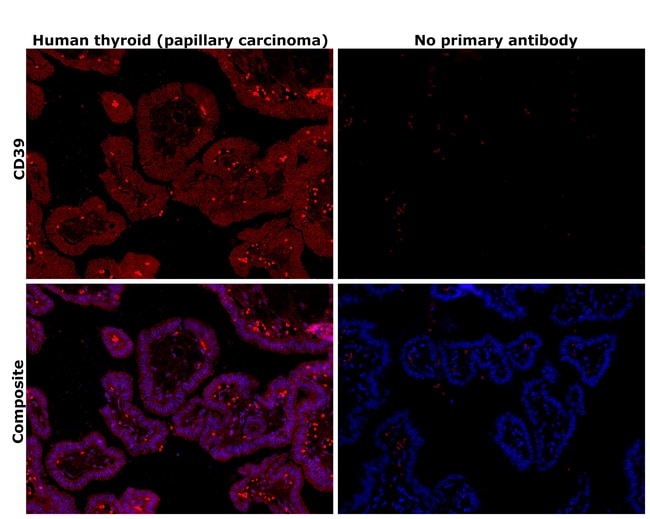
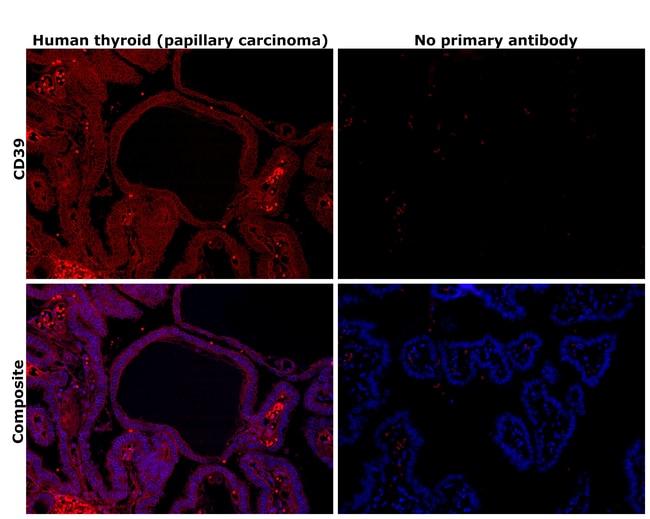
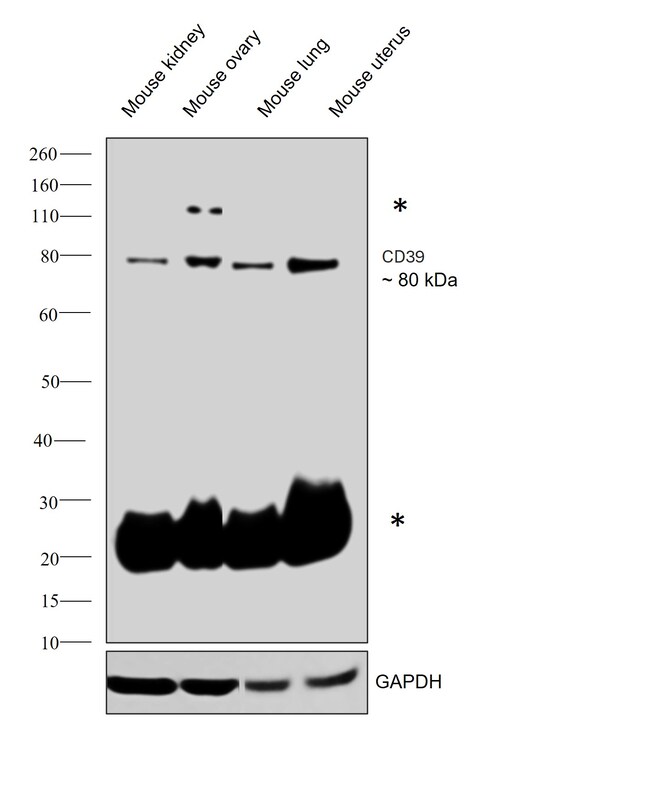

Invitrogen™ CD39 Monoclonal Antibody (eBioA1 (A1)), eBioscience™, Invitrogen™

Mouse Monoclonal Antibody
Brand: Invitrogen™ 14-0399-82
This item is not returnable.
View return policy
Description
Description: The eBioA1 monoclonal antibody reacts with human CD39 also known as ectonucleoside triphosphate diphosphohydrolase 1 (ENTPD1) or NTPDase. CD39 is an integral membrane protein with two transmembrane domains and exists as a homotetramer. It is the most prominent ectoenzyme of the immune system. The function of CD39 is to effectively remove toxic extracellular ATP by converting it to ADP or AMP. CD39 is thought to work together with CD73 to hydrolyze ATP and has been well characterized on Langerhans cells. Expression of CD39 was originally identified on activated lymphocytes. Expression is also found on a subset of T cells, B cells and dendritic cells as well as weak staining on monocytes and granulocytes. Recently, CD39 and CD73 have been found on regulatory T cells (Treg). Expression of CD39 on Treg may facilitate their entry into inflamed areas where high levels of ATP are present. Expression of CD39 on Foxp3+CD4+ cells ranges from 25-45%. Applications Reported: This eBioA1 (A1) antibody has been reported for use in flow cytometric analysis, and immunohistochemical staining. Applications Tested: This eBioA1 (A1) antibody has been tested by flow cytometric analysis of nomral human peripheral blood cells. This can be used at less than or equal to 0.25 μg per test. A test is defined as the amount (μg) of antibody that will stain a cell sample in a final volume of 100 μL.
CD39 is an integral membrane protein characterized by two transmembrane domains and forms a homotetramer structure. It is recognized as the most prominent ectoenzyme within the immune system, primarily functioning to remove toxic extracellular ATP by converting it into ADP or AMP. CD39 works in conjunction with CD73 to hydrolyze ATP and is well characterized on Langerhans cells. Originally identified on activated lymphocytes, CD39 is expressed on a variety of immune cells, including peripheral blood B cells, monocytes, and T cell clones. It is also found on a subset of T cells, B cells, and dendritic cells, with weaker expression observed on monocytes and granulocytes. The CD39 cell surface antigen is a 70-100kD molecule, and its expression is induced on T cells and increases on B cells as a late activation antigen. CD39 possesses intrinsic ecto-ATPase activity, playing a crucial role in modulating extracellular nucleotide levels and contributing to immune regulation.
Specifications
| CD39 | |
| Monoclonal | |
| 0.5 mg/mL | |
| PBS with 0.09% sodium azide; pH 7.2 | |
| P49961, P55772 | |
| ENTPD1 | |
| Affinity chromatography | |
| RUO | |
| 12495, 953 | |
| 4°C | |
| Liquid |
| Flow Cytometry, Immunohistochemistry (Frozen), Immunohistochemistry (Paraffin), Western Blot | |
| eBioA1 (A1) | |
| Unconjugated | |
| ENTPD1 | |
| 2610206B08Rik; AA408691; ATPDase; Cd39; CD39 antigen; DKFZp686D194; DKFZp686I093; ecto-apyrase; Ecto-ATP diphosphohydrolase 1; ecto-ATPase 1; ecto-ATPDase 1; Ectonucleoside triphosphate diphosphohydrolase 1; ENTPD1; FLJ40921; FLJ40959; Lymphoid cell activation antigen; NTPDase 1; NTPDase-1; SPG64 | |
| Mouse | |
| 100 μg | |
| Primary | |
| Human, Mouse | |
| Antibody | |
| IgG1 κ |
Product Content Correction
Your input is important to us. Please complete this form to provide feedback related to the content on this product.
Product Title
For Research Use Only.
Spot an opportunity for improvement?Share a Content Correction