missing translation for 'onlineSavingsMsg'
Learn More

beta-Catenin Antibody, Novus Biologicals™

Rabbit Polyclonal Antibody

Brand:  Novus Biologicals NBP2-29476-20ug

 View more versions of this product

Product Code. 18408631

  • £196.00 / 20µg

Please to purchase this item. Need a web account? Register with us today!

This item is not returnable. View return policy

Description

Description

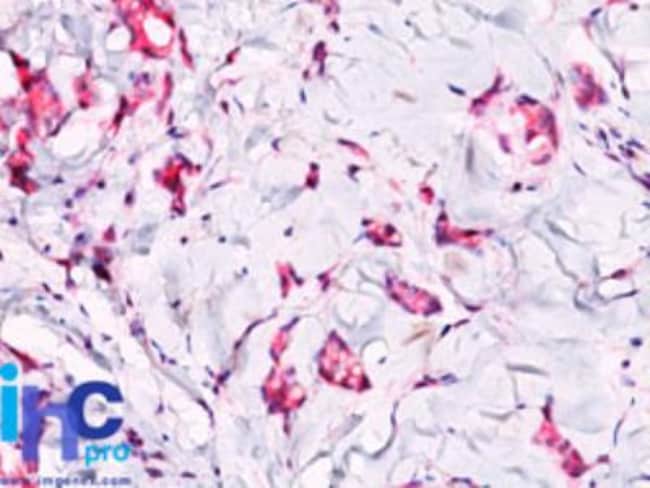
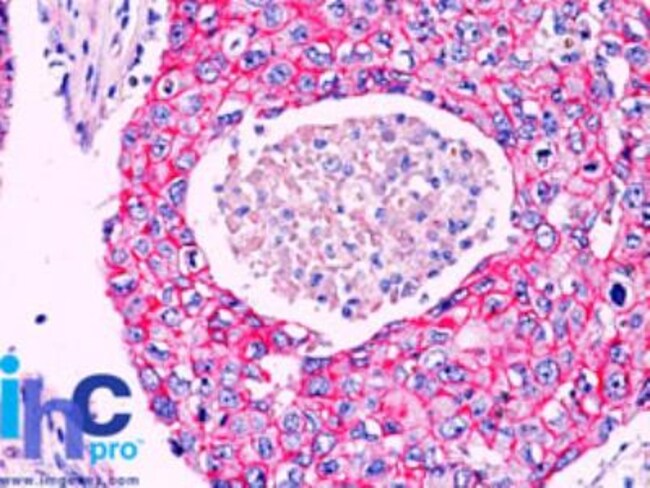
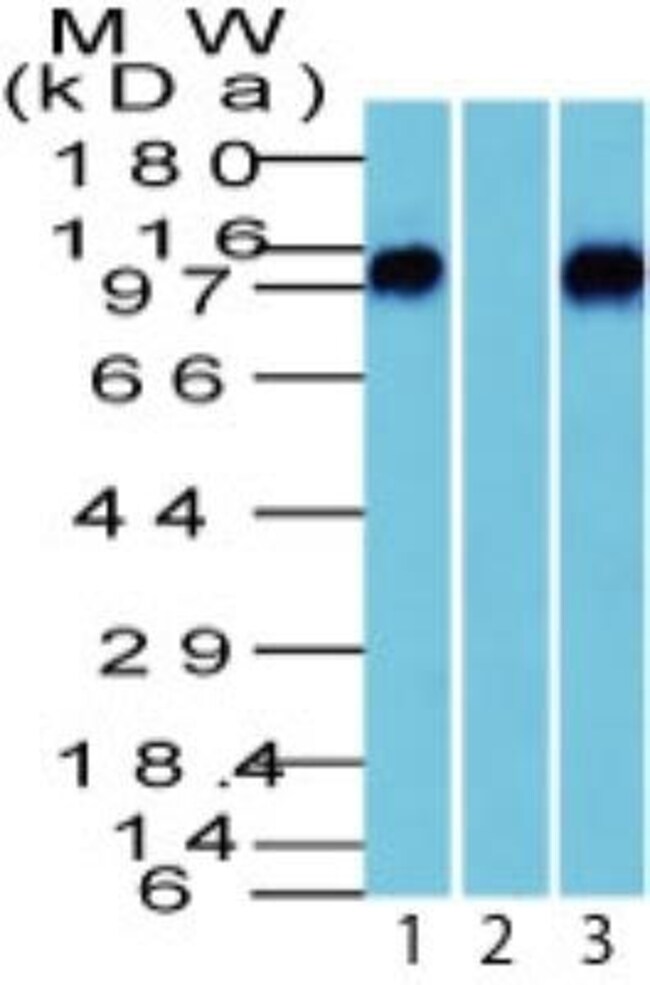
beta-Catenin Polyclonal specifically detects beta-Catenin in Human, Mouse samples. It is validated for Western Blot, Flow Cytometry, Immunohistochemistry, Immunohistochemistry-Paraffin.

TRUSTED_SUSTAINABILITY
Specifications

Specifications

beta-Catenin
Polyclonal
Unconjugated
PBS with 0.05% BSA. with 0.05% Sodium Azide
beta 1 (88kD), beta-catenin, catenin (cadherin-associated protein), beta 1, 88kDa, catenin beta-1, CTNNB, DKFZp686D02253, FLJ25606, FLJ37923
Rabbit
92 kDa
20 ug
Cancer, Cellular Markers, Extracellular Matrix, Neuroscience, Phospho Specific, Stem Cell Signaling Pathway, Wnt Signaling Pathway
1499
Human, Mouse
Purified
Western Blot, Flow Cytometry, Immunohistochemistry, Immunocytochemistry, Immunofluorescence, Immunoprecipitation
0.2 mg/ml
Western Blot 0.5-1ug/ml, Flow Cytometry 0.5-1ug/million cells, Immunohistochemistry 1-2ug/ml, Immunocytochemistry/Immunofluorescence 1-2ug/ml, Immunoprecipitation 1-2ug/500ug protein lysate, Immunohistochemistry-Paraffin 1-2ug/ml
P35222
CTNNB1
A synthetic peptide from the middle of beta-Catenin protein (Uniprot: P35222)
Protein A purified
RUO
Primary
Beta-catenin associates with the cytoplasmic portion of E-cadherin, which is necessary for the function of E-cadherin as an adhesion molecule. In normal tissues, beta-catenin is localized to the membrane of epithelial cells, consistent with its role in the cell adhesion complex. In breast ductal neoplasia, beta-catenin is usually localized in cellular membranes. However, in lobular neoplasia, a marked redistribution of beta-catenin throughout the cytoplasm results in a diffuse cytoplasmic pattern. Immuno-staining of beta-catenin and E-cadherin is helps in the accurate identification of ductal and lobular neoplasms, including a distinction between low-grade ductal carcinoma in situ (DCIS) and lobular carcinoma. Additionally, some rectal and gastric adenocarcinomas demonstrate diffuse cytoplasmic beta-catenin staining and a lack of membranous staining, mimicking the staining pattern observed with lobular breast carcinomas.
Store at 4C.
IgG
Product Suggestions

Product Suggestions

Videos
SDS
Documents

Documents

Certificates
Promotions

Promotions

Product Content Correction

Your input is important to us. Please complete this form to provide feedback related to the content on this product.

Product Title

By clicking Submit, you acknowledge that you may be contacted by Fisher Scientific in regards to the feedback you have provided in this form. We will not share your information for any other purposes. All contact information provided shall also be maintained in accordance with our Privacy Policy.

Thank You! Your feedback has been submitted. Fisher Scientific is always working to improve our content for you. We appreciate your feedback.

For Research Use Only