missing translation for 'onlineSavingsMsg'
Learn More

Invitrogen™ BACE1 Polyclonal Antibody

Product Code. 12868162
Change view
Click to view available options
Quantity:
100 μg
Unit Size:
100µg
1 product options available for selection
Product selection table with 1 available options. Use arrow keys to navigate and Enter or Space to select.
Product Code. Quantity unitSize
12868162 100 μg 100µg
Use arrow keys to navigate between rows. Press Enter or Space to select a product option. 1 options available.
1 options
This item is not returnable. View return policy
Product Code. 12868162 Supplier Invitrogen™ Supplier No. PA519952

Please to purchase this item. Need a web account? Register with us today!

This item is not returnable. View return policy

Rabbit Polyclonal Antibody

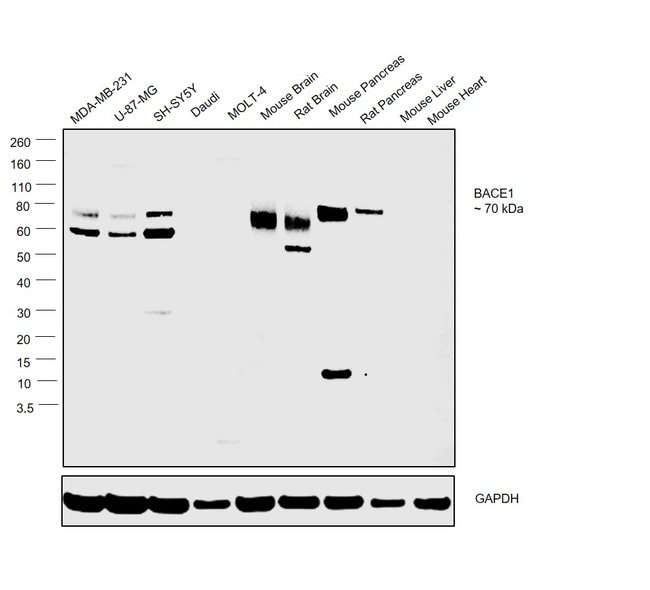
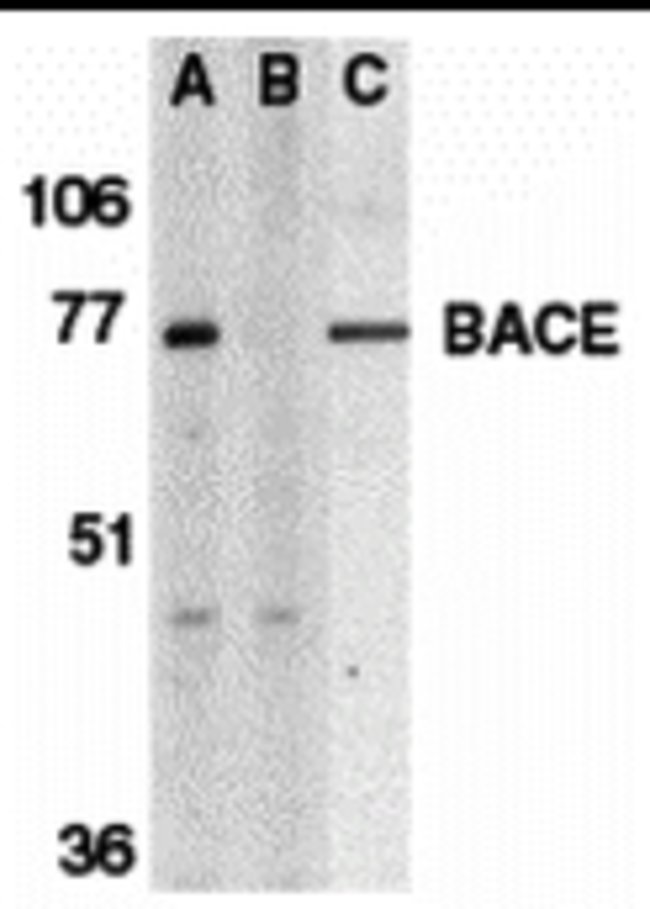
A suggested positive control is human brain tissue lysate. PA5-19952 can be used with blocking peptide PEP-0077. The PA5-19952 immunogen is located within the last 50 amino acids of BACE. Predicted molecular ~ 55kD. In Western blot applications, this antibody has been observed to detect a band at: 65kD (Post-modification: 4 N-linked glycosylation). Predicted species reactivity based on immunogen sequence: Guinea pig: (94%), Rat: (94%), Bovine: (94%).

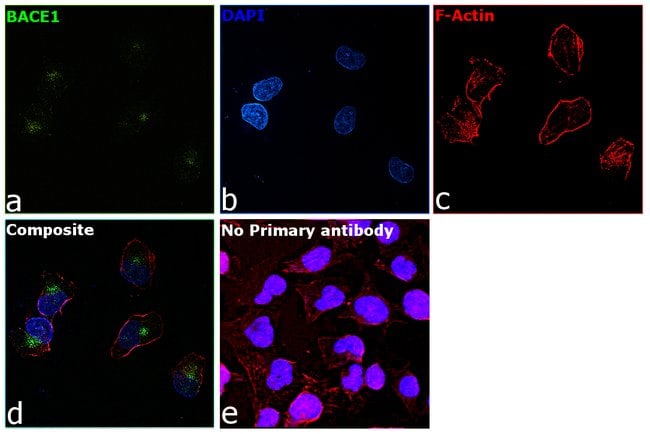
BACE1 (beta-secretase) is a key enzyme involved in the production of amyloid beta-peptides (Abeta) found in extracellular amyloid plaques of Alzheimer's disease (AD). In some cases early onset familial AD can be attributed to a swedish mutation in the amyloid precursor protein (APP), which dramatically enhances the cleavage of this protein by BACE1. This and other genetic and pathological evidence has led to therapeutic approaches that have focused on the inhibition of BACE1 and other APP-cleaving enzymes, such as gamma-secretase stuff. APP is first cleaved by b-secretase, producing a soluble derivative of the protein and a membrane anchored 99-amino acid carboxy-terminal fragment (C99). The C99 fragment serves as substrate for g-secretase to generate the 4 kDa amyloid-b peptide, which is deposited in the brains of all sufferers of Alzheimer's disease. The long-sought b-secretase was recently identified by several groups independently and designated beta-site APP cleaving enzyme (BACE) and aspartyl protease 2 (Asp2). bACE/Asp2 is a novel transmembrane aspartic protease and colocalizes with APP.
TRUSTED_SUSTAINABILITY

Specifications

Antigen BACE1
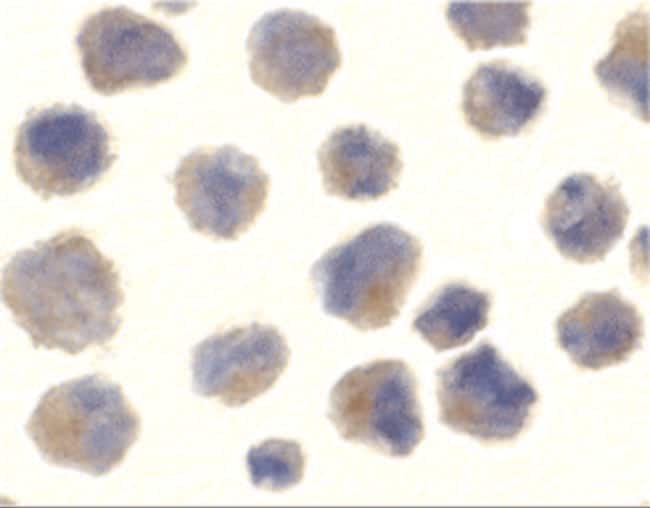
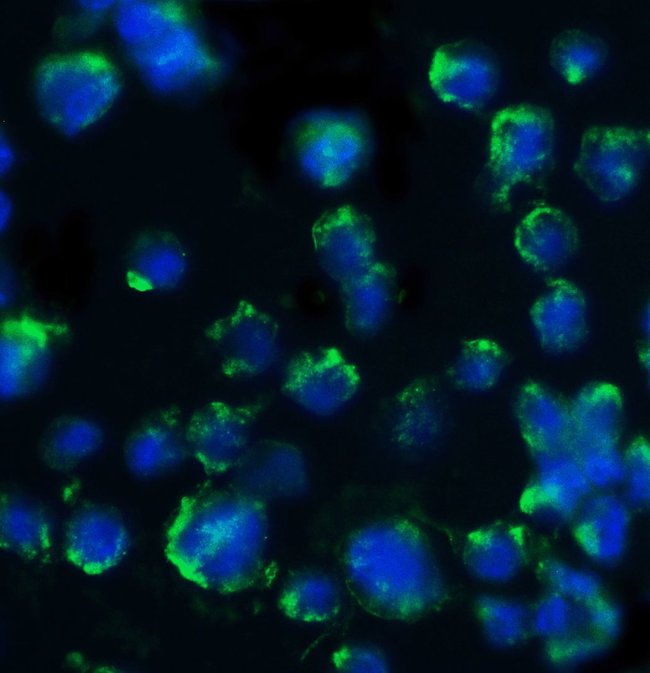
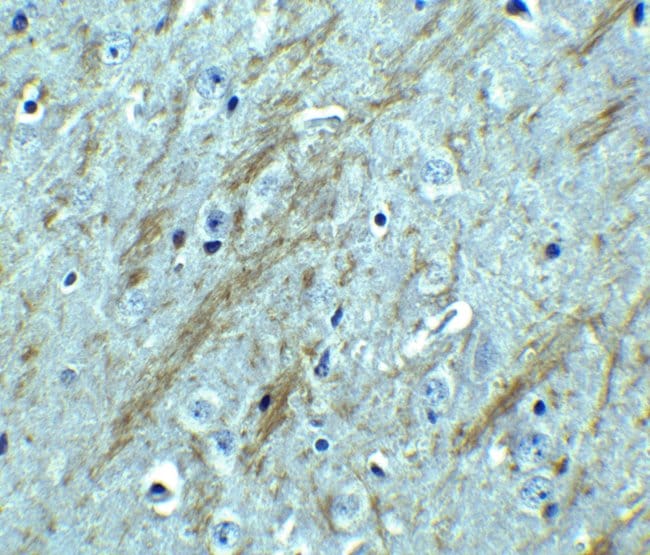
Applications Immunohistochemistry (Paraffin), Western Blot, Immunocytochemistry
Classification Polyclonal
Concentration 1 mg/mL
Conjugate Unconjugated
Formulation PBS with 0.02% sodium azide
Gene BACE1
Gene Accession No. P56817, P56818
Gene Alias APP beta-secretase; asp 2; ASP2; Aspartyl protease 2; BACE; BACE 1; BACE1; BACE-1D; BACE-I-432; Beta secretase; Beta-secretase 1; beta-secretase 1 precursor variant 1; beta-site amyloid beta A4 precursor protein-cleaving enzyme; beta-site amyloid precursor protein cleaving enzyme 1; Beta-site APP cleaving enzyme 1; beta-site APP-cleaving enzyme 1; C76936; HSPC104; hypothetical protein LOC403005; KIAA1149; Memapsin; Memapsin2; Memapsin-2; membrane-associated aspartic protease 2; protease; transmembrane aspartic proteinase Asp2; zgc:77409
Gene Symbols BACE1
Host Species Rabbit
Immunogen A peptide corresponding to 17 amino acids at the carboxy terminus of human BACE.
Purification Method Ion-exchange chromatography
Quantity 100 μg
Regulatory Status RUO
Primary or Secondary Primary
Gene ID (Entrez) 23621, 23821
Target Species Human, Mouse
Content And Storage Maintain refrigerated at 2-8°C for up to 3 months. For long term storage store at -20°C
Product Type Antibody
Form Liquid
Isotype IgG
Show More Show Less
Product Title
Select an issue

By clicking Submit, you acknowledge that you may be contacted by Fisher Scientific in regards to the feedback you have provided in this form. We will not share your information for any other purposes. All contact information provided shall also be maintained in accordance with our Privacy Policy.