missing translation for 'onlineSavingsMsg'
Learn More
Learn More


Invitrogen™ Arginase 1 Monoclonal Antibody (sl6arg), eBioscience™, Invitrogen™

Mouse Monoclonal Antibody
Brand: Invitrogen™ 14-9779-82
This item is not returnable.
View return policy
Description
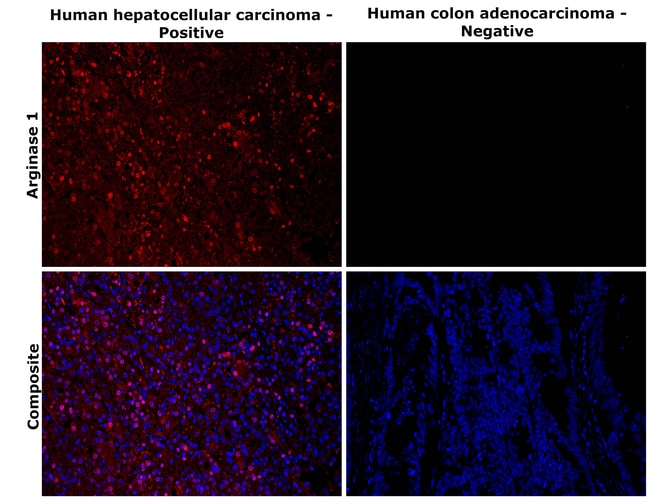
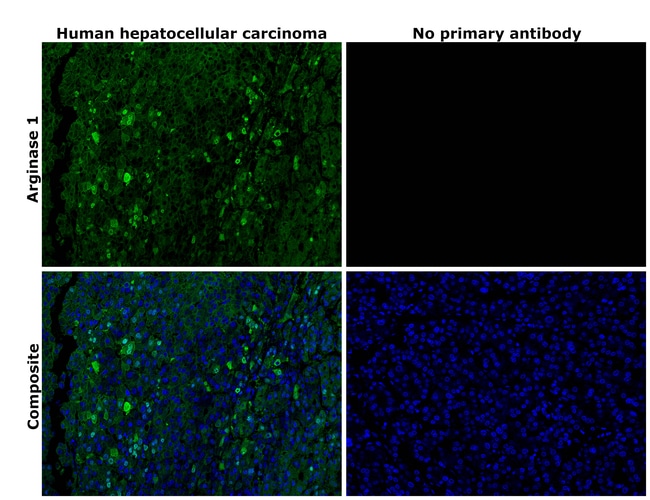
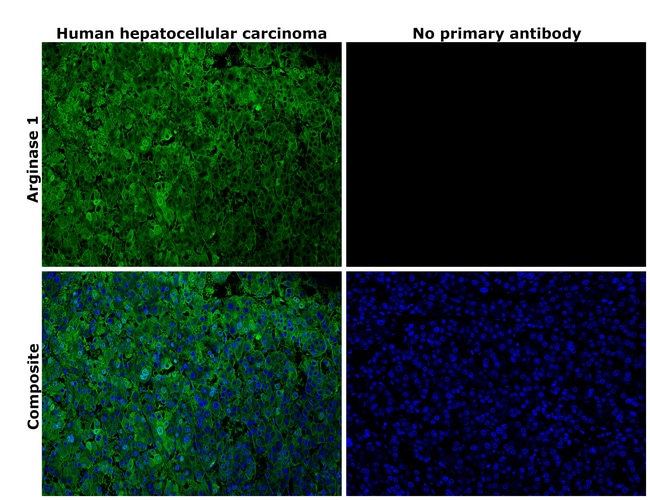
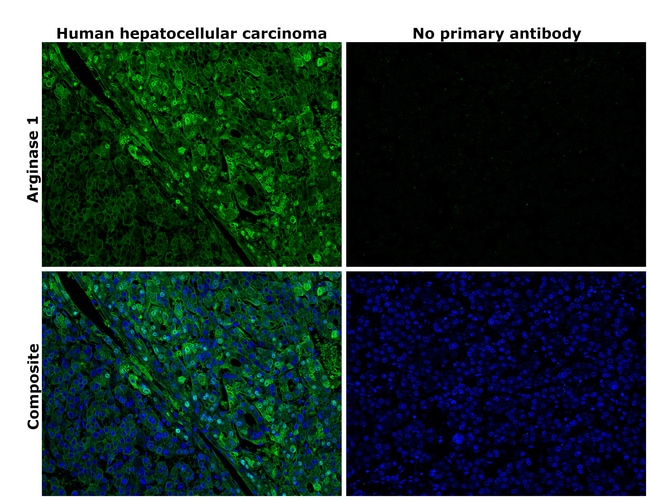
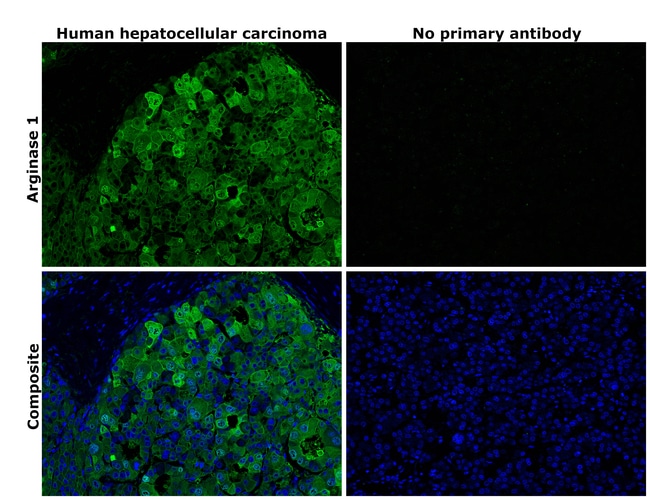
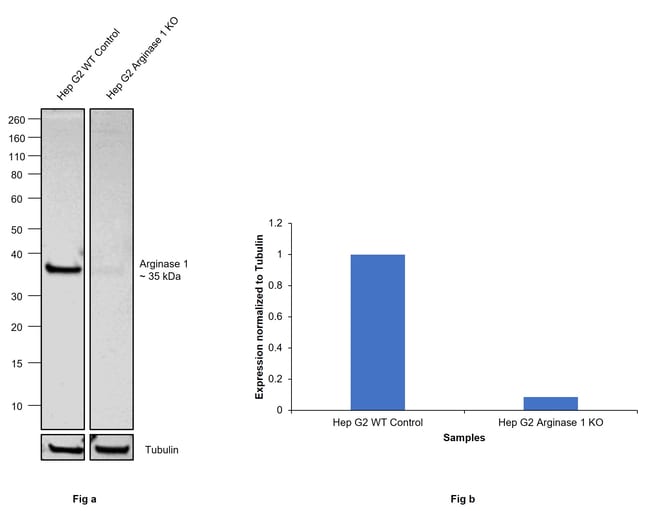
Description: The monoclonal antibody sl6arg recognizes human Arginase-1, a 35 kDa enzyme that that helps eliminate nitrogen by converting L-arginine to urea and L-ornithine which further converts to polyamine. These polyamines are important for cell proliferation and removal of toxins that arise from protein degradation. Expression is found in the liver, neutrophils, as well as myeloid derived suppressor cells (MDSC) and neural stem cells. Expression in macrophages has not been determined in humans, while in mice expression in M2 macrophages is well established. Arginase-1 may be expressed in the myeloid population in breast cancer tumors and is typically found in the majority of hepatocellular carcinomas. Applications Reported: This sl6arg antibody has been reported for use in western blotting, immunohistochemical staining of formalin-fixed paraffin embedded tissue sections, microscopy, immunohistochemical staining, and immunocytochemistry. Applications Tested: This sl6arg antibody has been tested by immunohistochemistry on formalin-fixed paraffin embedded human tissue using either low or high pH antigen retrieval and can be used at less than or equal to 20 μg/mL. This sl6arg antibody has also been tested by immunocytochemistry of fixed and permeabilized human cells and can be used at less than or equal to 20 μg/mL. It is recommended that the antibody be carefully titrated for optimal performance in the assay of interest.
Arginase-1 (Arg1) is a 35 kDa enzyme converting L-arginine to urea and L-ornithine, which is the final step in the urea cycle. The resulting polyamines are important for cell proliferation and removal of toxins that arise from protein degradation. By degrading arginine, Arginase 1 deprives NO synthase of its substrate and down-regulates nitric oxide production. In both human and mouse, Arginase 1 is expressed in the liver, neutrophils, myeloid derived suppressor cells (MDSC) and neural stem cells. In human, expression in blood neutrophils but not in CCR3+ granulocytes has been reported. In mice, expression of Arginase 1 is one of the hallmarks of alternatively activated macrophages (M2a). Arginase-1 may be expressed in the myeloid cells infiltrating tumors, and is typically found in the majority of hepatocellular carcinomas. Defects in Arginase 1 are the cause of argininemia, an autosomal recessive disorder characterized by hyperammonemia.
Specifications
| Arginase 1 | |
| Monoclonal | |
| 0.5 mg/mL | |
| PBS with 0.09% sodium azide; pH 7.2 | |
| P05089 | |
| ARG1 | |
| Affinity Chromatography | |
| RUO | |
| 383 | |
| 4°C | |
| Liquid |
| Immunohistochemistry (Paraffin), Western Blot, Immunocytochemistry | |
| sl6arg | |
| Unconjugated | |
| ARG1 | |
| AI; A-I; AI type I arginase; AI256583; Arg1; Arg-1; Arginase; arginase 1; arginase 1 liver; arginase 1, liver; arginase I; arginase, liver; Arginase1; arginase-1; HGNC:663; Liver Arginase; Liver-type arginase; PGIF; similar to arginase, type I; Type 1 Arginase; type I arginase | |
| Mouse | |
| 100 μg | |
| Primary | |
| Human | |
| Antibody | |
| IgG1 κ |
Product Content Correction
Your input is important to us. Please complete this form to provide feedback related to the content on this product.
Product Title
For Research Use Only.
Spot an opportunity for improvement?Share a Content Correction