missing translation for 'onlineSavingsMsg'
Learn More
Learn More
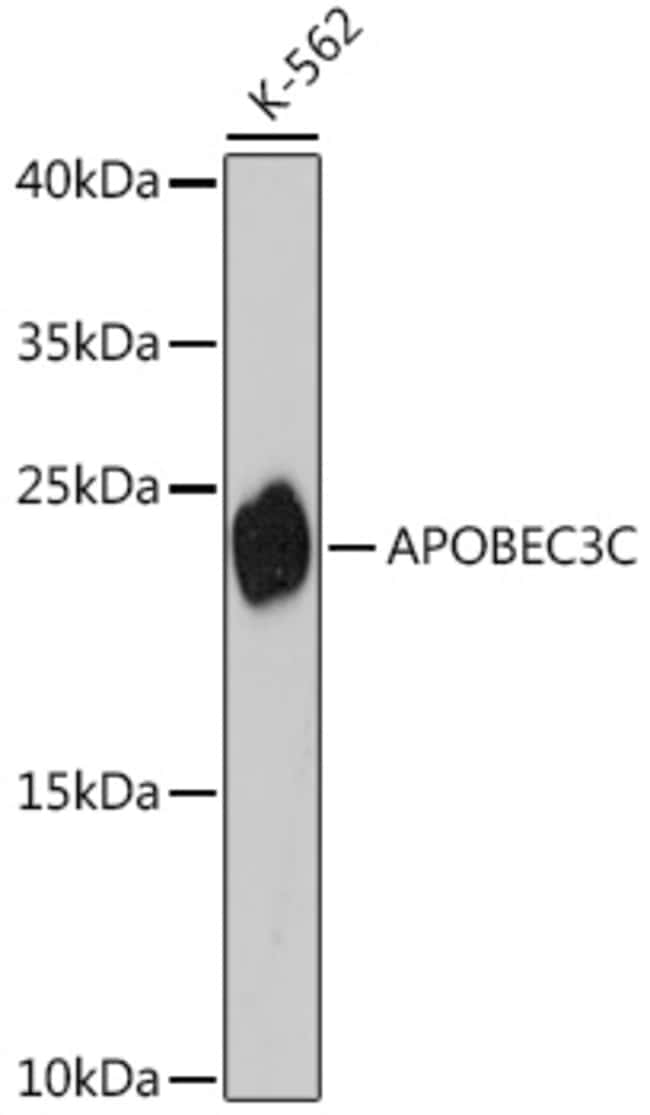
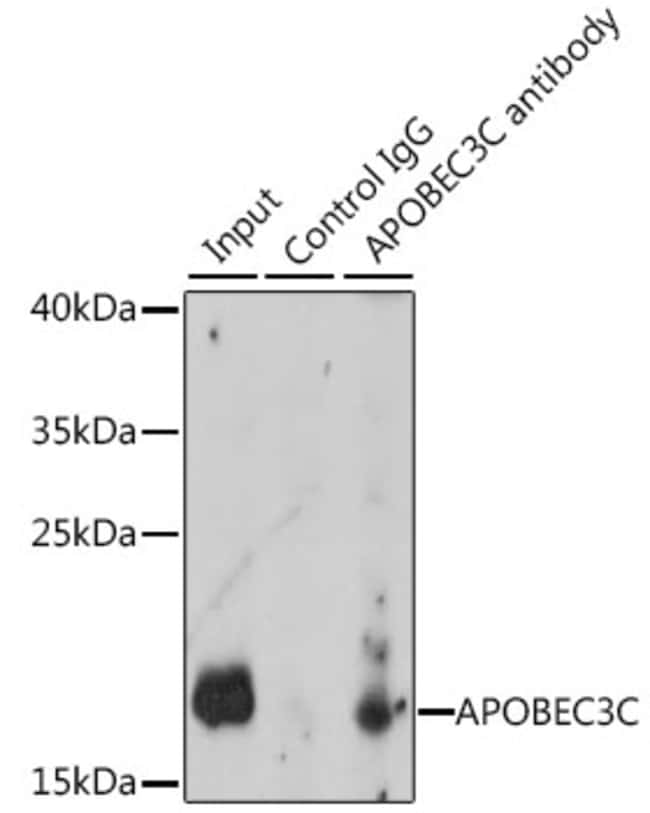
Invitrogen™ APOBEC3C Polyclonal Antibody

Description
Immunogen sequence: MNPQIRNPMK AMYPGTFYFQ FKNLWEANDR NETWLCFTVE GIKRRSVVSW KTGVFRNQVD SETHCHAERC FLSWFCDDIL SPNTKYQVTW YTSWSPCPDC AGEVAEFLAR HSNVNLTIFT ARLYYFQYPC YQEGLRSLSQ EGVAVEIMDY EDFKYCWENF VYNDNEPFKP WKGLKTNFRL LKRRLRESLQ.
APOBEC (apolipoprotein B mRNA editing enzyme, catalytic) proteins inhibit retroviruses by deaminating cytosine residues of viral RNA and DNA. The seven APOBEC3 genes or pseudogenes are found in a cluster thought to result from gene duplication on chromosome 22. Like APOBEC3G, APOBEC3F deaminates deoxycytosine to deoxyuracil in the minus strand of HIV-1 DNA, resulting in G to A hypermutation in the plus strand of DNA. Thus, APOBEC3G and APOBEC3F provide a mechanism for innate immunity to retroviruses, and are also likely contribute to sequence variation observed in many viruses. Viral infectivity factor (Vif) imparts APOBEC3G and APOBEC3F resistance to HIV through impaired translation of their mRNA and accelerated posttranslational degradation of the APOBEC3 proteins by the 26S proteasome. Interestingly, HIV-1 Vif cannot form a complex with APOBEC3G or APOBEC3F of mouse origin as it does with the human protein, and thus mouse APOBEC3G and APOBEC3F function as a potent inhibitors of wildtype HIV-1 replication, where human APOBEC3G and APOBEC3F are only able to inhibit Vif-deficient HIV-1 replication. This implies that induction of APOBEC3G and APOBEC3F activity or a method of blocking their interaction with Vif may provide a method for therapeutic intervention.

Specifications
Specifications
| Antigen | APOBEC3C |
| Applications | ELISA, Immunoprecipitation, Western Blot, Immunocytochemistry |
| Classification | Polyclonal |
| Concentration | 2.45 mg/mL |
| Conjugate | Unconjugated |
| Formulation | PBS with 50% glycerol and 0.01% thimerosal; pH 7.3 |
| Gene | APOBEC3C |
| Gene Accession No. | Q9NRW3 |
| Gene Alias | A3C; APOBEC1L; APOBEC1-like; APOBEC3C; apolipoprotein B editing enzyme catalytic polypeptide-like 3C; apolipoprotein B mRNA editing enzyme catalytic polypeptide like 3C; apolipoprotein B mRNA editing enzyme catalytic subunit 3C; apolipoprotein B mRNA editing enzyme, catalytic polypeptide-like 3C; ARDC2; ARDC4; ARP5; bK150C2.3; DNA dC->dU-editing enzyme APOBEC-3C; MGC19485; PBI; Phorbolin I; probable DNA dC->dU-editing enzyme APOBEC-3C |
| Gene Symbols | APOBEC3C |
| Show More |
Product Title
By clicking Submit, you acknowledge that you may be contacted by Fisher Scientific in regards to the feedback you have provided in this form. We will not share your information for any other purposes. All contact information provided shall also be maintained in accordance with our Privacy Policy.
Spot an opportunity for improvement?