missing translation for 'onlineSavingsMsg'
Learn More
Learn More

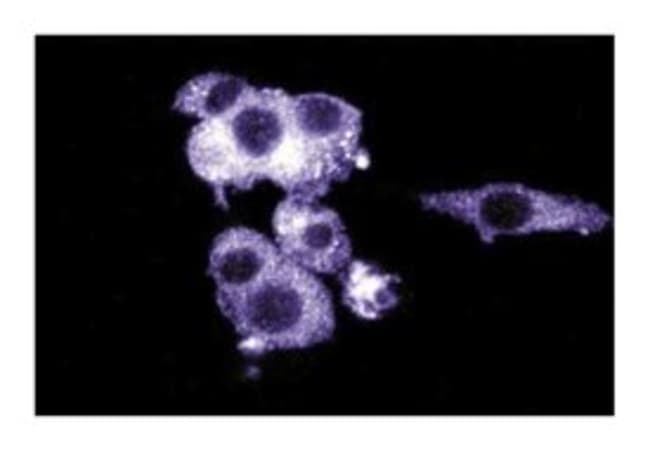
PIP5Kγ Mouse, Unlabeled, Clone: 12, BD
Mouse Monoclonal Antibody
Brand: BD Biosciences 611148
This item is not returnable.
View return policy
Description
Phosphoinositide turnover is a well established mechanism of intracellular signal transduction. Sequential phosphorylation of phosphatidylinositol (PtdIns) results in PtdIns(4)P (PIP) and PtdIns(4,5)P2 (PIP2). Phospholipase C (PLC) hydrolyzes PIP2 to inositol (1,4,5)P3 (IP3) which stimulates release of intracellular Ca2+. PIP2 is generated by phosphorylation of PtdIns 5-kinases (PI5-K). These enzymes are divided into two types (I and II) based on their size and sensitivity to certain compounds. Three mammalian PI5-Ks, PI5-Kα, β, and γ of type I have been identified and a type II PIP5kα. Although the PI4-Ks are abundantly distributed throughout the cell, activity is found primarily in association with membranous structures. Members of this family contain a lipid kinase unique domain and a C-terminal catalytic domain.
Host Species: Mouse
Clone: 12
Isotype: IgG1
Species Reactivity: Rat
Immunogen: Mouse PIP5Kγ aa. 479-580
Formula Weight [Chemical]: 87-90kDa
Immunofluorescence, Western Blotting

Specifications
| PIP5Kγ | |
| Monoclonal | |
| 250μg/mL | |
| Aqueous buffered solution containing BSA, glycerol, and ≤0.09% sodium azide. | |
| Mouse PIP5Kγ aa. 479-580 | |
| 50 μg | |
| Cell Biology | |
| Mouse, Rat | |
| IgG1 |
| Western Blot | |
| 12 | |
| Unconjugated | |
| Mouse | |
| Affinity Purified | |
| RUO | |
| Primary | |
| Store undiluted at -20°C. |
Product Content Correction
Your input is important to us. Please complete this form to provide feedback related to the content on this product.
Product Title
Spot an opportunity for improvement?Share a Content Correction