missing translation for 'onlineSavingsMsg'
Learn More
Learn More
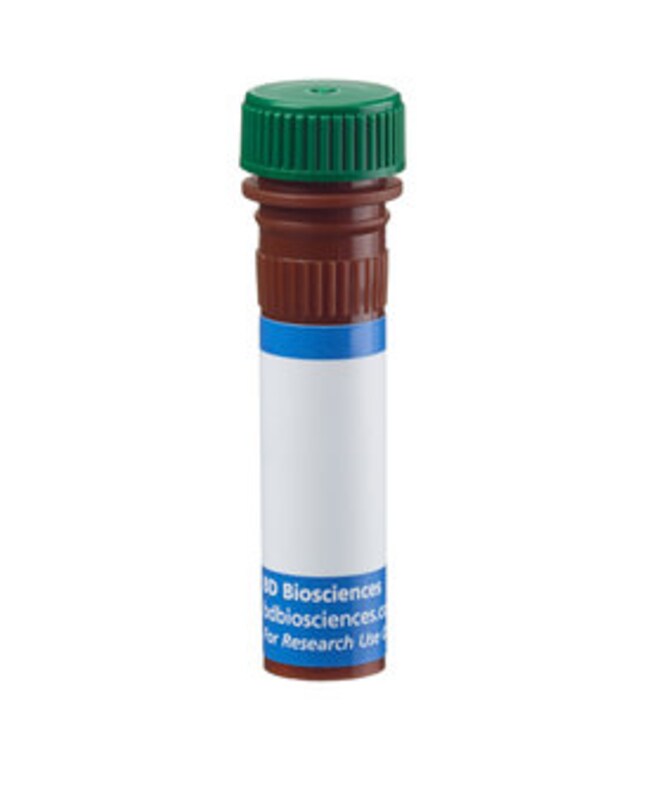

p21-Arc Mouse, FITC, Clone: 26, BD
Mouse Monoclonal Antibody
Brand: BD Biosciences 612236
This item is not returnable.
View return policy
Description
Cellular morphology, adhesion, and motility occur through the reorganization of the actin cytoskeleton. This reorganization of actin filaments occurs through the interactions between actin and actin binding proteins. Actin-binding proteins regulate the polymerization and depolymerization of actin, connect actin-based structures to membranes and to other cytoskeletal elements, power the movement of actin filaments, and cross-link actin filaments into bundles. Actin related proteins (Arp) 2/3 complex is an actin polymerization inducing complex that includes Arp2, Arp3, p41-Arc, p34-Arc, p21-Arc, p20 Arc, and p16-Arc. The Arp2 and Arp3 subunits may nucleate actin polymerization, while the p41-Arc subunit is a WD repeat-containing protein that may regulate both the activity and localization of the Arp2/3 complex. Arp3, p34-Arc, and p21-Arc are localized to the lamellipodia of stationary and locomoting fibroblasts. Both WASP and Abp1p are acidic sequence-containing proteins that activate the Arp2/3 complex. However, WASP binds actin monomers, while the endocytosis-related Abp1p protein binds actin filaments. Thus, Arp2/3 complex may regulate actin polymerization in specific cell locations through interaction with actin binding Arp2/3 activators.
Immunofluorescence

Specifications
| p21-Arc | |
| Monoclonal | |
| 250μg/mL | |
| Aqueous buffered solution containing BSA, glycerol, and ≤0.09% sodium azide. | |
| Human p21-Arc aa. 10-118 | |
| 50 μg | |
| Cell Biology | |
| Canine, Chicken, Human, Mouse, Rat | |
| IgG1 |
| Immunofluorescence | |
| 26 | |
| FITC | |
| Mouse | |
| Affinity Purified | |
| RUO | |
| Primary | |
| Store undiluted at -20°C. |
Product Content Correction
Your input is important to us. Please complete this form to provide feedback related to the content on this product.
Product Title
Spot an opportunity for improvement?Share a Content Correction