missing translation for 'onlineSavingsMsg'
Learn More
Learn More
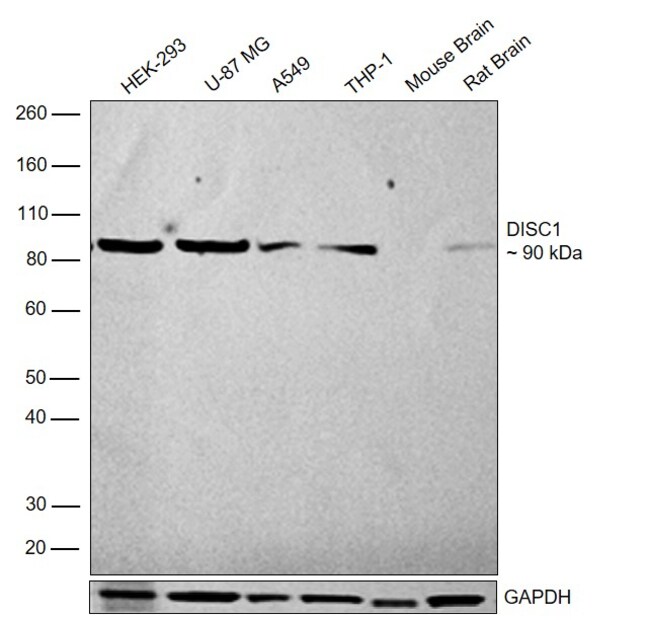

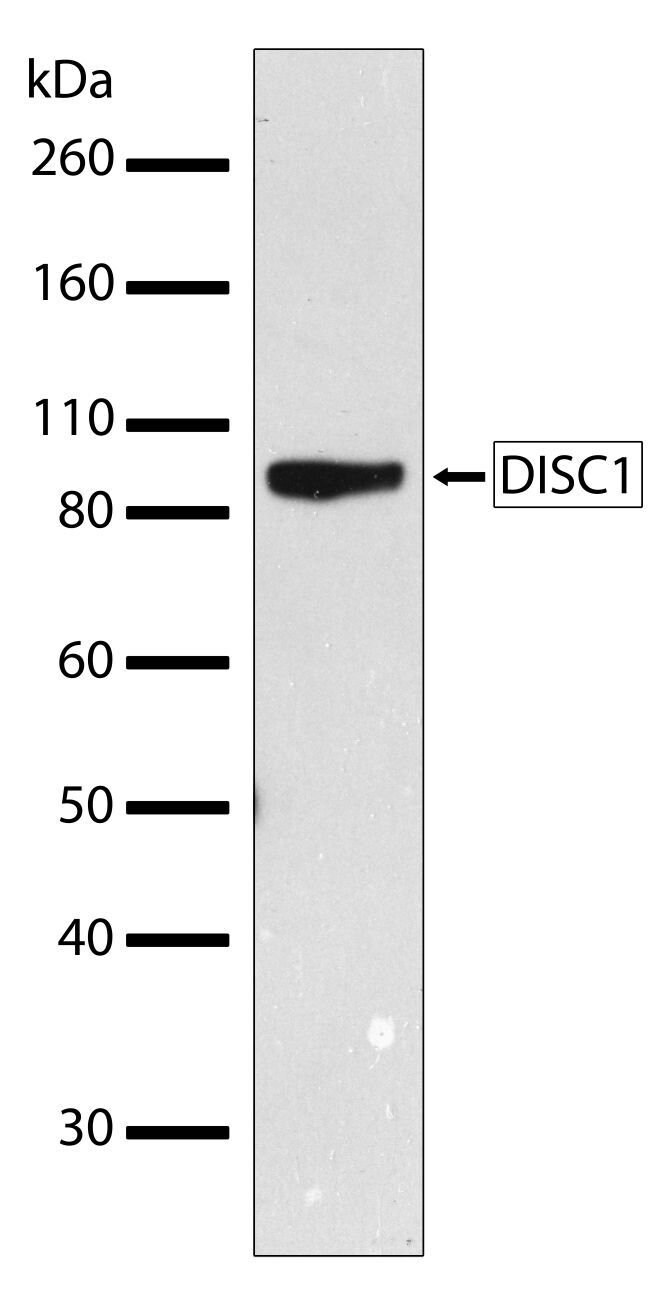
Invitrogen™ DISC1 Recombinant Rabbit Monoclonal Antibody (4H21L1)
Rabbit Recombinant Monoclonal Antibody
Brand: Invitrogen™ 701172
This item is not returnable.
View return policy
Description
This antibody is predicted to react with mouse and rat based on sequence homology. Intact IgG appears on a non-reducing gel as ~150 kDa band and upon reduction generating a ~25 kDa light chain band and a ~50 kDa heavy chain. Recombinant rabbit monoclonal antibodies are produced using in vitro expression systems. The expression systems are developed by cloning in the specific antibody DNA sequences from immunoreactive rabbits. Then, individual clones are screened to select the best candidates for production. The advantages of using recombinant rabbit monoclonal antibodies include: better specificity and sensitivity, lot-to-lot consistency, animal origin-free formulations, and broader immunoreactivity to diverse targets due to larger rabbit immune repertoire.
DISC1 (Disrupted in Schizophrenia 1) is a multifunctional protein that interacts with multiple proteins of the centrosome and cytoskeletal system, and is involved in neuronal functions that are dependent upon proper cytoskeletal regulation, including neuronal migration, neurite architecture and intracellular transport. Regions of the brain which express DISC1 include the hippocampus, lateral septum, amygdala, cerebral cortex, cerebellum and paraventricular hypothalamus, and loss of DISC1 function results in differences in structural organization.The DISC1 gene locus is associated with patients afflicted with schizophrenia as a result of chromosomal translocations. DISC-1 encodes a large protein predicted to contain a globular N-terminal domain and a helical C-terminal domain, both of which have the potential to form interactions with other proteins. DISC-1 interacts with proteins involved in the centrosome and cytoskeletal system, including MIPT3, MAP1A and NUDEL; proteins which localize receptors to membranes, including alpha-actinin 2, beta 4-spectrin; and proteins which transduce signals from membrane receptors, including ATF-4 and ATF-5. Therefore, DISC-1 is thought to be involved in intracellular transport, neurite architecture and/or neuronal migration, all of which are thought to be pathogenic in the schizophrenic brain. Decreased expression of DISC1 in neurons caused an accelerated rate of neuronal integration, resulting in aberrant morphological development, suggesting that DISC1 plays a role in dendritic development and synapse formation. DISC-1 is thought to be involved in intracellular transport, neurite architecture and/or neuronal migration, all of which are thought to be pathogenic in the schizophrenic brain.
Specifications
| DISC1 | |
| Recombinant Monoclonal | |
| 0.5 mg/mL | |
| PBS with 0.09% sodium azide | |
| Q810H6, Q811T9, Q9NRI5 | |
| DISC1 | |
| Peptide corresponding to amino acids 419-428 of human DISC1. | |
| 100 μg | |
| Primary | |
| Human, Mouse, Rat | |
| Antibody | |
| IgG |
| Western Blot | |
| 4H21L1 | |
| Unconjugated | |
| DISC1 | |
| C1orf136; DISC1; disrupted in schizophrenia 1; disrupted in schizophrenia 1 homolog; Disrupted in schizophrenia 1 protein; KIAA0457; RP4-730B13.1; SCZD9 | |
| Rabbit | |
| Protein A | |
| RUO | |
| 244667, 27185, 307940 | |
| Store at 4°C short term. For long term storage, store at -20°C, avoiding freeze/thaw cycles. | |
| Liquid |
Product Content Correction
Your input is important to us. Please complete this form to provide feedback related to the content on this product.
Product Title
Spot an opportunity for improvement?Share a Content Correction