missing translation for 'onlineSavingsMsg'
Learn More
Learn More

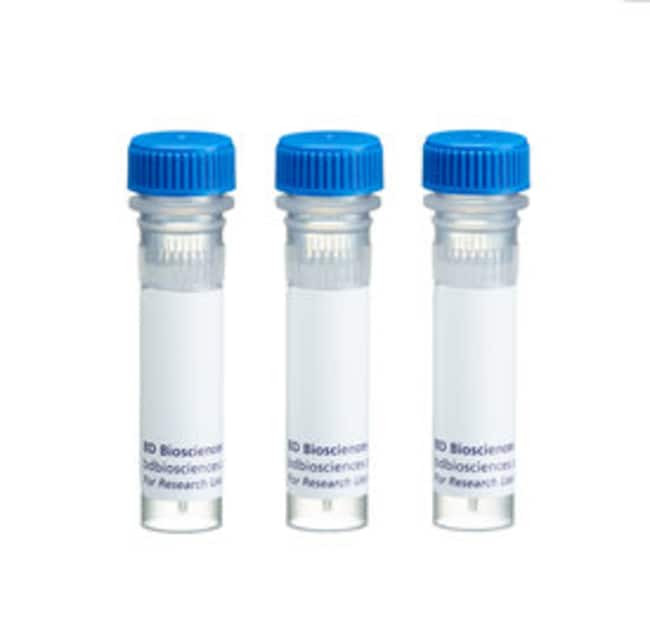


Caspase-7 Mouse, Unlabeled, Clone: 10-1-62, BD
Mouse Monoclonal Antibody
£260.00 - £428.00
Specifications
| Antigen | Caspase-7 |
|---|---|
| Clone | 10/1/1962 |
| Concentration | 0.5mg/mL |
| Applications | Western Blot |
| Classification | Monoclonal |
Description
The caspase family of cysteine proteases plays a key role in apoptosis and inflammation. Caspases are synthesized as inactive proenzymes containing three domains, that are processed into large and small subunits that associate to form the active enzyme. Processing can occur in apoptotic cells by either transactivation, self-proteolysis, or cleavage by another protease. While caspases share a common structure, there are some differences, such as the preferred substrate specificity. These sequence differences in specificity, as well as the size of the NH2-terminal prodomains can be used to catagorize the caspases into functional groups including, apoptotic initiators (long prodomains), apoptotic executioners′ (short prodomains), and cytokine processors. Caspase-7, along with caspase-3 and -6 are members of the apoptotic executioners group containing short prodomains; caspase-7 is structurally and functionally most similar to caspase-3. Upon induction of apoptosis, pro-caspase-7 (35kDa) is first converted to a 32kDa intermediate, which is further processed into active subunits consisting of 20kDa and 11kDa forms (Swiss-Prot P55210). Active caspase-7 has been shown to cleave the nuclear substrate PARP as well as the sterol regulatory element-binding protein 1 (SREBP-1). In cells undergoing Fas-mediated apoptosis in vivo, active caspase-7 has been shown to translocate from the cytosol to the mitochondrial and microsomal fractions, whereas caspase-3 remains cytosolic. This data supports the hypothesis that similar apoptotic executioners cleave distinct substrates in different cellular compartments. The antibody recognizes human and mouse caspase-7. Full-length recombinant human caspase-7 protein was used as immunogen. The antibody is routinely tested by western blot and immunoprecipitation analysis of Jurkat T cells (please refer to Table I for what forms of caspase-7 are identified in a particular application).
Host Species: Mouse
Clone: 10-1-62
Isotype: IgG1 κ
Species Reactivity: Human
Immunogen: Human caspase-7 full-length recombinant protein
Immunoprecipitation, Western Blotting
Specifications
| Caspase-7 | |
| 0.5mg/mL | |
| Monoclonal | |
| Mouse | |
| Cell Biology | |
| Aqueous buffered solution containing ≤0.09% sodium azide. | |
| IgG1 κ | |
| Affinity Purified | |
| Mch3 |
| 10/1/1962 | |
| Western Blot | |
| Unconjugated | |
| RUO | |
| Human, Mouse | |
| Human caspase-7 full-length recombinant protein | |
| Primary | |
| Store undiluted at 4°C |
For Research Use Only.
Spot an opportunity for improvement?Share a Content Correction
Product Content Correction
Your input is important to us. Please complete this form to provide feedback related to the content on this product.
Product Title