missing translation for 'onlineSavingsMsg'
Learn More
Learn More
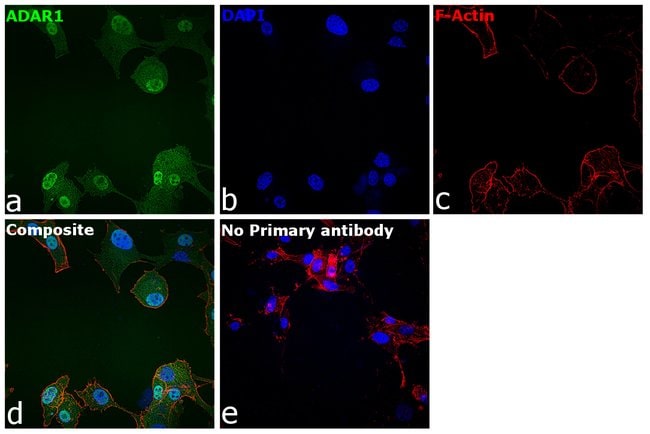

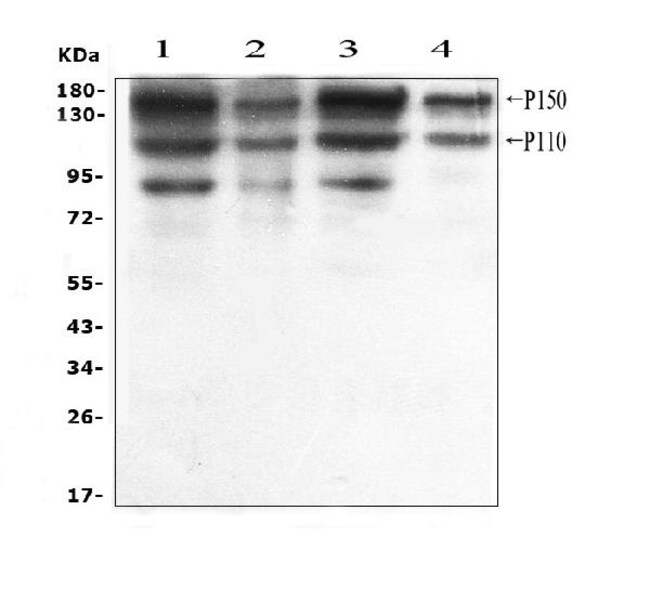
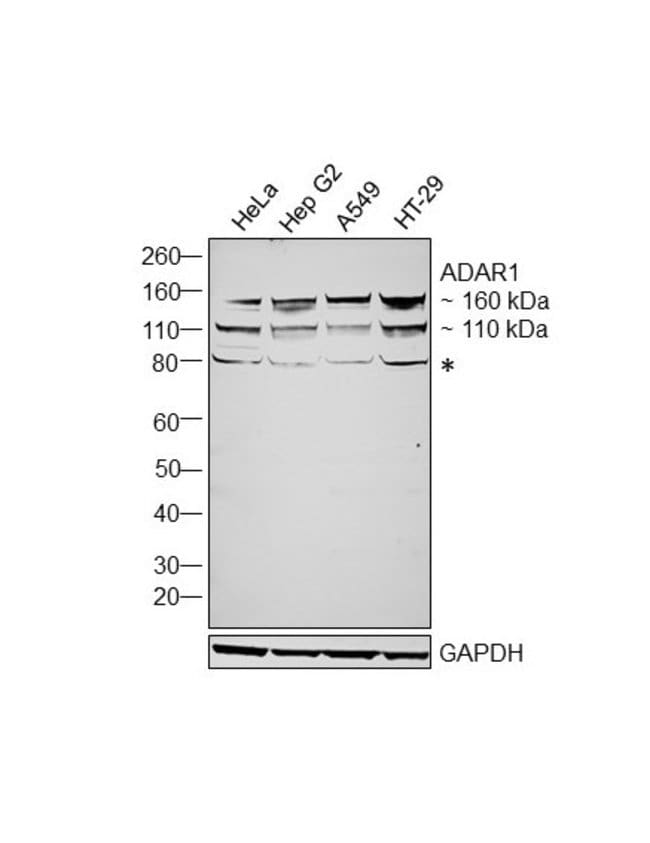
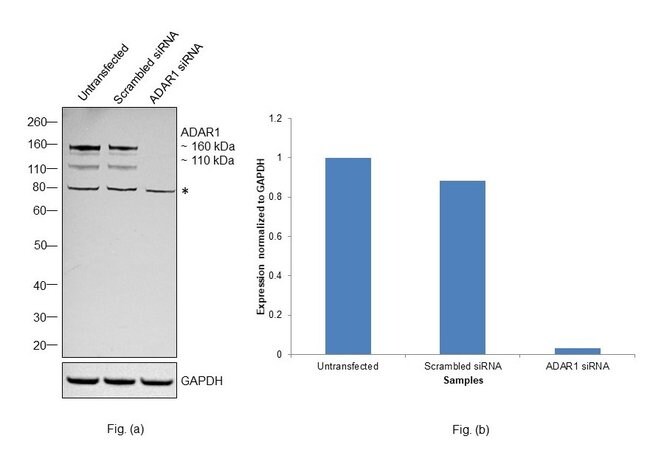
Invitrogen™ ADAR1 Polyclonal Antibody

Rabbit Polyclonal Antibody
Brand: Invitrogen™ PA578729
This item is not returnable.
View return policy
Description
Human CRM1 shares 93.4% and 91.5% amino acid (aa) sequence identity with mouse and rat CRM1, respectively. Reconstitute with 0.2 mL of distilled water to yield a concentration of 500 μg/mL. Positive Control - WB: HELA whole cell, A549 whole cell, MCF-7 whole cell, HEPG2 whole cell. IHC: human lung cancer tissue.
Adenosine Deaminase RNA Specific (ADAR) catalyzes the hydrolytic deamination of adenosine to inosine in double-stranded RNA (dsRNA) referred to as A-to-I RNA editing.This may affect gene expression and function in a number of ways that include mRNA translation by changing codons and hence the amino acid sequence of proteins; pre-mRNA splicing by altering splice site recognition sequences; RNA stability by changing sequences involved in nuclease recognition; genetic stability in the case of RNA virus genomes by changing sequences during viral RNA replication; and RNA structure-dependent activities such as microRNA production or targeting or protein-RNA interactions. ADAR can edit both viral and cellular RNAs and can edit RNAs at multiple sites (hyper-editing) or at specific sites (site-specific editing). Its cellular RNA substrates include: bladder cancer-associated protein (BLCAP), neurotransmitter receptors for glutamate (GRIA2) and serotonin (HTR2C) and GABA receptor (GABRA3). Site-specific RNA editing of transcripts encoding these proteins results in amino acid substitutions which consequently alters their functional activities. Exhibits low-level editing at the GRIA2 Q/R site, but edits efficiently at the R/G site and HOTSPOT1. Its viral RNA substrates include: hepatitis C virus (HCV), vesicular stomatitis virus (VSV), measles virus (MV), hepatitis delta virus (HDV), and human immunodeficiency virus type 1 (HIV-1). Exhibits either a proviral (HDV, MV, VSV and HIV-1) or an antiviral effect (HCV) and this can be editing-dependent (HDV and HCV), editing-independent (VSV and MV) or both (HIV-1). Impairs HCV replication via RNA editing at multiple sites. Enhances the replication of MV, VSV and HIV-1 through an editing-independent mechanism via suppression of EIF2AK2/PKR activation and function. Stimulates both the release and infectivity of HIV-1 viral particles by an editing-dependent mechanism where it associates with viral RNAs and edits adenosines in the 5'UTR and the Rev and Tat coding sequence. Can enhance viral replication of HDV via A-to-I editing at a site designated as amber/W, thereby changing an UAG amber stop codon to an UIG tryptophan (W) codon that permits synthesis of the large delta antigen (L-HDAg) which has a key role in the assembly of viral particles. However, high levels of ADAR1 inhibit HDV replication. (Uniprot).
Specifications
| ADAR1 | |
| Polyclonal | |
| Unconjugated | |
| Adar | |
| 136 kDa double-stranded RNA-binding protein; ADA; Adar; ADAR1; Adar1p110; Adar1p150; Adenosine Deaminase; adenosine deaminase acting on RNA 1-A; adenosine deaminase RNA specific; adenosine deaminase, RNA specific; adenosine deaminase, RNA-specific; AGS6; AV242451; double-stranded RNA-specific adenosine deaminase; DRADA; DSH; DSRAD; dsRNA adenosine deaminase; dsRNA adeonosine deaminase; G1P1; IFI4; IFI-4; interferon-induced protein 4; interferon-inducible protein 4; K88DSRBP; LOW QUALITY PROTEIN: double-stranded RNA-specific adenosine deaminase; mZaADAR; P136; RNA adenosine deaminase 1; RNA-specific adenosine deaminase p110 form; RNA-specific adenosine deaminase p150 form | |
| Rabbit | |
| Antigen affinity chromatography | |
| RUO | |
| 103 | |
| -20°C | |
| Lyophilized |
| Immunohistochemistry (Paraffin), Western Blot, Immunocytochemistry | |
| 500 μg/mL | |
| PBS with 5mg BSA and 0.05mg sodium azide | |
| P55265 | |
| Adar | |
| E.coli-derived human ADAR1 recombinant protein (Position: S128-Q346). | |
| 100 μg | |
| Primary | |
| Human | |
| Antibody | |
| IgG |
Product Content Correction
Your input is important to us. Please complete this form to provide feedback related to the content on this product.
Product Title
Spot an opportunity for improvement?Share a Content Correction