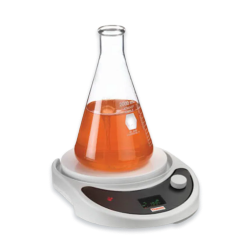
Magnetic Hotplate Stirrers
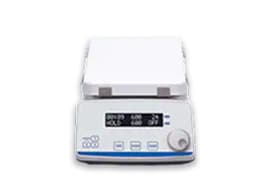
Magnetic stirrers are laboratory tools used to stir liquids, usually in a container. They create a rotating magnetic field that causes a stir bar placed in the container to rotate, which in turn stirs the liquid. Magnetic stirrers are used for a variety of laboratory applications, such as mixing solutions, culturing cells, and performing chemical reactions.

Useful Links
Save Now - Exclusive Deals

Product Code 12917246

Product Code 4531352

Product Code 6467732

Product Code 16883960

Product Code 200007136

Product Code 6091814

Product Code 8001128

Product Code 8012689
Complete Your Order - Great Deals


Must Have

Product Code 15353538

Product Code 10104444

Product Code 15356607
Product Code 10145751
FAQ
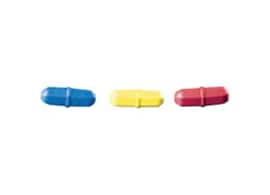
A magnetic stirrer uses a rotating magnetic field generated by an internal motor or electromagnetic drive to spin a magnetic stir bar (flea) placed inside the sample vessel.
This provides uniform, contact-free agitation, ideal for mixing liquids without introducing contamination or shear stress.
Magnetic stirring is widely used in sample preparation, titration, cell culture media mixing, and buffer dissolution, offering smooth, reproducible motion across a wide range of viscosities.
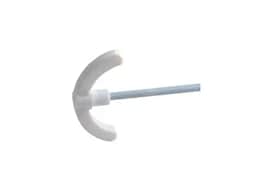
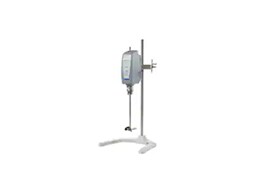
Unlike overhead stirrers, magnetic units require minimal maintenance and eliminate mechanical seal wear, making them highly reliable for continuous or sterile operations.
The drive system determines the stability and precision of stirring:
- Motor-driven stirrers use permanent magnets and mechanical rotation, reliable and affordable for general laboratory use.
- Inductive (electromagnetic) stirrers offer friction-free, wear-less operation with finely tuned speed feedback loops, maintaining constant rpm even under changing load or viscosity.
Advanced models provide digital speed control (30–2000 rpm), soft start functionality to prevent decoupling, and synchronization with temperature modules for thermal reactions. - For reproducibility, choose units with closed-loop feedback, ensuring consistent vortex formation and sample homogeneity across runs.
To achieve long-term stability and compliance:
- Use flat-bottom glassware for optimal magnetic coupling.
- Match the stir bar size and coating (PTFE or glass) to vessel volume and chemical compatibility.
- Ensure proper ventilation and spill protection, some models include sealed housings and IP-rated enclosures for harsh environments.
- For regulated laboratories, digital units with data logging, calibration reminders, and error diagnostics help meet GLP/GMP and ISO 17025 standards.
Safety features such as overheat protection, speed limiters, and auto-stop on overload protect both samples and equipment during extended operation.
Top Brands